









The Hidden Reality of Upgrading an Aging System in Baldwin Park
Your aging AC is running nonstop, but the house still feels like a sauna by mid-afternoon. If you are reading Behind the Photos: A Step-by-Step Look at a Recent Piggies AC Installation, you likely know the frustration of an underperforming unit. Removing an old, failing air conditioner and executing a flawless rebuild is about much more than just unboxing a new unit. The technical execution of the teardown and rebuild matters just as much as the equipment brand you choose.
According to the U.S. Department of Energy, an improper installation can reduce a new system's efficiency by up to 30%. That means a poorly installed premium unit will perform worse than a perfectly installed budget model. If you are looking to upgrade your home comfort, investing in modern air conditioning systems requires partnering with a team that values the unseen details. In this walkthrough, we pull back the curtain on our process to show you exactly what happens when you book professional AC installation services with our team. By looking beyond the final glossy photos, you will see the rigorous steps that guarantee a successful replacement in Baldwin Park.
Knowing When to Commit to a High-Efficiency Replacement
Before the first wrench turns, the most critical step is the initial assessment. Many homeowners struggle with the tipping point where frequent repairs become more costly than simply upgrading the entire system. When assessing an old, failing unit, our technicians look at the age of the equipment, the frequency of breakdowns, and the cost of the next necessary repair.
Transitioning to modern, energy-efficient technology offers massive benefits, but it requires careful planning. You cannot just swap a new box for an old box. Our team performs precise load calculations to determine the exact cooling capacity your home needs. Proper sizing ensures the new high-efficiency central AC system will run in long, steady cycles, dehumidifying the air properly rather than short-cycling and driving up your energy bills.
If you are currently deciding whether to repair or replace your AC, consider the long-term reality of your current equipment. Here is a quick breakdown of what we typically see when evaluating an aging system:
• Age of Unit — Keep Repairing: Under 10 years old — Replace Now: Over 10-12 years old
• Repair Frequency — Keep Repairing: Rare (once every few years) — Replace Now: Frequent (multiple times a year)
• Energy Bills — Keep Repairing: Stable and predictable — Replace Now: Spiking during summer months
• Refrigerant Type — Keep Repairing: Modern R-410A or newer — Replace Now: Obsolete R-22 (Freon)
Once the math points toward a replacement, we finalize the equipment selection and prepare for installation day. Every detail is mapped out before our trucks ever arrive at your property.
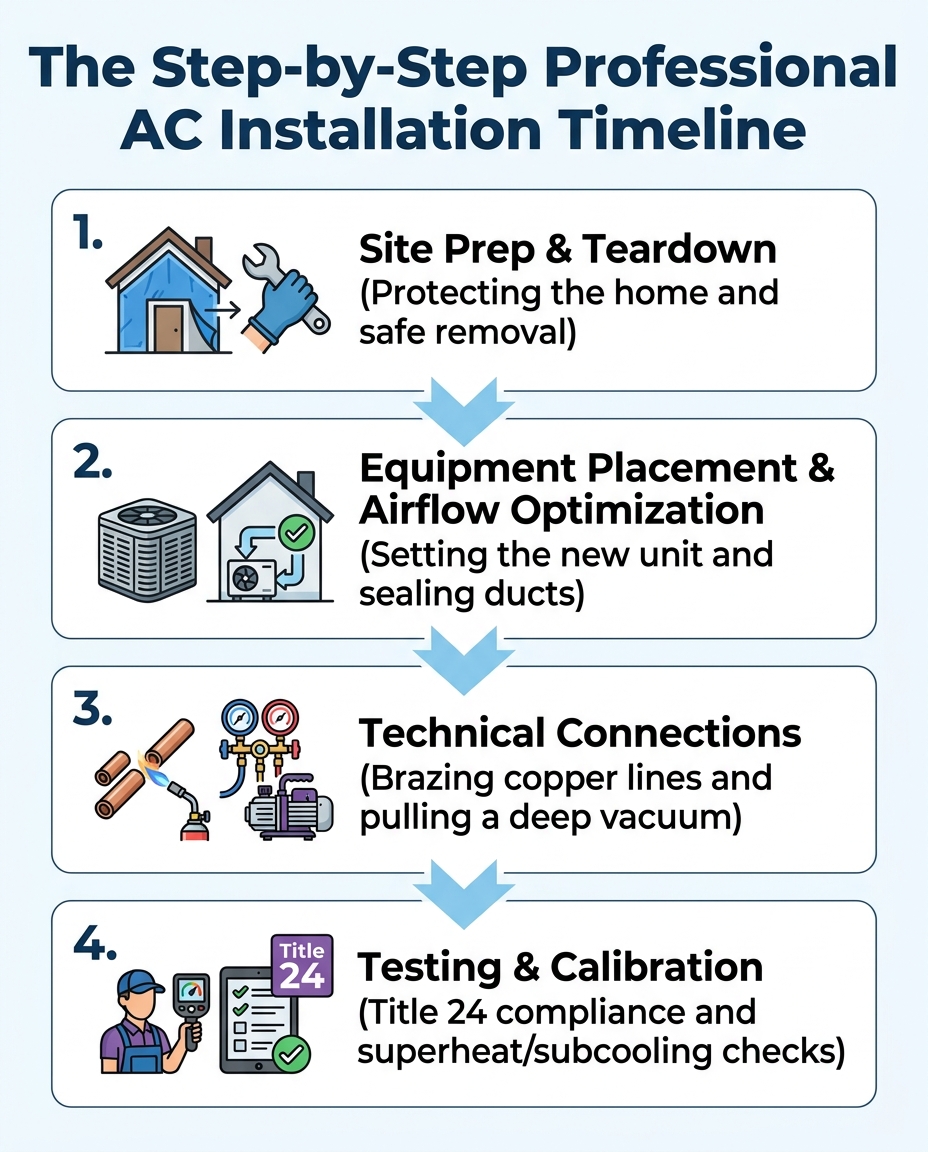
Step 1: Safe Teardown and Protecting the Property
Installation day begins with respect for your home. We know that replacing an HVAC system is a major construction project, and the last thing you want is a mess left behind. The preparation phase involves laying down heavy-duty drop cloths, wearing shoe covers, and protecting your home's interior from dust and debris. During a recent summer project replacing a massive 5-ton split system, the homeowner's biggest concern was protecting their newly finished floors. Our team secured the entire work path, completing the fast replacement while keeping the property pristine—leaving the customer completely satisfied.
With the home protected, we begin the physical removal of the old condenser and indoor coil. We start by disconnecting the high-voltage electrical lines and the low-voltage control wires safely. Then, we cut away the old copper lines and carefully remove the heavy equipment. Creating a clean slate for the new equipment pad and connections is vital. We level the outdoor pad, ensuring the new condenser will sit perfectly flat, which prevents uneven wear on the compressor bearing during the intense peak July summer heat.
Whether we are working in Baldwin Park or handling an AC installation in Glendora, our teardown process follows strict protocols to ensure nothing is rushed and nothing is damaged.
Environmental Safety and Refrigerant Recovery
One of the most important parts of the teardown is handling the old chemicals. We never simply cut the lines and vent old refrigerant into the atmosphere.
• Following EPA guidelines: We use specialized recovery machines and recovery cylinders to pull every ounce of old refrigerant out of the failing system safely.
• Proper chemical handling: We document the recovered amounts and transport the tanks to certified recycling facilities.
• Zero hazardous materials left behind: We haul away the old unit, the scrap metal, and all hazardous components, leaving your yard exactly as we found it.
Step 2: Site Preparation and Airflow Optimization
With the old system gone, we turn our attention to the indoor components. A high-efficiency central AC system is only as good as the ductwork attached to it. The positioning of the new indoor evaporator coil and air handler must be exact to allow for proper drainage and unrestricted airflow.
During a recent summer installation for a homeowner who was financially stretched by a new house purchase, our airflow inspection revealed a major problem: the home was missing critical air vents, choking the system. We provided an upgraded unit and installed the missing air vents to ensure the system could actually breathe, ultimately saving the customer money on future energy waste. This is why we never skip the airflow assessment.
Here is how we optimize the airflow during a new installation:
1. Inspecting and modifying the plenum: We check the main trunk line (the plenum) where air enters and exits the air handler. If it is undersized or damaged, we rebuild it to match the new system's specifications.
2. Sealing duct connections: We use mastic sealant and professional-grade foil tape on all connections. This prevents expensive, conditioned air from escaping into your hot attic before it ever reaches your living room.
3. Addressing airflow restrictions: We check static pressure. If the system is pushing too hard against restricted ducts, it will burn out the blower motor prematurely. We add returns or expand supply drops as needed to maximize the equipment's lifespan.
Step 3: The Technical Details You Don't See in the Photos
Many companies post photos of a shiny new condenser sitting in a yard, but they rarely show the highly technical, hidden steps that happen in between. At Piggies Air Conditioning, we operate with total transparency. We want to show you these meticulous technical steps because they visually prove our superior standards and workmanship. The difference between an AC that lasts 15 years and one that dies in five usually comes down to the copper connections.
When we connect the indoor coil to the outdoor condenser, we must braze (weld) the copper refrigerant lines together. The critical step: While brazing, we flow nitrogen gas through the copper pipes. Heating copper creates a black soot called cupric oxide on the inside of the pipe. Flowing nitrogen displaces the oxygen, preventing this oxidation entirely. If a technician skips the nitrogen, that black soot washes directly into the new refrigerant and clogs the compressor's tiny metering devices.
Once the lines are welded, we move to the pressure testing and vacuuming phase. We pressurize the system with nitrogen to check for micro-leaks, ensuring the welds are perfectly tight. Then, we use a specialized vacuum pump to remove all air and moisture from the lines. Finally, we weigh in the exact amount of new refrigerant required by the manufacturer, down to the ounce. Whether we are working in the peak July summer heat or providing AC installation services in San Dimas, these steps are never skipped.
Why a Deep Vacuum is Non-Negotiable
Pulling a deep vacuum on the system is arguably the most important technical step in the entire process. We use a digital micron gauge to ensure the vacuum reaches the manufacturer's strict requirements.
• Moisture creates acid: If even a microscopic drop of moisture is left inside a refrigerant line, it mixes with the refrigerant oil and creates a highly corrosive acid.
• Internal destruction: This acid eats away at the compressor's internal copper windings, literally destroying the heart of your new AC from the inside out.
• Premature failure: Skipping the vacuum step is the number one reason new compressors fail within their first few years of operation.
Step 4: Rigorous Testing and Title 24 Compliance
The final phase of the installation is calibration and testing. Simply turning the unit on and feeling cold air at the vent is not enough. Flawless airflow calibration and precise refrigerant charging are the only ways to ensure the system won't fail or spike your electricity bills during intense, dry Southern California afternoon heat.
We begin the startup sequence by performing comprehensive electrical checks. Our technicians measure the starting amps and running volts of the compressor and blower motor to ensure they match the factory ratings. Next, we attach digital gauges to check the superheat and subcooling. These measurements tell us exactly what state the refrigerant is in as it moves through the system. Adjusting the charge based on superheat and subcooling ensures the system is absolutely perfect and ready to handle the extreme temperatures in Baldwin Park.
Because we operate in California, we also adhere strictly to Title 24 energy efficiency standards. This often involves mandatory duct leakage testing performed by a third-party HERS (Home Energy Rating System) rater. We build our installations to pass these rigorous state requirements the first time. Once the technical testing is complete, we conduct a final walkthrough with you. We explain how to operate your new smart thermostat, show you where the emergency shut-offs are, and outline the exact maintenance schedule required to keep your warranty valid.
Frequently Asked Questions About the AC Installation Process
How long does it take to install a new AC unit?
A standard AC replacement typically takes one full day, usually between 8 to 10 hours. If the project requires extensive ductwork modifications, new electrical circuits, or moving the location of the equipment, it may extend into a second day. We always provide a clear timeline before the project begins so you know exactly what to expect.
What is included in a professional AC installation?
A professional installation includes the safe removal and disposal of your old equipment, setting the new indoor and outdoor units, and modifying the immediate ductwork (plenum) to fit. It also covers all necessary electrical wiring updates near the unit, new copper line connections, digital thermostat setup, and comprehensive system testing. We also handle all the required permits and testing coordination.
What happens on AC installation day?
On installation day, our team arrives, reviews the plan with you, and immediately begins prepping the home with drop cloths. We safely recover the old refrigerant, remove the old units, and install the new equipment. The afternoon is dedicated to brazing, vacuuming the lines, charging the system, and running rigorous performance tests before we clean up and walk you through the final results.
Do I need to be home during the AC installation?
You should be home at the beginning of the day to grant access and review the installation plan with our lead technician. You also need to be present at the end of the day for the final walkthrough and thermostat tutorial. While you do not need to hover during the middle of the day, someone authorized to make decisions should be reachable by phone.
Why is a vacuum test required for new refrigerant lines?
A vacuum test uses a specialized pump to remove all air, nitrogen, and moisture from the copper lines before new refrigerant is introduced. If moisture mixes with refrigerant oil, it creates a corrosive acid that destroys the compressor. Pulling a deep vacuum is the only way to guarantee the inside of the system is perfectly clean and dry.
How does California Title 24 affect my new AC installation?
California Title 24 sets strict energy efficiency standards for residential HVAC systems to reduce the state's overall energy consumption. For most AC replacements, this means your ductwork must be tested by an independent HERS rater to ensure it does not leak more than the allowable percentage. We seal your ducts meticulously during installation to ensure your system easily passes these mandatory tests.
Ensure Your Next Installation is Built to Last
A successful replacement is about the meticulous details behind the scenes, not just the brand name printed on the side of the metal cabinet. From flowing nitrogen during brazing to pulling a deep vacuum and verifying exact superheat measurements, these hidden steps dictate how your system will perform when the peak July summer heat arrives.
Proper, transparent installation is the absolute key to surviving the hottest months with low energy bills and zero breakdowns. If your current system is struggling to keep up and you want the peace of mind that comes from a flawless technical rebuild, reach out to our team for professional guidance on your home comfort needs.
Other blogs


Customer Testimonials



CUSTOMER SERVICE!
I highly recommend this company for anyone needing AC repair or maintenance. I'll definitely be calling them again for any future needs!

I had the pleasure of experiencing outstanding service and professionalism from Ruben, and I am beyond impressed. From the moment I first contacted them, by phone and follow up communication via email for my quotes. The attention to detail and commitment to excellence were evident.
Ruben, was incredibly responsive, addressing all my inquiries promptly and with clear, thorough explanations. Their dedication to understanding and meeting my needs was remarkable.
Ruben, went above and beyond to ensure that everything was handled seamlessly, demonstrating not just professionalism, but also a sincere dedication to customer satisfaction.
I can't recommend Piggies air Conditioning/Ruben highly enough. If you're looking for someone who combines expertise with exceptional service, look no further. They are a true example of what outstanding professionalism should be.
The technician arrived on time, which I really appreciated given how crucial air conditioning is in this heat. Ruben was professional and friendly, explaining what he was doing throughout the process. The issue I had was diagnosed fairly quickly, and they provided me with a few options on how to fix it. The pricing was transparent, and I didn't feel like there were any hidden costs, which is always a plus when it comes to service calls like these. Highly recommend this company!
1st & foremost, huge shout out to Ruben thank u so so much for reaching out & making things happen SO FAST! I was so surprised since i had reached out to a couple different places who lagged on even answering calls, messages, etc.
Ruben was also very informative & taught me ALOT that i didnt know about.
Also cant leave the amazing Luis & Miles out of
this review.
They came, they saw, they conquered!
And they worked pretty swiftly too, felt very comfy around em, loved their personalities, great attitude, work ethic, professionalism, had some really good convos & they still got the job done lightning fast
SUPER HUGE SHOUT OUT & THANKS for everything guys! Definitely recommending u guys to everyone i know.
recommendations and feedback. The actual installation was painless and unremarkable, his AC experts got it done, got it cleaned and most importantly got it right. Rueben even went a step further to assure we had
protection from the coming rain, that is service unheard of these days. His price was competitive and a REAL value for the service we recieved. Using anyone else for your AC needs, would be a huge mistake. We thank them again and will recommend to everyone.
Echoing a lot of the other reviews here, Piggies Air Conditioning responds so quickly to requests (even though I actually accidentally sent in multiple requests on my side without responding, oops!)
They were able to come do a FREE energy audit and initial inspection on the same day and Ruben was amazing at explaining his thoughts on our house's situation and what he thought was worth the money and wasn't worth the money.
I truly felt like he was trying to help me find the best solution to our issues instead of just trying to upsell us on everything and anything.
I'm definitely recommending this business to anyone I know if they want a trustworthy and realistic service, value, and quality.