









The Hidden Danger of Micro-Vibrations in Your AC System
Your air conditioner might sound like it is running perfectly, but if you want to understand why we torque electrical connections during every AC tune-up, you have to look closely at the invisible wear and tear happening inside the metal cabinet. In our years serving Baldwin Park, the team at Piggies Air Conditioning has found that a sudden system shutdown often traces back to a single, slightly loosened wire that nobody bothered to test. Air conditioners are powerful, dynamic machines filled with heavy moving parts that create constant micro-vibrations during operation. Every time the compressor kicks on or the blower motor spins up to speed, a subtle shudder travels through the entire framework of the equipment.
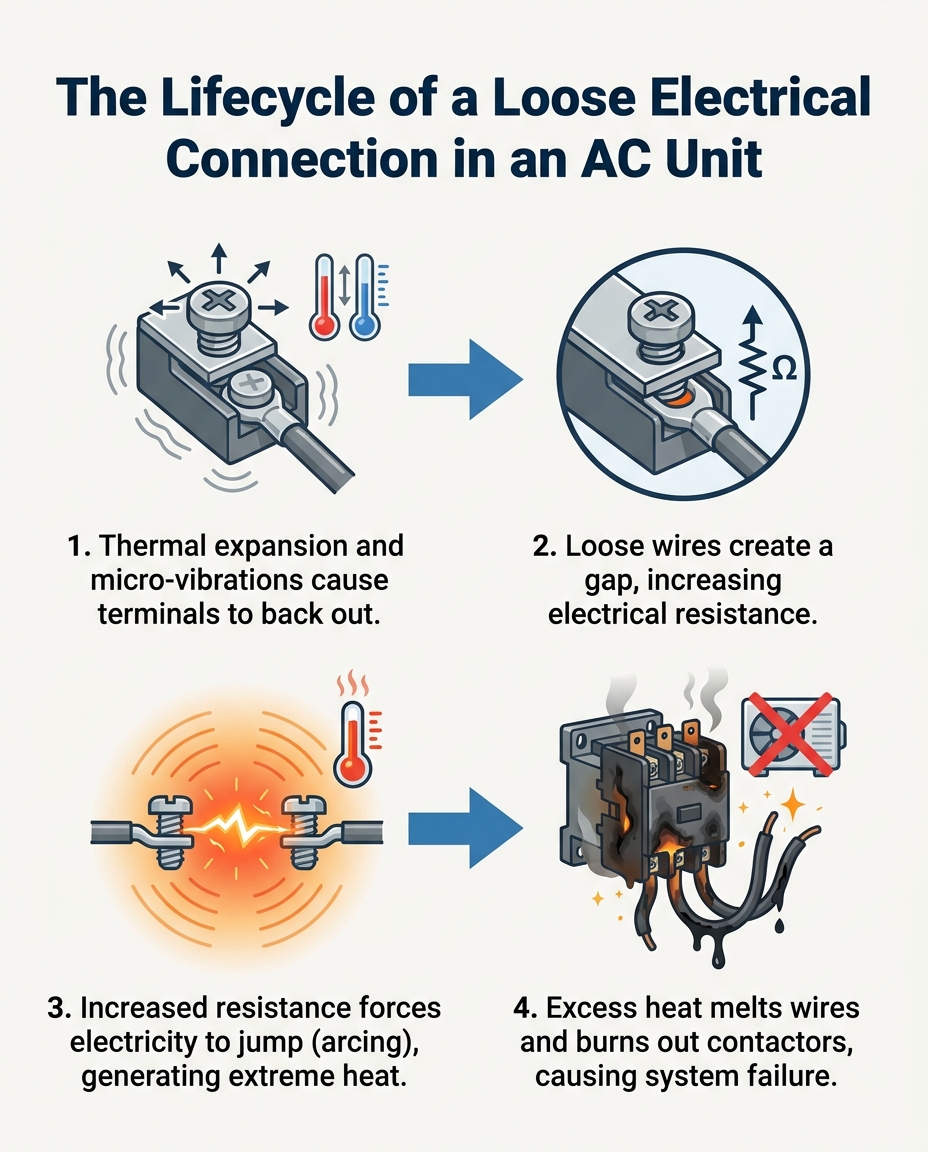
Over time, these relentless micro-vibrations slowly cause electrical wires to back out of their terminal screws. It happens a fraction of a millimeter at a time, making it completely invisible to a casual observer. Our technicians emphasize that this invisible loosening is exactly why addressing hidden wear-and-tear is a primary reason homeowners schedule professional maintenance, especially during the September pre-heating transition when your system has just endured hundreds of hours of heavy summer operation. If you need comprehensive air conditioning services, understanding the critical difference between merely looking at a wire and physically testing its tightness is the first step toward true system reliability.
The Invisible Threat Inside Your Unit
Constant movement: Your HVAC system is not a static box sitting quietly in the yard or the attic. It is a high-voltage engine. The spinning fan blades, the pumping compressor, and the clicking relays all generate kinetic energy. This energy transfers directly into the control board and the terminal blocks where your electrical wires are seated.
Gradual loosening: Because the vibrations are so small, the loosening process takes months. In our field experience, a wire that was perfectly tight in May might be dangerously loose by late August. This slow progression is deceptive because the system will continue to run normally right up until the moment the connection completely fails, often leaving you without cooling during those lingering warm days of early fall.
The Physics of Loose Wires: Thermal Expansion and Run Cycles
The Problem: Beyond the mechanical vibrations of the moving parts, your air conditioner's electrical system is locked in a constant battle with extreme temperature changes. This introduces a powerful scientific force known as thermal expansion. Metals naturally expand when they heat up and contract when they cool down. In an HVAC system, the electrical current flowing through the wires generates its own internal heat, while the ambient outdoor temperatures add external heat to the equation.
The Cause: In Baldwin Park, the intense summer heat demands long, continuous AC run cycles, maximizing the system's exposure to this thermal expansion. As our crews perform early fall maintenance, we see the results: when the unit runs for hours on end to combat the afternoon sun, the copper wires and the metal terminal screws heat up and swell slightly. When the sun goes down and the system finally cycles off, those same metals cool and shrink. Because different metals (like copper wiring and aluminum terminals) expand and contract at different rates, this constant expanding and contracting cycle naturally loosens the screw terminals over months of heavy usage.
The Solution: The only way to combat the physics of thermal expansion is through proactive, hands-on maintenance. Long, continuous run cycles are directly connected to the accelerated loosening of critical electrical components. By anticipating this physical reality, our thorough tune-ups reset the tension on these connections, counteracting the effects of thermal expansion before it leads to a total loss of power or severe component damage.
Why Loose Connections Lead to Electrical Arcing
When a wire backs out of its terminal even slightly, the physical surface area connecting the wire to the metal screw decreases. This creates a bottleneck for the electricity trying to flow through the circuit, which introduces a dangerous phenomenon known as electrical resistance. Electrical resistance forces the electrical current to work much harder to cross from the wire into the component. Because the electricity still needs to complete its circuit, it will physically jump across the microscopic gap created by the loose connection.
This jumping of electrical current is called electrical arcing. Arcing is incredibly dangerous because it generates excessive heat—sometimes reaching thousands of degrees in a localized area. This extreme temperature can easily melt the plastic insulation surrounding the wires, scorch the control board, or completely destroy the metal terminals. If you have ever smelled a sharp, metallic burning odor near your outdoor unit, you may be smelling the direct results of electrical arcing.
Furthermore, this excess heat directly leads to burned-out contactors and sudden system shutdowns. The contactor is a heavy-duty relay that acts as a high-voltage switch for your compressor. When arcing occurs at the contactor terminals, the intense heat pits and scars the metal, eventually fusing it shut or burning it out entirely. When our repair teams are called out because an AC keeps tripping the circuit breaker, or the system repeatedly shuts itself off, these underlying electrical faults and the resulting heat buildup are frequently to blame. Catching this during a September pre-heating transition check is vital to preventing electrical fires.
Visual Inspections vs. Physical Torquing: The Crucial Difference
Many homeowners assume that if a technician looks at the electrical panel and sees no obvious burn marks, the system is safe. However, a loose electrical connection often looks perfectly fine to the naked eye. The gap between the wire and the terminal might be no thicker than a sheet of paper—invisible in the shadows of a control box, yet large enough to cause severe electrical arcing. Proper maintenance requires hands-on verification, not just a quick flashlight glance.
Unlike "blow and go" visual inspections offered by some, our team at Piggies Air Conditioning takes a comprehensive approach. We physically torque connections to factory specifications. Torquing to factory specifications means using specialized, calibrated tools to tighten every single screw to the exact rotational force required by the HVAC manufacturer. This guarantees the connection is secure enough to handle high voltage safely without crushing the wire.
• Basic Visual Inspection — Method Used: Looking for obvious scorch marks or detached wires. — Hidden Risks Addressed?: No. Microscopic gaps remain completely undetected. — Long-Term Reliability: Low. High risk of mid-season electrical failure.
• Physical Torquing — Method Used: Applying calibrated rotational force to every terminal screw. — Hidden Risks Addressed?: Yes. Eliminates invisible gaps and resistance. — Long-Term Reliability: High. Prevents arcing and extends component life.
Just recently, one of our Baldwin Park customers scheduled a next-day appointment to have their AC unit checked after noticing inconsistent cooling. Our technicians arrived early, bypassed a simple visual check, and physically verified the electrical connections using torque tools. They discovered several loose terminals at the contactor, completed the simple fix, and carefully explained our recommendations for future maintenance to prevent further issues.
The Domino Effect: From Loose Wires to Component Failure
Neglecting electrical torquing during routine maintenance rarely results in an immediate breakdown. Instead, it triggers a slow, destructive chain reaction throughout your entire HVAC system. What begins as a tiny gap at a terminal block eventually threatens the most expensive parts of your air conditioner.
1. Increased Electrical Resistance: As discussed, a loose wire forces the electricity to squeeze through a smaller contact area, creating resistance and localized heat.
2. Voltage Drops and Amperage Spikes: Because of the resistance, the voltage reaching the compressor and fan motors drops. To compensate and maintain the same power output, these motors are forced to draw more amperage (current).
3. Overheating Motors: Drawing higher amperage causes the compressor and the fan motors to run significantly hotter than their designed operating temperatures.
4. Premature Wear and Tear: This constant overheating breaks down the insulation inside the motor windings, leading directly to premature wear on expensive components like the compressor.
5. Total System Breakdown: Eventually, the stressed components give out entirely, usually when the system is working its hardest.
Catching these cascading issues during a scheduled September pre-heating transition tune-up prevents sudden weekend breakdowns. Re-securing the wiring ensures that the voltage remains steady and the amperage stays within safe limits. If you are looking into annual AC tune-up services in East Los Angeles, remember that our electrical torquing process is a vital preventative measure that actively extends the overall lifespan of the entire system.
The Professional Safety Standard for Electrical Connections
Dealing with high-voltage HVAC equipment is inherently dangerous, which is why the industry has strict safety protocols. Both the National Electrical Code (NEC) guidelines and individual HVAC manufacturer service manuals explicitly outline the required equipment torque requirements for every terminal in the system. These specifications are not suggestions; they are engineered safety standards designed to prevent electrical fires and equipment destruction.
To meet these standards, our licensed professionals use specialized insulated tools and specific torque screwdrivers. These tools measure the exact inch-pounds of force being applied to the screw. We strongly advise against any DIY tightening. Over-torquing a screw can easily strip the threads or crush the copper wire, creating a weak point that will break under vibration. Conversely, under-torquing leaves the connection loose, directly causing the arcing and heat damage we discussed earlier. Both scenarios pose severe electrocution and fire risks to you and your home.
A trained professional follows a strict step-by-step process to ensure safety. First, we safely isolate the power by pulling the disconnect and verifying zero voltage with a multimeter. Only then do we apply the torque screwdriver to the terminals. During a warm early-fall weekend recently, a Baldwin Park customer reached out to our dispatch because their AC needed urgent repair. One of our technicians arrived the same day, safely isolated the power, troubleshot the system, and found a severely loose connection at the capacitor. By following strict professional safety standards, the system was repaired and running safely before evening. If you need a reliable AC tune-up in Glendora, ensuring your technician follows these safety-first electrical procedures is paramount.
Frequently Asked Questions About AC Electrical Maintenance
Why do AC electrical connections loosen over time?
Constant micro-vibrations from the running unit and thermal expansion cycles gradually cause screw terminals to back out. In our experience, every time your compressor turns on, the entire unit shudders slightly, acting like a tiny hammer on the screws. Combined with the metals expanding in the heat and contracting in the cool night air, the connections naturally lose their tight grip over months of operation.
What is electrical arcing in an HVAC system?
Electrical arcing occurs when electricity jumps across a gap caused by a loose connection, generating extreme heat that can melt components and cause fires. Because the wire is no longer making solid contact with the terminal, the electrical current forces its way through the air to complete the circuit. This visible spark creates localized temperatures that easily destroy control boards, melt plastic insulation, and ruin contactors.
Does a standard AC tune-up include checking electrical components?
While some companies only do visual checks, our proper professional tune-ups always include physically verifying and torquing electrical connections to factory specs. Simply shining a flashlight on a terminal block is not enough to detect a microscopic gap. A comprehensive maintenance visit during the September pre-heating transition always involves using insulated tools to test the physical tightness of every high-voltage wire.
Why is my AC contactor burned out?
Burned contactors are a frequent issue we see caused by loose wiring that increases electrical resistance, leading to excess heat that destroys the component. The contactor is a heavy-duty switch that handles the massive influx of power needed to start your compressor. When the wires attached to it become loose, the resulting electrical arcing pits the metal contacts and melts the surrounding housing, eventually causing the part to fail completely.
Can I tighten my AC electrical connections myself?
No. HVAC electrical panels carry high voltage, and our technicians use specific torque tools to meet manufacturer specifications safely without stripping terminals. Attempting to tighten these screws with a standard screwdriver can lead to over-torquing, which crushes the wire, or under-torquing, which leads to arcing. Furthermore, failing to properly isolate the power before touching the electrical panel poses a lethal electrocution risk.
Secure Your System's Safety This Season
True system reliability comes from meticulous attention to detail, not just swapping out dirty air filters. The unseen components inside your air conditioner face brutal conditions in Baldwin Park, and ensuring tight electrical connections protects your home, prevents electrical arcing, and stops costly component failures before they happen. Don't wait for a loose wire to shut down your system just as we transition into fall. We encourage you to explore comprehensive maintenance options that prioritize safety and longevity. By investing in a routine AC maintenance plan with Piggies Air Conditioning, you gain a clear, jargon-free understanding of your system's health and the peace of mind that your equipment is thoroughly protected against invisible wear and tear.
Other blogs


Customer Testimonials



CUSTOMER SERVICE!
I highly recommend this company for anyone needing AC repair or maintenance. I'll definitely be calling them again for any future needs!

I had the pleasure of experiencing outstanding service and professionalism from Ruben, and I am beyond impressed. From the moment I first contacted them, by phone and follow up communication via email for my quotes. The attention to detail and commitment to excellence were evident.
Ruben, was incredibly responsive, addressing all my inquiries promptly and with clear, thorough explanations. Their dedication to understanding and meeting my needs was remarkable.
Ruben, went above and beyond to ensure that everything was handled seamlessly, demonstrating not just professionalism, but also a sincere dedication to customer satisfaction.
I can't recommend Piggies air Conditioning/Ruben highly enough. If you're looking for someone who combines expertise with exceptional service, look no further. They are a true example of what outstanding professionalism should be.
The technician arrived on time, which I really appreciated given how crucial air conditioning is in this heat. Ruben was professional and friendly, explaining what he was doing throughout the process. The issue I had was diagnosed fairly quickly, and they provided me with a few options on how to fix it. The pricing was transparent, and I didn't feel like there were any hidden costs, which is always a plus when it comes to service calls like these. Highly recommend this company!
1st & foremost, huge shout out to Ruben thank u so so much for reaching out & making things happen SO FAST! I was so surprised since i had reached out to a couple different places who lagged on even answering calls, messages, etc.
Ruben was also very informative & taught me ALOT that i didnt know about.
Also cant leave the amazing Luis & Miles out of
this review.
They came, they saw, they conquered!
And they worked pretty swiftly too, felt very comfy around em, loved their personalities, great attitude, work ethic, professionalism, had some really good convos & they still got the job done lightning fast
SUPER HUGE SHOUT OUT & THANKS for everything guys! Definitely recommending u guys to everyone i know.
recommendations and feedback. The actual installation was painless and unremarkable, his AC experts got it done, got it cleaned and most importantly got it right. Rueben even went a step further to assure we had
protection from the coming rain, that is service unheard of these days. His price was competitive and a REAL value for the service we recieved. Using anyone else for your AC needs, would be a huge mistake. We thank them again and will recommend to everyone.
Echoing a lot of the other reviews here, Piggies Air Conditioning responds so quickly to requests (even though I actually accidentally sent in multiple requests on my side without responding, oops!)
They were able to come do a FREE energy audit and initial inspection on the same day and Ruben was amazing at explaining his thoughts on our house's situation and what he thought was worth the money and wasn't worth the money.
I truly felt like he was trying to help me find the best solution to our issues instead of just trying to upsell us on everything and anything.
I'm definitely recommending this business to anyone I know if they want a trustworthy and realistic service, value, and quality.