









The Mid-Fall HVAC Transition: Is Your System Ready?
You switch your thermostat from cooling to heating for the first time this season, and within minutes, a strange burning smell fills the hallway. Every homeowner should have a reliable seasonal home maintenance checklist, but the transition from summer cooling to winter heating often brings unexpected anxiety. That mid-fall October heating startup is a critical moment for your system. After sitting dormant for months, your furnace or heat pump is suddenly called into action, and the initial results can sometimes be alarming.
Many homeowners immediately wonder if they are dealing with a harmless seasonal adjustment or a dangerous mechanical failure. Strange smells, sluggish performance, and odd noises are common during this first cycle. The challenge is determining which symptoms are normal dust burn-off and which are red flags signaling a serious hazard. Understanding this difference protects your home, your family, and your wallet.
Routine maintenance and timely professional assessments are the best ways to ensure year-round system health. If you are unsure whether your system is operating safely, reaching out for air conditioning services or professional AC repair is the smartest move. Knowing exactly when to wait out a normal system adjustment and when to call a licensed technician is the foundation of smart homeownership.
How Santa Ana Winds and Summer Heat Impact Your HVAC
Your heating system does not operate in a vacuum. Its performance in the fall is directly tied to what your entire HVAC system endured over the summer. In Baldwin Park and the broader San Gabriel Valley, late-summer heat waves put immense strain on air conditioning components. Compressors run for hours on end, capacitors endure high thermal loads, and blower motors work overtime to push conditioned air through your home.
This intense summer workload accelerates wear and tear on the internal mechanisms of your system. But heat is only half the battle. The late-summer Santa Ana winds introduce a massive environmental toll right before the fall season begins. These dry, forceful winds kick up heavy amounts of dust, pollen, and micro-particulates that find their way into your home's air intake.
The Toll on Filters and Heat Exchangers
When the Santa Ana winds blow, your HVAC air filter captures a significant amount of that airborne debris. A filter that normally lasts three months might become completely clogged in just a few weeks. Furthermore, fine dust bypasses standard filters and settles directly onto the heat exchanger and blower motor.
Heavy usage consequences: A system that has been working overtime to combat 100-degree days is already fatigued. When you transition to heating, that thick layer of accumulated dust on the heat exchanger becomes the first thing to heat up. This direct connection between heavy summer usage, dust infiltration, and subsequent fall performance explains why so many systems struggle during their first autumn startup. If your system was barely keeping up in late September, it almost certainly needs professional attention before winter arrives in full force.
Safe Fall Troubleshooting: What You Can Check Yourself
When your system acts up during the fall transition, there are several safe, homeowner-level diagnostic steps you can take before calling a professional. The goal is to empower yourself with basic checks without ever crossing the line into dangerous DIY repairs.
One homeowner reached out on a hot summer weekend when their AC unit needed checking and repair. A technician arrived the same day, performed troubleshooting, found the problem, and solved it quickly. This highlights the value of professional intervention, but there are a few things you should verify before making that call.
• Verify thermostat settings: Ensure the thermostat is actually set to "Heat" and that the temperature setpoint is at least three degrees higher than the current room temperature. A surprising number of service calls originate from a thermostat that is still set to "Cool" or "Auto."
• Inspect the air filter: Pull out your air filter and hold it up to a light source. If you cannot see light passing through it, the filter is clogged. A heavily soiled filter from late-summer winds severely restricts airflow, which can cause the system to overheat and mimic serious mechanical failures.
• Check the circuit breakers: Look at your home's electrical panel. If the breaker labeled for the furnace or air handler is tripped, reset it once. If it trips again immediately, stop. This indicates a serious electrical short.
• Ensure vents are open: Walk through your home and make sure all supply and return registers are fully open and unobstructed by furniture or rugs. Closing vents in unused rooms actually increases static pressure and damages the blower motor.
These safe visual inspections are highly effective for catching simple oversights. However, they are vastly different from the methodical, step-by-step troubleshooting performed by licensed technicians. Professionals use multimeters to check electrical draws, manometers to measure gas pressure, and specialized tools to inspect the integrity of the heat exchanger. Always maintain a strict boundary between looking at the system and attempting to physically alter its mechanical or electrical components.
Sensory Diagnostics: Normal Burn-Off vs. Mechanical Hazards
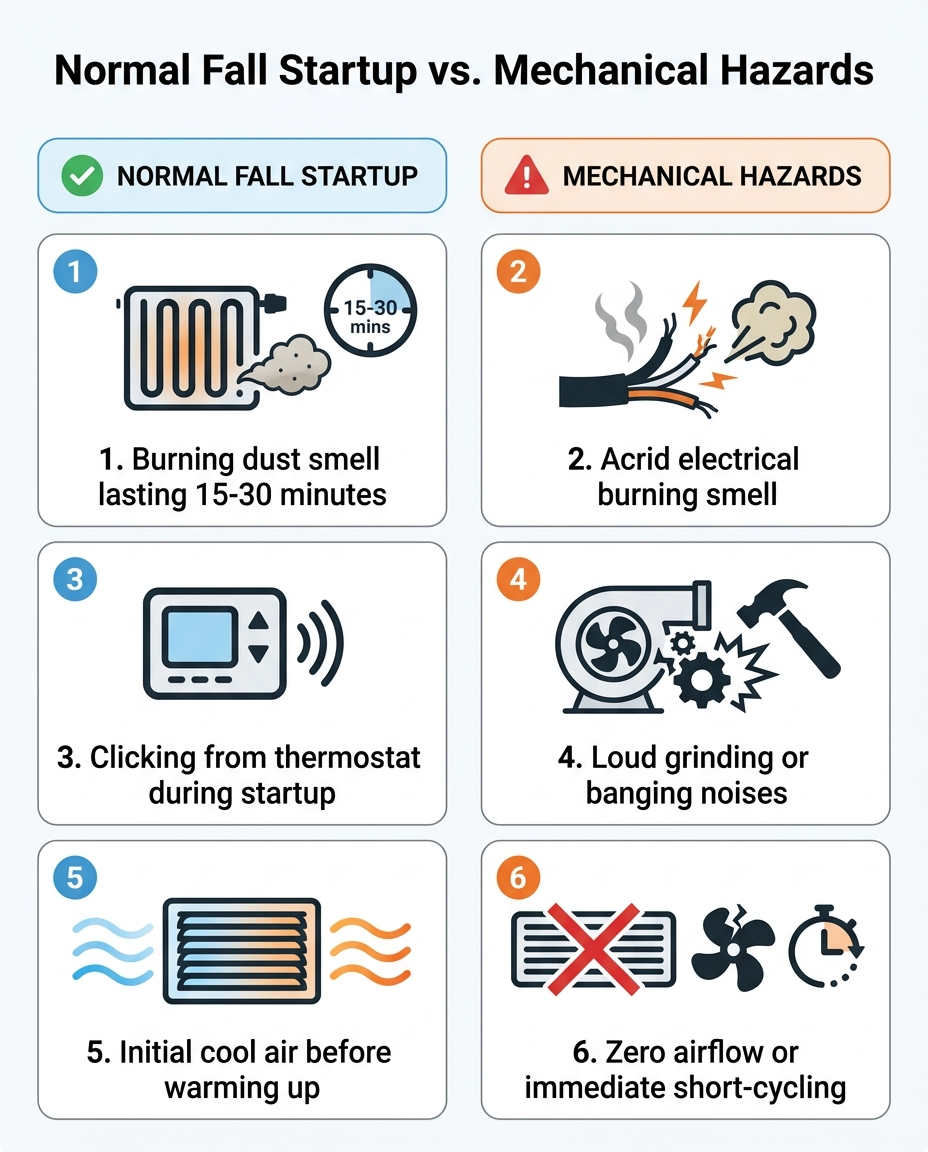
The most common cause of panic during a mid-fall October heating startup is the sensory experience. Your nose and ears are excellent diagnostic tools if you know what to pay attention to. When a furnace or heat pump turns on for the first time in months, it is entirely normal to experience a temporary burning smell. This is simply the dust that accumulated on the heat exchanger over the summer safely burning away.
This normal dust burn-off smell typically lasts between 15 and 30 minutes. Once the initial layer of dust is cleared, the odor should dissipate completely, and the air should smell clean. However, if the smell changes or persists, you may be facing a mechanical hazard.
Sensory red flags include acrid electrical odors (like burning plastic or melting wire insulation), loud grinding or banging noises, and persistent burning smells that last for hours. Ignoring these hazard signs can lead to severe system damage, electrical fires, or carbon monoxide exposure. If you experience any of these red flags, shut the system down immediately at the thermostat.
• Smell — Normal Operation (Safe): Mild burning dust odor that fades within 15-30 minutes. — Mechanical Hazard (Call a Pro): Acrid, melting plastic, or electrical burning smells that persist.
• Sound — Normal Operation (Safe): Soft clicking from the thermostat, smooth rush of air, gentle hum. — Mechanical Hazard (Call a Pro): Loud grinding, metal-on-metal screeching, or sudden loud bangs.
• Airflow — Normal Operation (Safe): Brief period of cool air followed by steady, warm airflow. — Mechanical Hazard (Call a Pro): Zero airflow from vents, or system shuts down after 30 seconds.
Why Is My HVAC System Short-Cycling or Running Constantly?
During the seasonal transition, two of the most frustrating performance issues are short-cycling and continuous running. Short-cycling occurs when the heating system turns on, runs for a brief period (often less than a minute or two), and shuts off before reaching the desired temperature. This rapid on-and-off behavior is a major red flag for system health because it places immense mechanical stress on the starter components and severely degrades energy efficiency.
If you are dealing with a system that refuses to complete a full cycle, there are a few primary culprits to consider:
1. Severely restricted airflow: As discussed earlier, a dirty air filter is the number one cause of short-cycling. When air cannot flow freely over the heat exchanger, the internal temperature of the furnace spikes rapidly.
2. Overheating safety sensors: Modern HVAC systems are equipped with high-limit switches. If the heat exchanger gets too hot due to restricted airflow, this sensor intentionally shuts the system down to prevent a fire or a cracked heat exchanger. The system cools off, tries to start again, overheats again, and the short-cycle loop continues.
3. Flame sensor issues: In gas furnaces, a dirty flame sensor may fail to detect the burner flame. As a safety precaution, the system will shut off the gas valve almost immediately after ignition, resulting in a very brief cycle.
On the opposite end of the spectrum, you might face a system that runs non-stop without ever making the house feel warm. This continuous running often points to a loss of heating capacity, ductwork leaks, or an undersized unit struggling against a sudden drop in outdoor temperature. If you are experiencing this exhausting issue, understanding why your AC is running constantly or why your heater won't shut off is the first step toward a proper resolution.
When to Stop Troubleshooting and Call an Expert
There is a distinct line between responsible homeownership and dangerous tampering. While checking filters and resetting a breaker once are perfectly safe, attempting to diagnose internal mechanical or electrical faults is not. Knowing exactly when to step back and call a professional is vital for your safety and the longevity of your equipment.
You must stop troubleshooting and call an expert immediately if you encounter definitive signs of failure. These include persistent electrical burning smells, a circuit breaker that trips repeatedly, visible soot around the furnace, or a system that produces zero airflow despite the thermostat calling for heat. These symptoms point to underlying issues that require specialized tools and training to resolve safely.
Attempting DIY electrical or refrigerant repairs is incredibly dangerous. High-voltage capacitors can retain a lethal charge long after the power is turned off, and mishandling refrigerant violates federal environmental regulations. Furthermore, opening sealed combustion chambers or tampering with gas valves can lead to carbon monoxide leaks. DIY repairs on these components will also instantly void your manufacturer warranty.
One customer reached out during winter needing a thorough cleaning of their evaporator coil. The technician responded promptly, detailed the service, provided a clear quote, and completed the cleaning timely and satisfactorily. This kind of professional, transparent service ensures the job is done right the first time. Relying on local expertise, such as scheduling AC repair in Covina or surrounding communities, guarantees that a licensed technician addresses the root cause rather than just putting a temporary bandage on the symptom.
The Value of Honest Diagnostics in HVAC Repair
When you do make the decision to call a professional, understanding what a proper diagnostic visit entails helps you set the right expectations. A thorough diagnostic visit is not a quick five-minute glance at the equipment. It is a comprehensive evaluation designed to uncover exactly what failed and, more importantly, why it failed.
During a professional diagnostic visit, a licensed technician will perform a series of rigorous checks. They will test the electrical components for proper voltage and amperage, inspect the blower motor, evaluate the static pressure of the ductwork, and perform critical safety checks on the heat exchanger and venting system. Piggies Air Conditioning is committed to transparent communication and honest diagnostics, ensuring homeowners understand exactly what failed and why before any repair begins.
This level of honesty empowers you to make informed decisions about your home. If a capacitor failed, a transparent technician will explain whether it failed due to age or because a clogged filter caused the motor to overwork, stressing the electrical components. This contrasts sharply with high-pressure sales tactics that simply declare the system "broken" and push for immediate, expensive replacements without explaining the underlying data.
Having access to trusted local service means you don't have to guess about the health of your system. Whether you need an emergency fix or routine AC repair in Diamond Bar, honest diagnostics provide the clarity and confidence needed to keep your home comfortable and safe.
Frequently Asked Questions About Fall HVAC Maintenance and Repair
Why does my heater smell like burning dust?
A burning dust smell is incredibly common during the first heating cycle of the fall season. Over the summer months, dust and airborne particles settle on the inactive heat exchanger. When the furnace ignites for the first time, this accumulated dust burns off, creating a distinct odor that should completely fade within 15 to 30 minutes of operation.
What is normal when turning on the heater for the first time?
Normal signs of a first-time heating startup include a brief burning dust smell, an audible clicking sound from the thermostat as it signals the system, and an initial blast of cool air from the vents before the warm air begins to circulate. The system should settle into a steady, quiet hum with consistent warm airflow within a few minutes.
Why is my heater short-cycling?
Restricted airflow from a dirty or clogged air filter is the top cause of a heater short-cycling. When air cannot move freely, the internal temperature rises rapidly, causing the overheating safety sensors to trip and shut the system down prematurely to prevent damage or fire hazards.
What should be on a fall home maintenance checklist?
A comprehensive fall home maintenance checklist should prioritize safety and efficiency before the cold weather sets in. Essential tasks include checking weatherstripping around doors and windows, testing all smoke and carbon monoxide detectors, changing your HVAC air filters, and scheduling a professional heating inspection.
How often should my HVAC system be serviced?
Industry standards recommend having your HVAC system professionally serviced twice a year. You should schedule one maintenance visit in the spring before the heavy cooling season begins, and a second visit in the fall to prepare the heating components for winter operation.
How can I tell if my AC needs repair or replacement after a hard summer?
Deciding between repair and replacement depends heavily on the age of the unit, the frequency of recent breakdowns, and the severity of the current issue. An honest professional assessment is crucial here; a technician can evaluate the system's efficiency and remaining lifespan to help you make the most cost-effective decision.
Ensuring Your Peace of Mind This Season
Navigating the transition from summer cooling to winter heating doesn't have to be a source of stress. A definitive understanding of normal seasonal adjustments versus mechanical red flags provides ultimate peace of mind. By paying attention to how your system sounds, smells, and operates during that first startup, you can catch minor issues before they escalate.
Addressing performance problems early is the most effective way to prevent catastrophic, mid-winter breakdowns when you need heating the most. If you suspect any hazards, or if your system simply isn't performing the way it should, do not hesitate to schedule a professional assessment to keep your home safe and comfortable all season long.
Other blogs


Customer Testimonials



CUSTOMER SERVICE!
I highly recommend this company for anyone needing AC repair or maintenance. I'll definitely be calling them again for any future needs!

I had the pleasure of experiencing outstanding service and professionalism from Ruben, and I am beyond impressed. From the moment I first contacted them, by phone and follow up communication via email for my quotes. The attention to detail and commitment to excellence were evident.
Ruben, was incredibly responsive, addressing all my inquiries promptly and with clear, thorough explanations. Their dedication to understanding and meeting my needs was remarkable.
Ruben, went above and beyond to ensure that everything was handled seamlessly, demonstrating not just professionalism, but also a sincere dedication to customer satisfaction.
I can't recommend Piggies air Conditioning/Ruben highly enough. If you're looking for someone who combines expertise with exceptional service, look no further. They are a true example of what outstanding professionalism should be.
The technician arrived on time, which I really appreciated given how crucial air conditioning is in this heat. Ruben was professional and friendly, explaining what he was doing throughout the process. The issue I had was diagnosed fairly quickly, and they provided me with a few options on how to fix it. The pricing was transparent, and I didn't feel like there were any hidden costs, which is always a plus when it comes to service calls like these. Highly recommend this company!
1st & foremost, huge shout out to Ruben thank u so so much for reaching out & making things happen SO FAST! I was so surprised since i had reached out to a couple different places who lagged on even answering calls, messages, etc.
Ruben was also very informative & taught me ALOT that i didnt know about.
Also cant leave the amazing Luis & Miles out of
this review.
They came, they saw, they conquered!
And they worked pretty swiftly too, felt very comfy around em, loved their personalities, great attitude, work ethic, professionalism, had some really good convos & they still got the job done lightning fast
SUPER HUGE SHOUT OUT & THANKS for everything guys! Definitely recommending u guys to everyone i know.
recommendations and feedback. The actual installation was painless and unremarkable, his AC experts got it done, got it cleaned and most importantly got it right. Rueben even went a step further to assure we had
protection from the coming rain, that is service unheard of these days. His price was competitive and a REAL value for the service we recieved. Using anyone else for your AC needs, would be a huge mistake. We thank them again and will recommend to everyone.
Echoing a lot of the other reviews here, Piggies Air Conditioning responds so quickly to requests (even though I actually accidentally sent in multiple requests on my side without responding, oops!)
They were able to come do a FREE energy audit and initial inspection on the same day and Ruben was amazing at explaining his thoughts on our house's situation and what he thought was worth the money and wasn't worth the money.
I truly felt like he was trying to help me find the best solution to our issues instead of just trying to upsell us on everything and anything.
I'm definitely recommending this business to anyone I know if they want a trustworthy and realistic service, value, and quality.