










Preparing Your HVAC System for the September Early-Fall Transition
The September early-fall transition is officially here, and knowing how to protect your outdoor condenser from fall debris and rodents is critical before temperatures drop further. As the seasons shift, your outdoor HVAC equipment faces a dual threat. First, falling leaves, snapping twigs, and wind-blown dirt begin to accumulate around your property. Second, as nighttime temperatures start to dip, outdoor pests actively seek out warm, sheltered places to build their winter nests. Your metal condenser cabinet is often their first choice.
At Piggies Air Conditioning, we often see homeowners focus entirely on changing their indoor air filters during this time of year, completely forgetting that proactive exterior maintenance is just as critical. When debris piles up and mice move in, your system has to work twice as hard, driving up energy costs and risking sudden breakdowns. Keeping your air conditioning running smoothly year-round often comes down to proactive care, which is why we highly recommend enrolling in a routine HVAC maintenance plan as the ultimate safeguard for seasonal transitions.
The Impact of Santa Ana Winds on Baldwin Park Condensers
In our experience serving the local community, autumn in Southern California creates a unique set of challenges. The September onset of Santa Ana wind conditions brings dry, high-velocity gusts that sweep through Baldwin Park. Unlike a standard gentle autumn breeze that might drop a few leaves, our technicians routinely see these intense wind events blow heavy dust, broken twigs, and brittle foliage directly into condenser housings.
Heavy Airborne Dust and Dry Debris
During a severe wind event, airborne particulates are forced into the tiny spaces between your condenser's aluminum fins. Because the air is incredibly dry, this dirt doesn't wash away easily. Instead, it coats the coils and builds up rapidly. Dry leaves and larger debris can become firmly trapped against the exterior grates, essentially suffocating the unit. If you are already dealing with dust from Santa Ana winds clogging your AC, the addition of fall foliage only makes the problem worse.
Airflow Restrictions and Efficiency Loss
Your outdoor condenser relies on unrestricted airflow to pull heat out of your home and release it into the outside air. When the exterior fins are blocked by a thick layer of dust and trapped leaves, proper heat transfer becomes impossible. The compressor is forced to strain under these restricted airflow conditions, running longer cycles just to reach the temperature set on your thermostat.
To understand exactly how this regional climate event affects your equipment, consider the differences between standard fall weather and Santa Ana conditions that our team prepares for every year:
• Debris Type — Standard Fall Weather: Damp leaves, pine needles, soft soil. — Santa Ana Wind Events: Heavy dust, dry brittle leaves, flying twigs.
• Accumulation Speed — Standard Fall Weather: Gradual buildup over several weeks. — Santa Ana Wind Events: Rapid accumulation in a matter of hours.
• Impact on Coils — Standard Fall Weather: Organic matter decays and causes mild blockages. — Santa Ana Wind Events: Fine dust cements onto coils, severely restricting airflow.
• Action Required — Standard Fall Weather: Monthly visual checks and gentle clearing. — Santa Ana Wind Events: Immediate visual inspections during and after active wind events.
Why Rodents Seek Out Air Conditioning Units in Autumn
As the September early-fall transition takes hold, local pest populations begin preparing for colder weather. Rodents, particularly mice and rats, are biologically driven to find secure, dry, and warm locations to build their nests. Unfortunately, your outdoor HVAC unit checks every single box on their list.
The Appeal of Metallic Enclosures
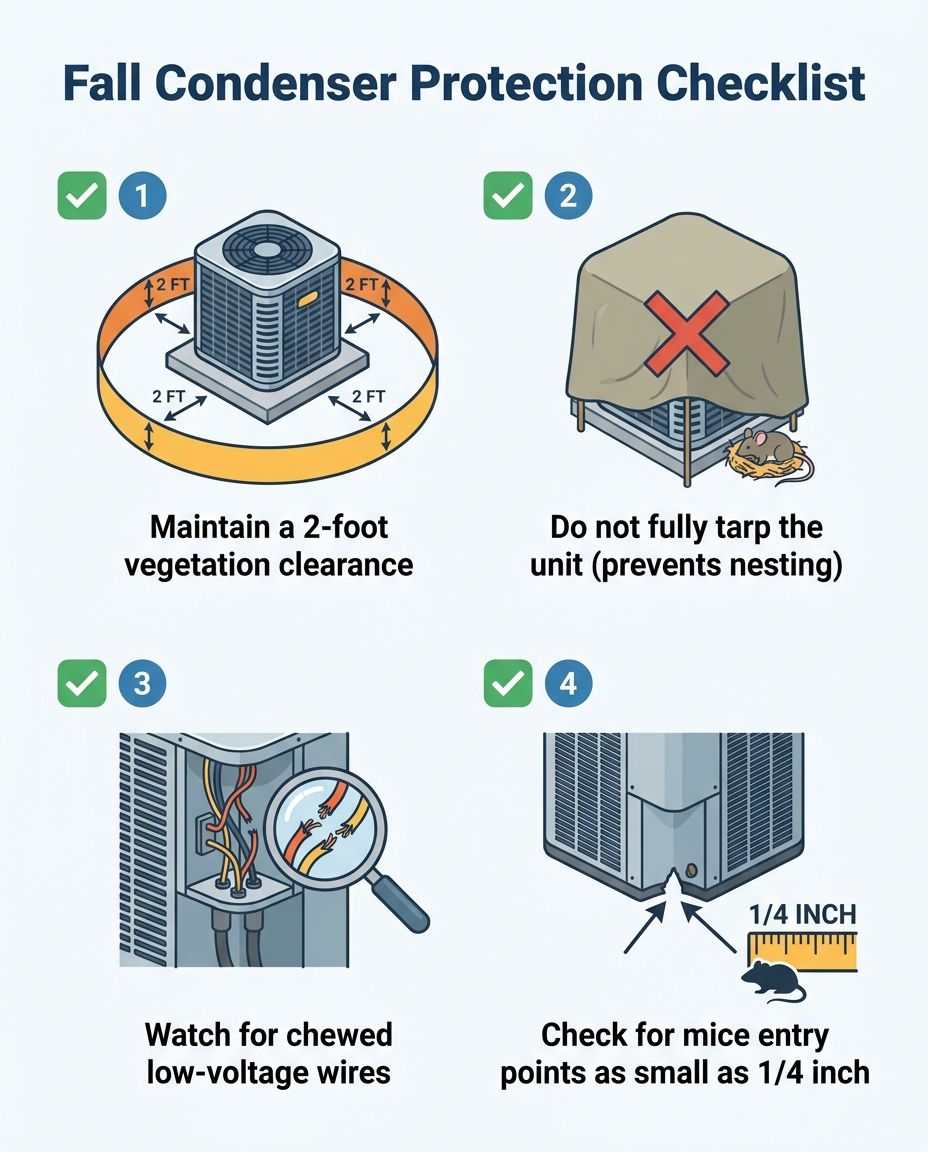
An air conditioning condenser provides a sturdy, predator-proof metallic enclosure that shields pests from harsh weather. Even when the unit is not actively running, the electrical components and the surrounding concrete pad can retain residual heat. This warmth is a magnet for mice. Because mice have collapsible rib cages, they can squeeze through gaps as small as a quarter-inch. The vents, grates, and piping entry points on a standard condenser offer multiple easy access routes to the interior.
The Danger to Low-Voltage Wiring
Once inside, rodents do not just sleep; they actively destroy the equipment. Mice have teeth that never stop growing, meaning they must constantly chew on hard surfaces to file them down. The low-voltage wires inside your HVAC unit are the perfect size and texture for this.
• Chewed insulation: Rodents strip the rubber insulation off wires, leaving bare copper exposed and prone to electrical shorts.
• Severed communication lines: If a mouse chews through the thermostat control wires, your system will completely fail to turn on.
• Cleared nesting space: Pests will chew through internal foam insulation and wiring simply to clear out a larger space for their nest.
When you allow accumulated yard debris to pile up against the base of the unit, you are providing these pests with both camouflage and a convenient ladder to access the interior.
The Winter Tarping Myth: Why Covering Your Unit Invites Pests
One of the most persistent myths our team encounters in home maintenance is that you must tightly wrap your outdoor condenser in a heavy plastic tarp to protect it during the winter. In reality, we tell our Baldwin Park customers that doing this is one of the worst things you can do for your system.
Trapped Moisture and Rust: Modern outdoor units are engineered by manufacturers to withstand rain, wind, and severe weather without needing a cover. When you tightly wrap a unit in a waterproof tarp, you trap ground moisture inside. As temperatures fluctuate, condensation forms under the tarp, leading to severe rust and corrosion on the internal components.
A Five-Star Resort for Rodents: By covering the unit, you are creating a dry, dark, and completely undisturbed environment. A tarp blocks out the wind and hides the unit from predators like owls and neighborhood cats. For a mouse, a tarped condenser is the perfect, secure nesting ground. They will quickly move in, build nests out of the insulation, and begin chewing on the wiring.
If you are genuinely concerned about falling leaves dropping directly into the fan grate from overhanging trees, there is a safer alternative. Use a specialized, breathable top-cover that only shields the top grate. Leave the sides completely open and exposed so that air can circulate freely and pests have nowhere to hide.
Safe, Actionable Steps to Clear the 2-Foot Perimeter
Protecting your system during the September early-fall transition requires physical action. Our technicians always enforce the Department of Energy (DOE) strict rule for outdoor HVAC equipment: you must maintain a minimum 2-foot clearance of all vegetation and debris around the entire unit. This applies whether you operate a standard air conditioner or a year-round heat pump.
Trimming Nearby Vegetation
Overgrown landscaping is a primary culprit for both airflow restriction and pest harborage. To secure the perimeter, follow these steps:
1. Cut back shrubs and bushes: Ensure that no branches are touching the metal cabinet. Trim them back at least 24 inches.
2. Mow tall grass: Keep the grass around the concrete pad cut short to eliminate hiding spots for mice.
3. Trim overhanging branches: Look up. If tree branches hang directly over the unit, trim them back to prevent leaves from dropping straight down into the fan grate.
Removing Harborage Areas
Pests need stepping stones to reach your unit. By removing their hiding spots, you make your condenser far less attractive.
1. Relocate firewood: Never stack firewood against your house or near your HVAC equipment. Store all firewood at least 20 feet away from the condenser.
2. Clear out leaf piles: Rake up and bag old, damp leaf piles that sit against the foundation, as these are typical breeding grounds for pests.
3. Gently brush the fins: Use a soft-bristle brush or a broom to gently sweep away cobwebs, dirt, and loose leaves from the exterior fins. Never use a pressure washer or hard tools, as the aluminum fins bend easily and can permanently restrict airflow.

Spotting Chewed Low-Voltage Wires and Internal Damage
Even with strict perimeter maintenance, determined pests can occasionally find their way inside. It is vital to know how to spot the early warning signs of an infestation without putting yourself in danger.
Visual Signs of Rodent Activity
You should inspect the area around your condenser weekly during the fall. Look for these specific visual indicators:
• Visible droppings: Small, dark, seed-shaped droppings on the concrete pad or near the refrigerant lines.
• Nesting materials: Shredded paper, chewed leaves, or bits of fiberglass insulation poking out from the fan grate.
• Frayed wires: Any visible wiring on the exterior of the unit that looks chewed, stripped, or frayed.
Just last fall, our Piggies Air Conditioning technicians responded to a Baldwin Park homeowner whose system suddenly stopped communicating with the thermostat. Our crew arrived on time, worked efficiently to track the issue down to pest-damaged internal wiring, and fixed the system right then and there. This highlights exactly why professional intervention is necessary when things go wrong.
The Dangers of DIY Electrical Work
If you spot exposed wires or suspect internal damage, do not attempt to fix it yourself. HVAC systems carry high-voltage electrical currents that can cause severe injury or death. Attempting to splice chewed low-voltage wires without a license can easily short out the system's expensive control board, turning a minor wire repair into a major component replacement.
Instead, immediately turn off the breaker to the unit to prevent electrical fires or further damage. Our technicians routinely identify and safely repair chewed low-voltage wires caused by rodents, ensuring transparent and straightforward diagnostics. Leave the electrical work to the experts.
Transitioning to Heating Season: When to Call the Professionals
As the September early-fall transition progresses, you will soon need to switch your system from cooling to heating. While clearing the exterior perimeter is a safe and necessary homeowner task, internal cleaning and system verification require a trained professional.
Before you rely on your heating system to keep you comfortable through the winter, it needs to be thoroughly inspected. When our team performs a pre-season maintenance visit, we go far beyond sweeping away leaves. During this visit, our technicians open the cabinet to check all electrical connections, test the capacitors, deep clean the interior coils, and verify that no rodents have caused hidden damage.
Addressing minor rodent damage or airflow restrictions early prevents major mid-winter breakdowns. If a mouse has started chewing a wire in October, finding and fixing it now ensures your heater won't fail you on the coldest night in January.
Secure Your System Before the Cold Sets In
Taking the time to protect your outdoor condenser from fall debris and rodents is an investment in your comfort and the longevity of your equipment. By maintaining a clean 2-foot perimeter, avoiding the tarping myth, and keeping a close eye out for signs of pests, you can keep your system safe in Baldwin Park.
However, visual inspections can only tell you so much. Don't wait until the first cold snap to find out a rodent has compromised your wiring. Act now before temperatures drop further and schedule a professional inspection with our team to ensure your system is clean, safe, and ready for the season ahead.
Frequently Asked Questions
How do I keep mice out of my air conditioner?
The best way to keep mice out of your air conditioner is to eliminate their hiding spots and food sources nearby. Maintain a strict two-foot perimeter around the unit by trimming back bushes, removing tall grass, and clearing away leaf piles. Avoid covering the unit with a tarp, as this creates a dark, warm, and dry environment that actively attracts nesting rodents.
Can mice chew through AC wires?
Yes, mice frequently chew through the low-voltage wires inside AC units. Because their teeth never stop growing, they chew on wire insulation to file their teeth down and to clear space for their nests. This chewing can cause electrical shorts, sever the connection to your thermostat, and prevent the entire system from operating.
Should I cover my AC unit in the fall?
No, you should never fully cover your AC unit with a tight tarp in the fall or winter. Covering the unit traps ground moisture inside, which accelerates rust and corrosion on internal metal components. Furthermore, a covered unit provides a perfectly sheltered, predator-free environment for rodents to build their winter nests.
What happens if leaves get in my AC condenser?
When leaves get into your AC condenser, they block the airflow necessary for the system to release heat. This forces the compressor to work much harder, reducing energy efficiency and increasing wear and tear on the equipment. Over time, trapped leaves trap moisture against the metal fins, which can lead to corrosion and eventual refrigerant leaks.
How much clearance does an outdoor condenser need?
The Department of Energy and all major HVAC manufacturers recommend maintaining a minimum clearance of two feet around all sides of the outdoor condenser. This space ensures that the unit can pull in enough air to operate efficiently. It also provides enough room for technicians to access the unit for repairs and maintenance.
Are Santa Ana winds dangerous for my HVAC system?
Santa Ana winds can be very hazardous to your HVAC system because they blow heavy dust, dry leaves, and brittle twigs directly into the condenser fins at high speeds. This fine dust rapidly coats the internal coils, severely restricting airflow and forcing the unit to overwork. Our team highly recommends visually inspecting and gently cleaning the exterior of your unit after a major wind event.
Other blogs


Customer Testimonials



CUSTOMER SERVICE!
I highly recommend this company for anyone needing AC repair or maintenance. I'll definitely be calling them again for any future needs!

I had the pleasure of experiencing outstanding service and professionalism from Ruben, and I am beyond impressed. From the moment I first contacted them, by phone and follow up communication via email for my quotes. The attention to detail and commitment to excellence were evident.
Ruben, was incredibly responsive, addressing all my inquiries promptly and with clear, thorough explanations. Their dedication to understanding and meeting my needs was remarkable.
Ruben, went above and beyond to ensure that everything was handled seamlessly, demonstrating not just professionalism, but also a sincere dedication to customer satisfaction.
I can't recommend Piggies air Conditioning/Ruben highly enough. If you're looking for someone who combines expertise with exceptional service, look no further. They are a true example of what outstanding professionalism should be.
The technician arrived on time, which I really appreciated given how crucial air conditioning is in this heat. Ruben was professional and friendly, explaining what he was doing throughout the process. The issue I had was diagnosed fairly quickly, and they provided me with a few options on how to fix it. The pricing was transparent, and I didn't feel like there were any hidden costs, which is always a plus when it comes to service calls like these. Highly recommend this company!
1st & foremost, huge shout out to Ruben thank u so so much for reaching out & making things happen SO FAST! I was so surprised since i had reached out to a couple different places who lagged on even answering calls, messages, etc.
Ruben was also very informative & taught me ALOT that i didnt know about.
Also cant leave the amazing Luis & Miles out of
this review.
They came, they saw, they conquered!
And they worked pretty swiftly too, felt very comfy around em, loved their personalities, great attitude, work ethic, professionalism, had some really good convos & they still got the job done lightning fast
SUPER HUGE SHOUT OUT & THANKS for everything guys! Definitely recommending u guys to everyone i know.
recommendations and feedback. The actual installation was painless and unremarkable, his AC experts got it done, got it cleaned and most importantly got it right. Rueben even went a step further to assure we had
protection from the coming rain, that is service unheard of these days. His price was competitive and a REAL value for the service we recieved. Using anyone else for your AC needs, would be a huge mistake. We thank them again and will recommend to everyone.
Echoing a lot of the other reviews here, Piggies Air Conditioning responds so quickly to requests (even though I actually accidentally sent in multiple requests on my side without responding, oops!)
They were able to come do a FREE energy audit and initial inspection on the same day and Ruben was amazing at explaining his thoughts on our house's situation and what he thought was worth the money and wasn't worth the money.
I truly felt like he was trying to help me find the best solution to our issues instead of just trying to upsell us on everything and anything.
I'm definitely recommending this business to anyone I know if they want a trustworthy and realistic service, value, and quality.