





Facing the Fall Chill: Managing Your First Heater Startup
You turn the thermostat to 'heat' to take the edge off a chilly evening, but instead of warm air, you are greeted by strange smells or a system that simply refuses to run—this is where effective home maintenance tips and troubleshooting become essential. Here at Piggies Air Conditioning, we've seen firsthand how the October mid-fall transition brings a very specific set of challenges to Baldwin Park homeowners. Your system might have been running perfectly in cooling mode just yesterday, but waking up a dormant furnace after months of inactivity often reveals hidden quirks. The immediate concern for most homeowners is determining whether that sudden burning odor or odd clicking sound is just a normal part of the seasonal startup, or a genuine mechanical hazard that requires immediate attention.
When basic checks point to a failing system rather than a harmless seasonal hiccup, our reliable air conditioning services and professional heat pump installation can restore your home's comfort safely and efficiently.
Setting the right expectations for this initial startup is crucial. During the peak of the cooling season, your system's heating components sit idle. Dust settles, electrical connections experience thermal expansion and contraction, and moving parts lose their lubrication. When you finally demand heat on that first 50-degree night, the system has to shake off the rust—sometimes literally. Understanding the difference between harmless dust burn-off and a dangerous electrical or gas issue is the first step in safely managing your home's climate control. This guide will walk you through exactly what to expect, what to check, and when to step back and call our professional team.
The Unique Stress of Southern California's Fall Climate on HVAC Systems
In our years of serving the community, our team at Piggies Air Conditioning has found that generic winterizing advice often misses the mark for homeowners in Baldwin Park and the surrounding San Gabriel Valley. Guides written for the Midwest might tell you to cover your outdoor condenser unit or shut down your AC entirely by late September. Here, following that advice would leave you sweltering. The regional climate creates specific transitional challenges for heating and cooling equipment that require a tailored approach to maintenance and operation.
Day-to-Night Temperature Swings
One of the most significant hurdles for local HVAC systems is the extreme diurnal temperature variation. It is incredibly common to experience an 80-degree or even 90-degree afternoon, followed by a rapid drop to the low 50s overnight. This means your HVAC system is often tasked with providing heavy air conditioning during the day, only to be abruptly switched into heating mode a few hours later.
This rapid alternating between cooling and heating puts immense mechanical strain on the system's components. The materials inside your unit—copper, aluminum, steel, and various plastics—expand and contract at different rates depending on the temperature. Forcing a system to swing between its two extreme modes within a single 24-hour cycle accelerates wear and tear on contactors, relays, and blower motors. It is precisely because of these day-to-night swings that you cannot simply "winterize" your AC and forget about it; both sides of your climate control system must be fully operational and ready to engage at a moment's notice.
Santa Ana Winds and Dust Accumulation
Compounding the temperature swings are the notorious seasonal Santa Ana winds. These dry, powerful gusts sweep through the valley, carrying massive amounts of fine particulate matter, pollen, and debris. Even in a well-sealed home, this microscopic dust finds its way inside and gets pulled into your HVAC system's return vents.
During the summer months, while the furnace portion of your system is dormant, this fine dust settles thickly over the heat exchanger, the burners, and the igniter. Because the blower motor is still running to push air-conditioned air through the house, the dormant heating components act like a secondary filter, collecting layers of silt. When the October mid-fall transition finally forces you to turn on the heat, that accumulated Santa Ana dust is suddenly subjected to extreme temperatures. This environmental reality is the direct cause of the alarming phenomena our technicians frequently see homeowners experience during their first heater startup of the year.
Home Maintenance Tips and Troubleshooting: Identifying Normal Furnace Smells
The most common cause for panic during the October mid-fall transition is an overwhelming burning odor spreading through the house within minutes of turning on the heat. As a homeowner, your first instinct is usually to shut everything down and assume something is catching fire. However, knowing how to identify specific odors can save you an unnecessary emergency service call, while still keeping your family safe.
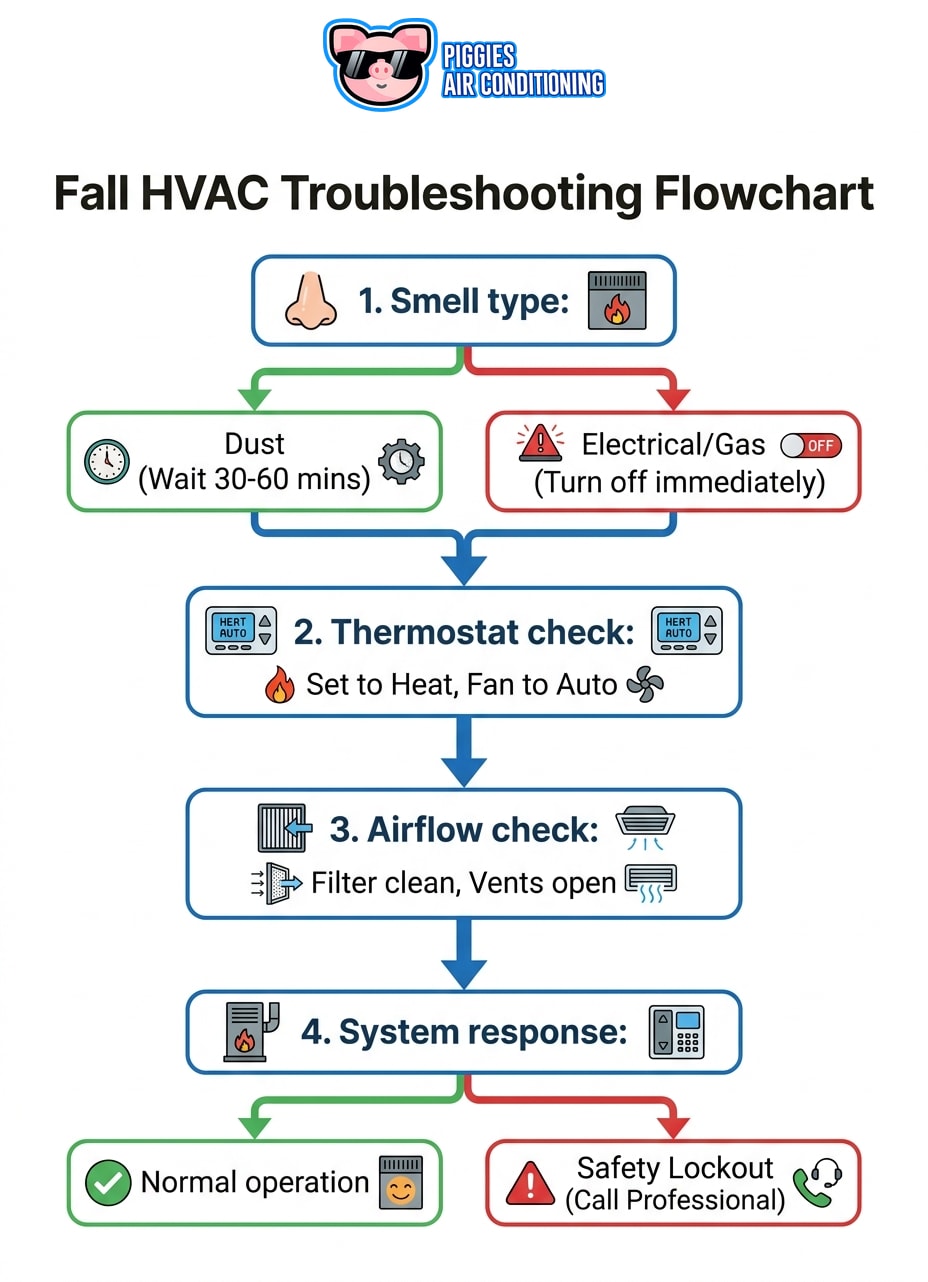
The Harmless Dust Burn-Off: When your furnace ignites for the first time after summer, the flames heat the metal heat exchanger to hundreds of degrees. The thick layer of dust that accumulated over the summer is instantly incinerated. This creates a distinct "burning dust" or slightly singed odor. It is a completely normal process. Typically, this smell should begin to dissipate within 30 to 60 minutes of continuous operation. The best course of action is to open a few windows to ventilate the home and monitor the system. Do not attempt to open the furnace cabinet to clean the dust yourself; the internal components are fragile and easily damaged.
Warning Signs You Should Never Ignore: While burning dust is normal, other smells indicate severe mechanical or electrical failures. We always advise using this breakdown to differentiate between seasonal quirks and actual hazards:
• Burning Dust / Singed Hair — Likely Cause: Incineration of summer dust buildup on the heat exchanger. — Required Action: Monitor. Should fade in 30-60 minutes. Open windows for ventilation.
• Burning Plastic or Rubber — Likely Cause: Melting wire casings, a failing blower motor, or an overheated capacitor. — Required Action: Turn off the system immediately at the thermostat. Call a professional.
• Electrical Ozone (Metallic Smell) — Likely Cause: Overheating electrical components or a failing blower motor bearing. — Required Action: Turn off the system immediately. Call a professional.
• Rotten Eggs or Sulfur — Likely Cause: A natural gas leak (mercaptan is added to gas to make it smell). — Required Action: Evacuate the home immediately. Do not flip light switches. Call the gas company and a professional.
By empowering yourself with this knowledge, you can confidently monitor your system during its initial burn-off period without intervening mechanically or putting your household at risk.
Understanding Furnace Safety Lockouts During Startup
Sometimes, the problem isn't a smell, but a system that simply refuses to turn on. You set the thermostat to heat, you hear a click, maybe a quiet hum, and then... nothing. Or, the system tries to start, runs for three seconds, and shuts down again. This frustrating experience is often a "furnace lockout." In Baldwin Park and the surrounding San Gabriel Valley, where systems sit idle for long periods, our technicians at Piggies Air Conditioning respond to these lockouts frequently throughout the fall season.
Why Your System Protects Itself
It is crucial to understand that a furnace lockout is not just a random breakdown; it is a highly engineered safety mechanism designed to protect your home. Modern furnaces operate through a strict sequence of events. First, a draft inducer motor turns on to clear residual gases. Next, an igniter glows red hot (or a spark fires). Then, the gas valve opens. Finally, a flame sensor verifies that the gas has actually ignited. If any single step in this sequence fails, the system's control board will immediately shut the entire process down.
If the furnace tries and fails to complete this sequence several times in a row (usually three attempts), it goes into a hard lockout. The system is intentionally disabling itself to prevent raw natural gas from pumping into your home unignited, which could lead to a catastrophic explosion.
Common Triggers for a Lockout:
• Dirty Flame Sensor: The sensor is coated in carbon or summer dust and cannot detect the flame, causing the system to shut off the gas as a precaution.
• Failed Igniter: The igniter has cracked or burned out over time and cannot spark the gas.
• Restricted Airflow: A severely clogged air filter causes the internal temperature of the furnace to spike, tripping a high-limit safety switch.
• Blocked Flue Exhaust: Bird nests or debris in the exhaust pipe prevent dangerous carbon monoxide from venting outside, triggering a pressure switch shutdown.
Because a lockout is a direct intervention by a safety mechanism, you must never attempt to bypass it or repeatedly force the system to restart. Resetting a lockout requires professional diagnosis to identify and correct the root cause safely. A comprehensive fall tune-up from our team addresses these exact triggers, cleaning sensors and testing switches before the coldest nights arrive.
Safe Troubleshooting Steps for the Fall Transition
While internal furnace repairs are strictly off-limits for anyone but a licensed technician, there are several vital, safe maintenance steps you can take. Performing these checks during the October mid-fall transition ensures you aren't calling a professional for a simple oversight, while clearly respecting the boundaries of DIY.
1. Verify Thermostat Settings and Power: It sounds overly simple, but ensure the thermostat is physically switched from 'Cool' to 'Heat'. If you have a programmable or smart thermostat, verify that the schedule hasn't been overridden. Additionally, replace the batteries if your thermostat requires them; weak batteries can cause erratic communication with the furnace control board.
2. Replace Your Air Filter: This is the single most important task a homeowner can perform. After a high-use summer cooling season, your filter is likely choked with dust, pet dander, and Santa Ana wind silt. A clogged filter starves the furnace of air, causing it to overheat and trip safety limit switches. Install a fresh, clean filter before the first heating cycle.
3. Inspect All Indoor Vents: Walk through your home and check every supply register and return grille. Ensure they are fully open and unobstructed. It is common to accidentally block vents with furniture, rugs, or curtains during summer rearranging. Closing vents in unused rooms actually increases static pressure inside the ductwork, forcing the blower motor to work harder and potentially causing the system to overheat.
4. Check the Circuit Breaker: If the system is completely unresponsive, check your home's main electrical panel. A power surge or a strained blower motor might have tripped the dedicated HVAC breaker. You can safely reset a tripped breaker once, but if it trips again immediately, leave it off and call a professional.
If you have completed these safe steps and the system still struggles, it is time to look into current AC promotions and heating service specials to get one of our licensed experts on-site. Never open the furnace cabinet, attempt to clean the flame sensor yourself, or tinker with the gas valve.
When to Schedule Professional Fall Maintenance
Knowing the threshold between routine homeowner checks and the necessity of a licensed HVAC technician is vital for protecting your property. If you have completed your basic troubleshooting and the system is still acting up, professional intervention is required. In Baldwin Park and the surrounding San Gabriel Valley, the window for proactive maintenance is short. You want to address these issues in October, before the more consistent and biting winter chill sets into the valley and emergency service wait times skyrocket.
You should schedule professional service immediately if you experience persistent burning smells that last well past the 60-minute mark, if the system repeatedly enters a safety lockout, or if you hear unusual grinding, squealing, or banging noises coming from the blower cabinet. These are not issues that resolve themselves; they are mechanical cries for help.
A comprehensive pre-winter inspection provides immense value by preventing mid-season breakdowns. During a professional fall tune-up, a licensed technician performs critical tasks that a homeowner cannot safely do. They will use a specialized camera to scope the heat exchanger for microscopic cracks—a vital check to prevent carbon monoxide leaks. They will test the microfarad readings on your capacitors, lubricate moving parts, clean the delicate flame sensor, and perform a combustion analysis to ensure the gas is burning cleanly and efficiently. Scheduling this proactively ensures your system runs safely all winter long.
Planning for Replacement: Leveraging SCE Rebates for Air Conditioning and Heat Pumps
Sometimes, despite your best troubleshooting efforts, the news isn't good. Fall maintenance occasionally uncovers major, irreparable safety failures. If a technician discovers a severely cracked heat exchanger or a failing compressor on an older unit, replacement becomes a much safer and more practical option than pouring money into a doomed system. When faced with this reality in Baldwin Park and the surrounding San Gabriel Valley, it pays to understand your options for upgrading.
Understanding Utility Incentives
Replacing an entire HVAC system is a significant investment, but utility incentives make upgrading to high-efficiency systems much more accessible. Managing heavy electricity usage is a major priority in Southern California, which is why programs exist to encourage homeowners to install energy-efficient equipment. Modern, qualifying heat pumps are particularly advantageous for this region because they can handle both the intense summer cooling demands and the necessary winter heating with incredible efficiency, all from a single unit.
Navigating the application process for these utility programs can be complex, as requirements frequently change based on equipment efficiency ratings and installation standards. It is highly recommended to consult with experts who can guide you through the paperwork and verify current program eligibility to ensure you select the right qualifying equipment. To help manage the initial investment, you can explore various HVAC financing options that allow for flexible payment structures.
For a deeper dive into the exact steps required to take advantage of local incentives, read our comprehensive guide on how to apply for Southern California Edison HVAC rebates. By planning ahead and leveraging these resources, you can turn a stressful system failure into an opportunity to drastically improve your home's comfort and energy efficiency.
Frequently Asked Questions
Why does my heater smell like burning dust?
A burning dust smell is incredibly common during the first few uses of the season. Over the summer, fine particulate matter settles on the dormant heat exchanger and burners. When the furnace ignites for the first time, this accumulated dust is instantly incinerated, creating a distinct, temporary odor that spreads through the ductwork.
How long does a furnace smell when first turned on?
The normal dust burn-off smell should typically dissipate within 30 to 60 minutes of continuous operation. You can open a few windows to help ventilate the home during this time. If the smell persists for several hours, or if it smells like burning plastic or electrical ozone, turn the system off and contact a professional immediately.
Why is my furnace blowing cold air in the fall?
If your furnace is blowing cold air, it often points to an ignition failure or a thermostat issue. The system's blower motor may be running, but if the burners fail to ignite due to a dirty flame sensor, a broken igniter, or a gas supply issue, the air will remain unheated. Ensure your thermostat is firmly set to "Heat" and not just "Fan On" before calling for service.
What does a furnace lockout mean?
A furnace lockout is a built-in safety feature that shuts the system down when it detects a potential hazard. If the furnace fails to ignite properly after a set number of attempts (usually three), the control board locks the system out to prevent raw natural gas from accumulating in your home. It requires a professional diagnosis to safely resolve the underlying issue.
How do I safely test my heater in the fall?
To safely test your heater, start by installing a fresh air filter and ensuring all room vents are fully open. Switch your thermostat to "Heat" and raise the temperature a few degrees above the current room temperature. Listen for the system to engage, monitor it for normal dust burn-off smells, and verify that warm air is flowing from the registers within a few minutes.
Can I reset a furnace lockout myself?
While you can temporarily reset a lockout by turning the power off and back on at the breaker, you should never repeatedly force a system to restart. The lockout occurred because a safety sensor detected a dangerous condition, such as a lack of ignition or restricted airflow. Bypassing this safety feature is dangerous; you must have a licensed technician identify and fix the root cause.
The shift from cooling to heating doesn't have to be a stressful event. By understanding the difference between harmless seasonal quirks and genuine mechanical issues, you can navigate the fall transition with confidence. Keep these home maintenance tips and troubleshooting strategies in mind, and remember that proactive professional care from Piggies Air Conditioning is the best way to guarantee a warm, safe, and comfortable home all season long.
Other blogs


Customer Testimonials



CUSTOMER SERVICE!
I highly recommend this company for anyone needing AC repair or maintenance. I'll definitely be calling them again for any future needs!

I had the pleasure of experiencing outstanding service and professionalism from Ruben, and I am beyond impressed. From the moment I first contacted them, by phone and follow up communication via email for my quotes. The attention to detail and commitment to excellence were evident.
Ruben, was incredibly responsive, addressing all my inquiries promptly and with clear, thorough explanations. Their dedication to understanding and meeting my needs was remarkable.
Ruben, went above and beyond to ensure that everything was handled seamlessly, demonstrating not just professionalism, but also a sincere dedication to customer satisfaction.
I can't recommend Piggies air Conditioning/Ruben highly enough. If you're looking for someone who combines expertise with exceptional service, look no further. They are a true example of what outstanding professionalism should be.
The technician arrived on time, which I really appreciated given how crucial air conditioning is in this heat. Ruben was professional and friendly, explaining what he was doing throughout the process. The issue I had was diagnosed fairly quickly, and they provided me with a few options on how to fix it. The pricing was transparent, and I didn't feel like there were any hidden costs, which is always a plus when it comes to service calls like these. Highly recommend this company!
1st & foremost, huge shout out to Ruben thank u so so much for reaching out & making things happen SO FAST! I was so surprised since i had reached out to a couple different places who lagged on even answering calls, messages, etc.
Ruben was also very informative & taught me ALOT that i didnt know about.
Also cant leave the amazing Luis & Miles out of
this review.
They came, they saw, they conquered!
And they worked pretty swiftly too, felt very comfy around em, loved their personalities, great attitude, work ethic, professionalism, had some really good convos & they still got the job done lightning fast
SUPER HUGE SHOUT OUT & THANKS for everything guys! Definitely recommending u guys to everyone i know.
recommendations and feedback. The actual installation was painless and unremarkable, his AC experts got it done, got it cleaned and most importantly got it right. Rueben even went a step further to assure we had
protection from the coming rain, that is service unheard of these days. His price was competitive and a REAL value for the service we recieved. Using anyone else for your AC needs, would be a huge mistake. We thank them again and will recommend to everyone.
Echoing a lot of the other reviews here, Piggies Air Conditioning responds so quickly to requests (even though I actually accidentally sent in multiple requests on my side without responding, oops!)
They were able to come do a FREE energy audit and initial inspection on the same day and Ruben was amazing at explaining his thoughts on our house's situation and what he thought was worth the money and wasn't worth the money.
I truly felt like he was trying to help me find the best solution to our issues instead of just trying to upsell us on everything and anything.
I'm definitely recommending this business to anyone I know if they want a trustworthy and realistic service, value, and quality.