










That Alarming Smell on the First Cool Evening
October has arrived, and here at Piggies Air Conditioning, getting your most common homeowner questions answered is essential when you turn on your furnace for the first time and immediately notice a strange odor. The transition from summer cooling to the first crisp autumn night often brings a sudden shift in how you use your home comfort system. You walk over to the thermostat, switch it from cool to heat, and within minutes, a distinct burning smell begins pouring out of your air vents. For many homeowners, this immediate olfactory warning triggers understandable anxiety. You rely heavily on your system to keep you comfortable, but a burning odor naturally raises red flags about fire hazards and safety.
If you are experiencing this mid-fall heating startup issue, you are not alone. Our team typically sees a surge of calls regarding this exact phenomenon every October. The core decision point you face right now is determining whether this odor is a normal seasonal occurrence or a genuine hazard that requires immediate attention. Before you panic, it helps to understand exactly what happens inside your system when it wakes up from a long summer sleep. For comprehensive guidance on managing your system year-round, exploring professional Air Conditioning resources can help you understand the shared components that drive both your heating and cooling.
During the long summer months, your heating components sit completely dormant. The sudden introduction of high heat to these untouched parts creates a very specific physical reaction. Knowing what to expect during this seasonal shift is the first step in protecting your home and your peace of mind.
The Mechanics of Dormancy: Why Dust Accumulates in Your HVAC System
To understand the burning smell, you have to look at the physical mechanics of your heating equipment. Inside your furnace is a crucial component called a heat exchanger. This metal chamber is responsible for transferring heat into the air that eventually blows through your vents. However, this component sits completely unused for eight to nine months out of the year. During that extended downtime, airborne particulate matter naturally settles on these dormant surfaces.
The Problem: In our years of serving Baldwin Park and the wider Southern California area, our technicians observe that our long, dry, and dusty summers contribute to a much heavier accumulation of particulate matter in dormant heating systems compared to other regions. Fine dust, pet dander, and microscopic debris get pulled into the system and gently coat the cold metal of the heat exchanger.
The Cause: When you initiate that mid-fall heating startup, the burners ignite, and the heat exchanger rapidly heats up to several hundred degrees. The layer of settled dust has nowhere to go. It bakes directly on the hot metal surface, undergoing a physical process of burning off. This initial burn-off is a mechanical reality of your system waking up, not necessarily a malfunction or a sign of danger.
The Solution: The best approach is patient observation. Recognizing that this is a natural consequence of summer dormancy helps alleviate the immediate panic. For homeowners looking to keep their entire system running cleanly, scheduling routine Air Conditioning Service ensures that the shared blower components remain free of excessive debris throughout the year.
How Shared Ventilation Spreads the Scent
You might wonder why a small amount of dust burning inside a metal cabinet can make your entire house smell. The answer lies in your home's shared ventilation. Your heating and cooling systems utilize the exact same blower motor and ductwork. When the furnace ignites and the dust begins to burn off, the blower fan kicks on to distribute the warm air. This sudden introduction of hot air acts as a delivery vehicle, forcefully pushing the localized burn-off odor through the ductwork and out of every vent in your home simultaneously. It smells overwhelming because it is being actively circulated, not because your house is actually filled with smoke.
The 30-Minute Rule: Defining Normal Dust Burn-Off
When you encounter a burning smell, you need a concrete, measurable way to evaluate the situation objectively. This is where the 30-minute rule becomes your definitive diagnostic baseline. Normal dust burn-off has a very predictable lifecycle, and understanding this timeline helps you separate harmless odors from real emergencies.
• Minutes 1 to 5: The odor will be at its strongest. As the heat exchanger reaches its peak operating temperature, the bulk of the accumulated summer dust burns away rapidly.
• Minutes 5 to 15: The intensity of the smell should noticeably decrease. You will still smell it, but it should not be getting worse or more acrid.
• Minutes 15 to 30: The smell should fade entirely. By this point, the metal surfaces are clean, and the system is simply circulating warm, clean air.
To help manage the initial harmless odors during your mid-fall heating startup, we highly advise opening a few windows to help ventilate the house. This allows the localized smell to escape and brings in fresh air.
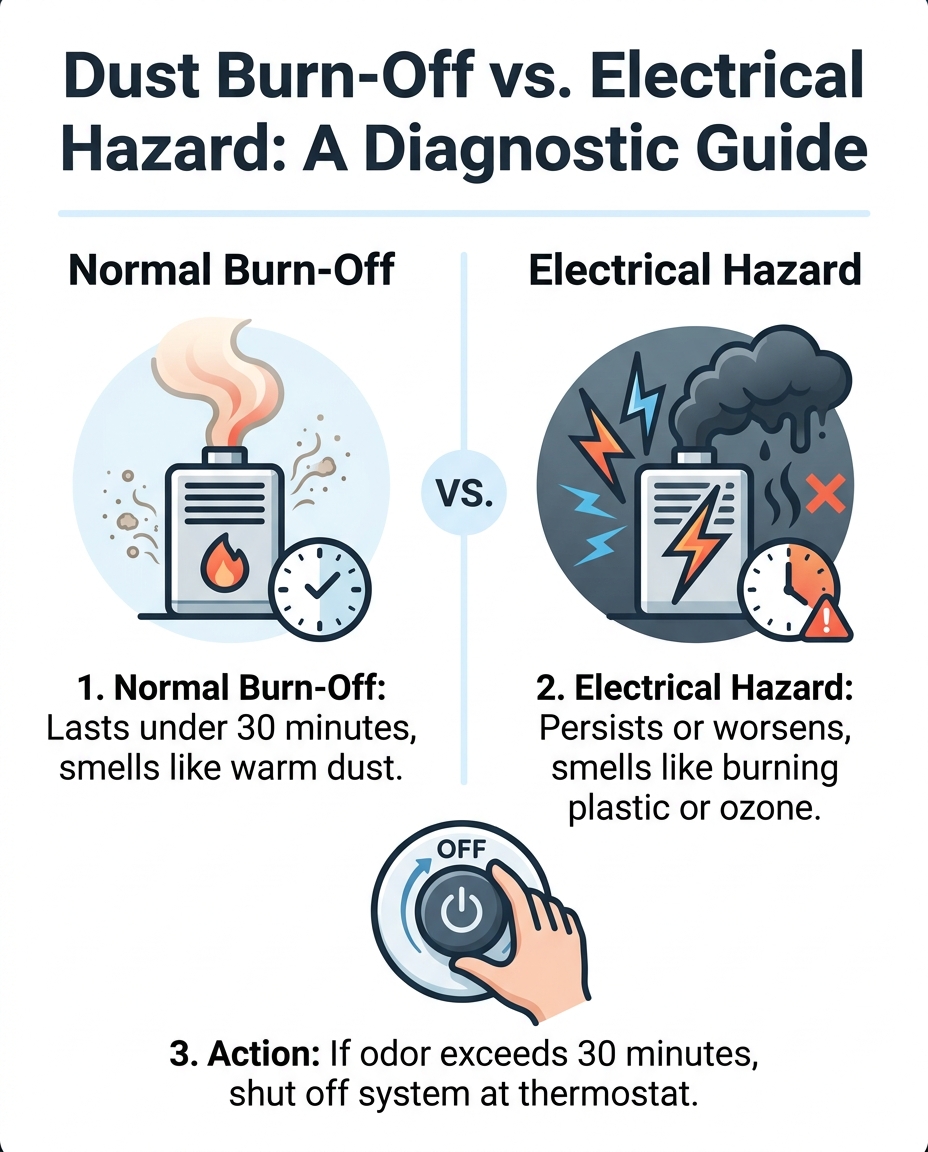
However, you must set a strict boundary: a smell duration under 30 minutes is considered normal. If the smell persists beyond the expected timeframe, it crosses the line from a normal seasonal transition to a potentially hazardous situation. If your heater has been running for 45 minutes and the smell is just as strong as when it started, the 30-minute rule dictates that you must take immediate action.
Recognizing the Difference Between Dust and Electrical Hazards
Educating yourself on olfactory warning signs is vital for home safety. A pattern we see often during emergency calls is the confusion between harmless dust and dangerous electrical faults. Not all burning smells are created equal. You need to be able to distinguish the harmless scent of dust burn-off from the dangerous odors of mechanical or electrical failures.
The specific scent profile of normal dust burn-off is relatively mild. It smells very similar to a hot radiator, singed hair, or a space heater that has just been plugged in. It is an earthy, dry smell. In stark contrast, electrical hazards produce sharp, toxic, and highly acrid odors. If you smell melting plastic, burning rubber, or a sharp metallic ozone scent, you are not dealing with dust. These odors indicate that wire casings are melting, electrical components are shorting out, or plastic parts are overheating.
Here is a simple breakdown to help you identify the source of the smell:
• Dry, warm, singed hair — Likely Cause: Normal dust on heat exchanger — Expected Duration: Smell duration under 30 minutes — Required Action: Monitor and ventilate
• Melting plastic or burning rubber — Likely Cause: Failing wiring or electrical short — Expected Duration: Persists or worsens rapidly — Required Action: Shut off immediately
• Sharp, metallic ozone — Likely Cause: Overheating electrical components — Expected Duration: Persists while running — Required Action: Shut off immediately
• Hot metal or friction — Likely Cause: Failing bearings in blower motor — Expected Duration: Continuous during operation — Required Action: Shut off immediately
A key indicator of danger is progression. Hazardous smells typically worsen over time rather than fading. If you suspect an electrical issue, do not wait. For professional diagnostics and repairs, reaching out for AC Repair in Covina can ensure that the shared electrical components in your system are thoroughly inspected by our experienced team.
Identifying Mechanical Odors
Beyond electrical smells, you must also be alert to mechanical odors. The smell of overheating metal or severe friction often points to failing bearings in the shared blower motor. Lingering summer wear and tear can easily manifest as mechanical strain during the first heating cycle. If the motor worked overtime during August heatwaves, the bearings might be dry or damaged, creating a hot metal smell the moment the system tries to push heavy warm air.

When to Shut Down Your System and Seek Professional Diagnostics
Safety must always be your primary concern. If your mid-fall heating startup produces an odor that violates the time rule or smells distinctly electrical, you must act decisively. Our team at Piggies Air Conditioning believes in honest, transparent communication—focusing on finding the actual root cause of an odor rather than using scare tactics to push an immediate system replacement. Here is exactly what you should do if you suspect a hazard:
1. Turn Off the Thermostat Immediately: Walk to your thermostat and switch the system from "HEAT" to "OFF." Do not simply turn the temperature down; ensure the system is completely disengaged.
2. Do Not Attempt a DIY Inspection: Never attempt to open the furnace cabinet, remove panels, or inspect the heat exchanger yourself. These components handle high voltage and combustible gas. Inspecting them requires specialized tools and a licensed professional.
3. Ventilate the Area: Open doors and windows to clear the remaining hazardous odors from your living space.
4. Call for Expert Diagnostics: Contact a licensed HVAC technician. A professional diagnostic process involves using specialized equipment to check for cracked heat exchangers, test electrical draws, and verify the integrity of the wiring.
Seeking a professional opinion is always the safest route when in doubt. A technician can safely determine if the issue is a simple failing capacitor or a more serious structural failure within the heat exchanger. If the smell duration under 30 minutes rule fails, trust your instincts and make the call.
Preventative Steps for a Smoother Seasonal Transition
You do not have to simply accept a smelly mid-fall heating startup as an unavoidable reality. In our daily work across Baldwin Park, we constantly remind homeowners that there are actionable, proactive steps you can take to minimize or completely prevent startup odors in the future.
Change the Air Filter: The single most important step you can take before switching the thermostat to heat is changing your air filter. A clean filter dramatically improves airflow and reduces the amount of dust circulating over the heat exchanger. If you leave a dirty summer filter in place, the blower motor has to work harder, and more particulate matter is forced past the filter media and directly onto the heating elements.
Schedule Pre-Season Maintenance: The value of professional pre-season maintenance cannot be overstated. A licensed technician will safely clean the internal components, including the burners and the heat exchanger area, before the first use. This physically removes the dust before it ever has a chance to burn off. If you are located in the surrounding areas, scheduling AC Repair in Diamond Bar or preventative seasonal maintenance ensures your system transitions smoothly. (Also, keep in mind that generic utility rebate programs may be available to help offset the cost of upgrading to highly efficient systems if yours is past its prime—always check with your local utility provider.)
Maintain a Clean Environment: Keeping the area around your indoor unit clean throughout the entire year reduces airborne debris. Avoid storing dusty boxes, lint-producing laundry items, or chemical cleaners near the air handler. The cleaner the immediate environment, the less dust the system will pull inside during its dormant months.
Protecting Your Indoor Air Quality Year-Round
The health of your heating system is directly connected to your overall household comfort and respiratory well-being. While the initial dust burn-off temporarily impacts your indoor air quality, it is usually a fleeting issue. However, if you consistently notice dust or poor air quality during your mid-fall heating startup, it may point to broader ventilation concerns.
Properly sealed ductwork plays a massive role in protecting your air. If your ducts have leaks, they can pull in dirty, dusty air from your attic or crawlspace and blow it directly into your living space. This bypasses your air filter entirely, leading to excessive dust accumulation on the heat exchanger and poorer air quality for your family.
Additionally, utilizing continuous fan operation can help filter the air, provided your filter is fresh. Switching your thermostat fan setting from "AUTO" to "ON" circulates the air through the filter media even when the heating or cooling cycle is not actively running. If you find your AC running constantly during the summer, you already know how much air moves through the system; utilizing that same airflow for filtration in the fall can keep your home smelling fresh.
Navigate the Changing Seasons with Confidence
Transitioning into the colder months should bring comfort, not stress. A brief, mild odor during your mid-fall heating startup is a perfectly normal part of transitioning to cooler weather. By keeping a close eye on the clock and ensuring the smell duration under 30 minutes rule holds true, you can confidently evaluate your system's health.
Always monitor the situation closely, trust your senses, and remember that safety comes first. If you have any lingering doubts, or if the odors turn sharp and electrical, prioritize your peace of mind by reaching out to our local experts for a thorough, transparent inspection.
Frequently Asked Questions
How long should a heater smell like burning?
A heater should only smell like burning for a very short window, typically less than 30 minutes. This initial odor is simply the accumulated summer dust burning off the heat exchanger. If the smell persists beyond this half-hour mark, or if it grows significantly stronger, it is no longer normal dust burn-off. You should turn off the system and have it evaluated by a professional.
Is it safe to run a furnace that smells like dust?
Yes, it is generally safe to run a furnace that produces a mild, dusty burning smell during its first cycle of the season. This is a normal mechanical reality of the system heating up dormant metal components. However, you must monitor it closely to ensure the smell dissipates quickly and does not transition into an acrid or electrical odor.
When should I worry about a burning smell from my vents?
You should worry if the burning smell resembles melting plastic, burning rubber, or a sharp electrical ozone scent. These odors indicate serious electrical or mechanical failures, not normal dust. Additionally, you should be concerned if a normal dusty smell lasts longer than 30 minutes without fading, as this could indicate a larger buildup of debris or a ventilation issue.
Can a dusty furnace cause a fire?
While normal dust on a heat exchanger is highly unlikely to cause a fire, severe neglect can create hazardous conditions. If a furnace is completely clogged with debris, lint, or pet hair, and the safety switches fail, the risk of overheating increases. This is why professional pre-season cleaning and regular filter changes are so critical for home safety.
Is it normal for a heater to smell like burning plastic?
No, it is never normal for a heater to smell like burning plastic. This specific odor strongly suggests that wire casings are melting, a capacitor is failing, or a plastic component has fallen against the heat exchanger. If you smell burning plastic, you should turn off the thermostat immediately and call a licensed technician.
How can I stop my heater from smelling when I first turn it on?
We highly recommend scheduling a professional pre-season tune-up before the weather gets cold as the most effective way to prevent startup odors. A technician will clean the heat exchanger and burners, removing the dust before it can burn. Additionally, changing your air filter regularly throughout the year reduces the total amount of dust that enters the system in the first place.
Other blogs


Customer Testimonials



CUSTOMER SERVICE!
I highly recommend this company for anyone needing AC repair or maintenance. I'll definitely be calling them again for any future needs!

I had the pleasure of experiencing outstanding service and professionalism from Ruben, and I am beyond impressed. From the moment I first contacted them, by phone and follow up communication via email for my quotes. The attention to detail and commitment to excellence were evident.
Ruben, was incredibly responsive, addressing all my inquiries promptly and with clear, thorough explanations. Their dedication to understanding and meeting my needs was remarkable.
Ruben, went above and beyond to ensure that everything was handled seamlessly, demonstrating not just professionalism, but also a sincere dedication to customer satisfaction.
I can't recommend Piggies air Conditioning/Ruben highly enough. If you're looking for someone who combines expertise with exceptional service, look no further. They are a true example of what outstanding professionalism should be.
The technician arrived on time, which I really appreciated given how crucial air conditioning is in this heat. Ruben was professional and friendly, explaining what he was doing throughout the process. The issue I had was diagnosed fairly quickly, and they provided me with a few options on how to fix it. The pricing was transparent, and I didn't feel like there were any hidden costs, which is always a plus when it comes to service calls like these. Highly recommend this company!
1st & foremost, huge shout out to Ruben thank u so so much for reaching out & making things happen SO FAST! I was so surprised since i had reached out to a couple different places who lagged on even answering calls, messages, etc.
Ruben was also very informative & taught me ALOT that i didnt know about.
Also cant leave the amazing Luis & Miles out of
this review.
They came, they saw, they conquered!
And they worked pretty swiftly too, felt very comfy around em, loved their personalities, great attitude, work ethic, professionalism, had some really good convos & they still got the job done lightning fast
SUPER HUGE SHOUT OUT & THANKS for everything guys! Definitely recommending u guys to everyone i know.
recommendations and feedback. The actual installation was painless and unremarkable, his AC experts got it done, got it cleaned and most importantly got it right. Rueben even went a step further to assure we had
protection from the coming rain, that is service unheard of these days. His price was competitive and a REAL value for the service we recieved. Using anyone else for your AC needs, would be a huge mistake. We thank them again and will recommend to everyone.
Echoing a lot of the other reviews here, Piggies Air Conditioning responds so quickly to requests (even though I actually accidentally sent in multiple requests on my side without responding, oops!)
They were able to come do a FREE energy audit and initial inspection on the same day and Ruben was amazing at explaining his thoughts on our house's situation and what he thought was worth the money and wasn't worth the money.
I truly felt like he was trying to help me find the best solution to our issues instead of just trying to upsell us on everything and anything.
I'm definitely recommending this business to anyone I know if they want a trustworthy and realistic service, value, and quality.