









The Hidden Cost of Subpar HVAC Workmanship
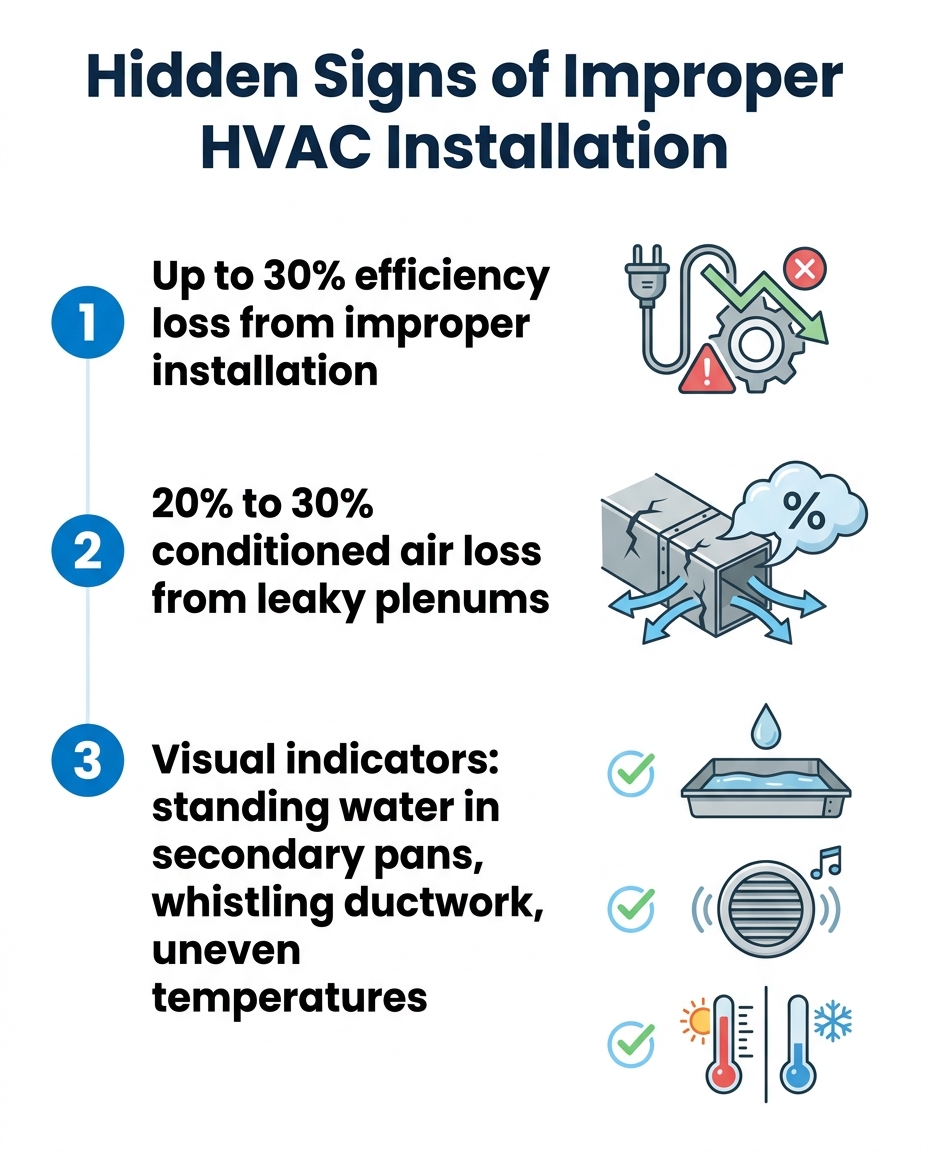
When you take a first-hand look at the most common installation mistakes we fix in Whittier, the statistics are staggering: according to the U.S. Department of Energy, improper setup can reduce a brand-new system's efficiency by up to 30%. At Piggies Air Conditioning, our team routinely sees this exact scenario play out across the San Gabriel Valley. You might invest in top-tier equipment, expecting lower utility bills and perfect indoor comfort, only to find the system struggling to keep up. The frustrating truth is that the root cause often has nothing to do with the manufacturer or the hardware itself. Instead, the culprit is poor workmanship during the initial setup.
Many installation flaws remain completely invisible to the homeowner. A system might turn on, blow cold air, and seem perfectly fine on a mild day. However, beneath the surface, tiny miscalculations in duct connections, drainage angles, and airflow balancing force the equipment to work significantly harder than it was designed to. Over time, this underlying stress leads to premature component failure, degraded indoor air quality, and skyrocketing energy consumption. For Whittier homes, where the system undergoes severe stress during peak weather patterns, these hidden errors eventually compound into major operational failures.
If you are evaluating your current setup, learning about how air conditioning systems operate is just as important as securing professional AC installation to guarantee long-term reliability.
Improper Drainage Slopes: The Silent Water Leak
The underlying problem: Your cooling system does more than just lower the temperature of your home; it actively dehumidifies the air. As warm indoor air passes over the freezing cold evaporator coil, moisture condenses into liquid water. This water must be safely routed out of your home. However, one of the most frequent and destructive errors our Piggies Air Conditioning technicians encounter in the field is an improperly sloped condensate drain line.
The cause of the failure: Condensate drainage systems rely entirely on the physics of gravity. There are no pumps pushing this water outside in a standard gravity-fed setup. Therefore, a precise downward slope—typically a quarter-inch drop for every foot of horizontal pipe—is absolutely mandatory. When installers rush the job or fail to secure the PVC piping properly, minor deviations occur. A pipe that is perfectly level, or worse, pitched slightly upward, creates a trap where water pools instead of flowing away.
The long-term solution: Standing water in a dark, warm environment is a recipe for biological growth. Algae, mold, and bacterial slime quickly form inside the stagnant sections of the pipe, eventually creating a solid blockage. Once the line clogs, the water backs up into the drain pan and overflows, leading to catastrophic water damage to ceilings, walls, and flooring.
In fact, our team responded to a Whittier homeowner last summer when their AC unit started struggling during a heatwave and a suspicious puddle formed near the indoor unit. A Piggies Air Conditioning technician arrived early the next day, quickly identifying that a slight drainage misalignment from a previous contractor was causing secondary moisture issues. After explaining the mechanics of the simple fix and providing long-term recommendations for maintenance, the system was fully restored and the water threat was eliminated.
The Mechanics of Condensate Removal
To understand why precise measurements matter, you have to look at the mechanics of the system. The condensate removal process involves several critical components working in harmony:
• The Evaporator Coil: This component extracts humidity from the air, causing water droplets to form continuously while the system runs.
• The Primary Drain Pan: Located directly beneath the coil, this pan catches the dripping water and funnels it toward the primary PVC exit line.
• The Secondary Drain Pan: Installed beneath the entire indoor unit as a backup, this pan is designed to catch overflow if the primary system fails.
• The Gravity-Fed Pitch: Because water will not flow uphill, the entire length of the exit pipe requires exact pitch measurements to maintain a continuous, smooth flow to the exterior of the home.
When planning a system layout, understanding the physics of drainage is just as important as knowing where to place the indoor unit of a mini split or a traditional air handler. Proper elevation and routing dictate the success of the entire moisture management system.
Professional Correction Methods
Correcting a poorly sloped drain line is not a simple matter of propping up a pipe. Our professional technicians use specialized levels and measuring tools to calculate the exact pitch required for the specific length of the run. We often have to cut out the sagging or improperly routed sections of PVC and rebuild the line using rigid supports that prevent future sagging.
Furthermore, professional remediation includes the installation of secondary safety switches. These small electronic devices sit in the primary or secondary drain pan. If water begins to back up due to a clog or slope failure, the switch detects the rising water level and automatically shuts off the air conditioner before an overflow occurs. Because this involves cutting into the system's low-voltage wiring and altering plumbing, strict adherence to professional remediation is required. DIY fixes with tape or makeshift props inevitably fail and void equipment warranties.
Unsealed Plenums: Losing Conditioned Air at the Source
The critical connection point: The plenum is the large metal box immediately attached to your air handler or furnace. It acts as the central distribution hub for your entire HVAC system. All the freshly cooled or heated air produced by your equipment is pushed into the supply plenum before branching out into the network of ducts that feed the individual rooms of your home. Because it sits directly next to the blower motor, the plenum handles the highest volume of air and the most intense static pressure of any component in the system.
The invisible energy drain: A pattern we see often in older Baldwin Park and Whittier tract homes is when installers fail to properly seal the connection between the equipment and the plenum. The results are disastrous for your energy bills. Industry data reveals that leaky ductwork at the plenum connection can account for 20% to 30% of conditioned air loss. This means you are paying to heat or cool your attic, crawlspace, or garage instead of your living room.
Signs of an unsealed plenum: Homeowners rarely inspect their attic ductwork, but there are clear warning signs inside the home that indicate a major leak at the source.
• Whistling noises: High-pressure air forcing its way through small gaps in the sheet metal often creates a distinct whistling or hissing sound near the indoor unit.
• Dust buildup (Ghosting): If the return plenum is unsealed, it acts like a vacuum, pulling dust and insulation fibers from the attic directly into the system and blowing them into your home.
• Uneven room temperatures: Because 30% of the air is escaping before it even reaches the main duct trunks, the furthest rooms in the house will struggle to receive adequate airflow, remaining hot in the summer and cold in the winter.
The professional standard for sealing a plenum requires specialized materials. Our licensed technicians use a thick, paintable mastic sealant combined with embedded fiberglass mesh tape to bridge gaps in the sheet metal. This creates a hardened, permanent, airtight shell.
Why Standard Tapes Fail Under Pressure
A common hallmark of poor workmanship that our crews frequently have to rip out and replace is the use of standard cloth-backed "duct tape" to seal the plenum. Despite its name, this tape is entirely inappropriate for HVAC applications.
First, the extreme thermal expansion and contraction of the metal plenum degrades standard rubber-based adhesives rapidly. The constant cycling between freezing cold summer air and baking hot winter air causes the tape to dry out, crack, and peel away within a single season. Second, the high static pressure generated by the blower motor physically forces air through the weakened adhesive bonds. Only professional-grade mastic sealant can withstand the thermal and pressure stresses located at the system's central hub.
Why the Seasonal Transition Reveals Hidden Flaws
As we transition into September, many homeowners call us wondering why a system that seemingly worked fine all summer suddenly exhibits major problems in the early fall. The answer lies in how the equipment operates under different loads. During Whittier's intense summer heat, your air conditioner runs almost continuously. This relentless operation often masks ductwork inefficiencies; the system overrides the 30% air loss simply by pumping a massive, continuous volume of cold air into the house. You might notice high energy bills, but the house eventually cools down.
However, during the September pre-heating-season transition, the weather shifts. The system begins to cycle on and off more frequently rather than running constantly. This shorter cycling exposes the hidden flaws. The uneven temperatures become starkly apparent because the system isn't running long enough to overcome the massive air leaks at the plenum.
Furthermore, the moisture buildup from heavy summer use sits stagnant in poorly sloped drain pans. During peak summer, the sheer volume of water pushing through the line might force its way past a slight upward bow. But in the fall, as condensation rates drop, that water just sits in the trap, breeding bacteria and creating foul odors that get blown into your home. Addressing these hidden issues before the furnace is activated is critical for protecting your indoor air quality. A professional tune-up during this specific calendar window ensures that summer moisture is cleared and ductwork is sealed before the heating season begins.
Professional Remediation: Correcting the Unseen
Correcting hidden installation flaws requires a completely different skill set than simply unboxing and plugging in a new unit. It demands advanced diagnostic capabilities to uncover exactly where the original installers cut corners. Quick patch jobs—like slapping more tape over a peeling plenum joint or propping up a sagging PVC pipe with a block of wood—only delay the inevitable failure. Permanent, code-compliant professional remediation involves breaking down the flawed components and rebuilding them to exact manufacturer specifications.
During a recent restoration project, a new homeowner reached out to Piggies Air Conditioning needing a complete system overhaul after discovering years of hidden installation flaws left by a previous contractor. Our team provided detailed insights, answered every question regarding the necessary corrections, and efficiently installed the new, properly calibrated system while leaving the restored space completely spotless.
The diagnostic process our licensed technicians use to identify these hidden flaws is highly rigorous. We utilize digital manometers to measure the exact static pressure inside the ductwork, pinpointing invisible leaks based on pressure drops. We use specialized levels to verify that the entire length of the condensate line maintains a quarter-inch drop per foot. Because correcting these issues requires specialized tools, handling of high-voltage components, and a deep understanding of fluid dynamics and airflow, we strictly advise against any DIY attempts.
Comparing Remediation Approaches:
• Plenum Sealing — Quick Patch Job (Not Recommended): Applying standard cloth duct tape over leaks. — Professional Remediation: Applying fiberglass mesh and professional mastic sealant.
• Drainage Slope — Quick Patch Job (Not Recommended): Propping sagging pipes with debris or blocks. — Professional Remediation: Cutting, rebuilding, and re-securing PVC with exact pitch calculations.
• Safety Mechanisms — Quick Patch Job (Not Recommended): Ignoring secondary drain pans. — Professional Remediation: Installing electronic float switches to prevent overflows.
• Diagnostic Testing — Quick Patch Job (Not Recommended): Visual guessing. — Professional Remediation: Digital static pressure testing and precise level measurements.
Piggies Air Conditioning brings technical precision and real-world experience in fixing subpar workmanship from other contractors. By focusing on the exact science of airflow and drainage, we permanently resolve the underlying issues that cause system stress. We proudly provide this level of detailed diagnostic service across all the areas we serve in Southern California, ensuring your system operates exactly as the manufacturer intended.
Frequently Asked Questions About HVAC Installation Workmanship
How do I know if my AC was installed wrong?
The most common signs of a bad installation include uneven cooling throughout your home, unusually high energy bills from day one, and strange noises like whistling near the indoor unit. You might also notice excessive dust buildup around the air handler or frequent system short-cycling. A professional static pressure test, like the ones our team performs during diagnostic visits, is the most definitive way to confirm if the system was sized and installed correctly.
Why is my AC leaking water inside?
An AC leaking water inside is almost always caused by an improperly sloped condensate drain line or a clogged pipe. When the PVC pipe lacks a precise downward pitch, gravity cannot pull the water outside, causing it to pool, grow algae, and eventually overflow the drain pan. Professional technicians can clear the blockage and rebuild the line with the correct slope to prevent future flooding.
How much energy is lost through unsealed ducts?
According to industry data, you can lose between 20% and 30% of your conditioned air through unsealed ducts, particularly at the plenum connection. This massive loss forces your HVAC system to run significantly longer to reach the temperature set on your thermostat. Sealing these leaks with professional mastic is one of the most effective ways to restore system efficiency.
What happens if HVAC is installed incorrectly?
If an HVAC system is installed incorrectly, it suffers from severe operational stress that drastically shortens its lifespan. The equipment will consume far more electricity or gas than rated, struggle to maintain comfortable indoor temperatures, and suffer from frequent breakdowns. Over time, improper airflow and drainage can also lead to severe indoor air quality issues, including mold growth.
Why do installation flaws become more noticeable during the fall transition in Whittier?
During the intense summer months, the system runs continuously, which can mask ductwork inefficiencies through sheer volume of airflow. However, during the fall transition, the system cycles less frequently, making uneven room temperatures and stagnant moisture in poorly sloped drain pans much more obvious. This transition period is when the accumulated wear and tear of poor workmanship finally catches up with the system's performance.
Secure Your System's Performance Before Winter
The hidden costs of subpar HVAC workmanship extend far beyond minor annoyances; they actively drain your wallet and degrade your home's comfort. By understanding the critical importance of exact drainage slopes and airtight plenum seals, you can take proactive steps to protect your investment. Correcting these specific issues ensures that you capture every ounce of efficiency your system was built to deliver.
Don't wait for a stagnant drain line to overflow or for a leaky plenum to inflate your winter heating bills. The September pre-heating-season transition is the perfect time to address these hidden flaws before the heavy demands of winter arrive. Schedule a comprehensive diagnostic inspection with the team at Piggies Air Conditioning today to verify your system's integrity, seal the leaks, and secure reliable, efficient performance for the seasons ahead.
Other blogs


Customer Testimonials



CUSTOMER SERVICE!
I highly recommend this company for anyone needing AC repair or maintenance. I'll definitely be calling them again for any future needs!

I had the pleasure of experiencing outstanding service and professionalism from Ruben, and I am beyond impressed. From the moment I first contacted them, by phone and follow up communication via email for my quotes. The attention to detail and commitment to excellence were evident.
Ruben, was incredibly responsive, addressing all my inquiries promptly and with clear, thorough explanations. Their dedication to understanding and meeting my needs was remarkable.
Ruben, went above and beyond to ensure that everything was handled seamlessly, demonstrating not just professionalism, but also a sincere dedication to customer satisfaction.
I can't recommend Piggies air Conditioning/Ruben highly enough. If you're looking for someone who combines expertise with exceptional service, look no further. They are a true example of what outstanding professionalism should be.
The technician arrived on time, which I really appreciated given how crucial air conditioning is in this heat. Ruben was professional and friendly, explaining what he was doing throughout the process. The issue I had was diagnosed fairly quickly, and they provided me with a few options on how to fix it. The pricing was transparent, and I didn't feel like there were any hidden costs, which is always a plus when it comes to service calls like these. Highly recommend this company!
1st & foremost, huge shout out to Ruben thank u so so much for reaching out & making things happen SO FAST! I was so surprised since i had reached out to a couple different places who lagged on even answering calls, messages, etc.
Ruben was also very informative & taught me ALOT that i didnt know about.
Also cant leave the amazing Luis & Miles out of
this review.
They came, they saw, they conquered!
And they worked pretty swiftly too, felt very comfy around em, loved their personalities, great attitude, work ethic, professionalism, had some really good convos & they still got the job done lightning fast
SUPER HUGE SHOUT OUT & THANKS for everything guys! Definitely recommending u guys to everyone i know.
recommendations and feedback. The actual installation was painless and unremarkable, his AC experts got it done, got it cleaned and most importantly got it right. Rueben even went a step further to assure we had
protection from the coming rain, that is service unheard of these days. His price was competitive and a REAL value for the service we recieved. Using anyone else for your AC needs, would be a huge mistake. We thank them again and will recommend to everyone.
Echoing a lot of the other reviews here, Piggies Air Conditioning responds so quickly to requests (even though I actually accidentally sent in multiple requests on my side without responding, oops!)
They were able to come do a FREE energy audit and initial inspection on the same day and Ruben was amazing at explaining his thoughts on our house's situation and what he thought was worth the money and wasn't worth the money.
I truly felt like he was trying to help me find the best solution to our issues instead of just trying to upsell us on everything and anything.
I'm definitely recommending this business to anyone I know if they want a trustworthy and realistic service, value, and quality.