










Myth: You Need a Gas Furnace to Survive the Winter
There is a persistent belief among homeowners that when the temperatures begin to drop, only a roaring natural gas flame can keep a house truly warm. If you are weighing a Furnace vs. Heat Pump: Making the Switch During a Fall HVAC Replacement, you have likely encountered this exact misconception. The reality is that modern electric heating technology has advanced far beyond the outdated systems of the past. At Piggies Air Conditioning, we often tell our customers that if you are preparing for the early fall pre-heating season, the transition away from fossil fuels is not just possible—it is often the most logical step forward.
For homeowners looking into heat pumps, scheduling a heat pump replacement now provides the perfect opportunity to upgrade your home's infrastructure before the coldest nights arrive.
Deciding whether to replace an aging natural gas furnace with a fully electric system requires looking closely at your long-term energy consumption. A traditional gas furnace relies on combustion, which inherently wastes a portion of the fuel it consumes through exhaust. Heat pumps, on the other hand, do not generate heat from scratch. They move existing heat from one place to another. Our team typically sees this fundamental difference in operation as the crucial decision point for homeowners weighing long-term energy efficiency against the familiarity of a traditional gas setup.
When you are facing an aging HVAC system in September, sticking with gas might seem like the path of least resistance. However, evaluating this choice through a mild-climate lens reveals that electrification is a highly practical, efficient, and forward-thinking choice for your home.
How Heat Pumps and Gas Furnaces Actually Work
To make an informed decision, it helps to understand the mechanical differences between these two systems. While both are designed to keep your home comfortable, their methods of achieving that goal could not be more different. This operational difference directly impacts your monthly energy consumption, your home's carbon footprint, and the overall lifespan of the equipment you install in your Baldwin Park, CA home.
Combustion vs. Heat Transfer
Gas furnaces operate on the principle of combustion. When your thermostat signals a need for heat, the furnace opens a gas valve, ignites burners, and creates a controlled fire inside a metal heat exchanger. The system's blower motor then forces indoor air over this hot metal, warming the air before distributing it through your ductwork. The dangerous byproducts of this combustion process, including carbon monoxide, are vented safely outside through an exhaust flue. Even the most highly rated furnaces lose some energy during this exhaust process.
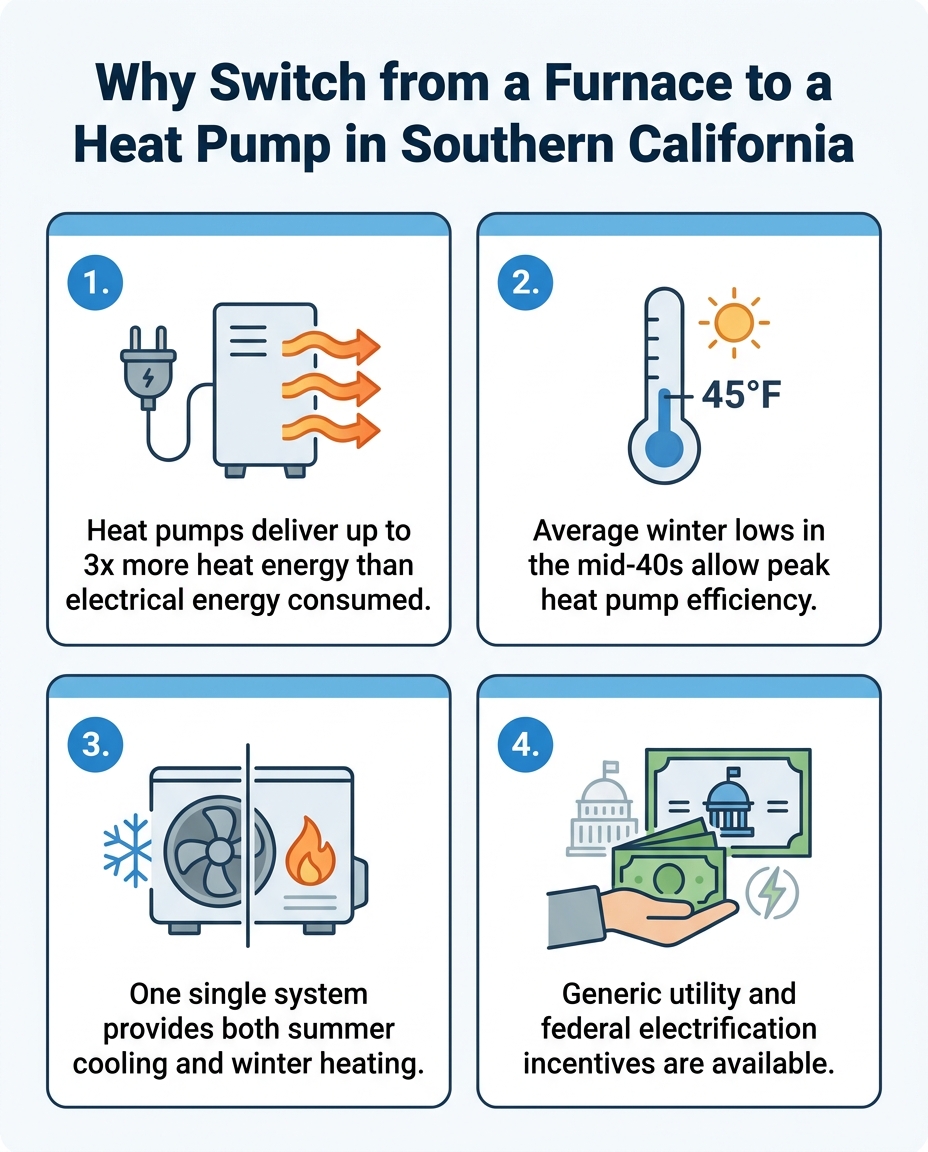
Heat pumps operate on the principle of heat transfer. Instead of burning fuel to create warmth, a heat pump uses electrical power and chemical refrigerant to absorb ambient heat from the outside air, compress it to increase its temperature, and release that heat inside your home. Because moving heat requires significantly less energy than generating it, air-source heat pumps can deliver up to three times more heat energy to a home than the electrical energy they consume.
• Heating Method — Gas Furnace: Burns natural gas to generate heat via combustion. — Electric Heat Pump: Transfers existing ambient heat using compressed refrigerant.
• Energy Efficiency — Gas Furnace: Maxes out around 98% efficiency (some energy is always lost). — Electric Heat Pump: Can reach up to 300% efficiency by moving existing heat.
• Cooling Capability — Gas Furnace: Heating only. Requires a separate air conditioning unit. — Electric Heat Pump: Provides both heating and cooling from a single system.
• Safety Considerations — Gas Furnace: Requires carbon monoxide monitoring and exhaust venting. — Electric Heat Pump: No combustion, no risk of carbon monoxide leaks.
• Ideal Climate — Gas Furnace: Effective in extreme, sub-zero freezing climates. — Electric Heat Pump: Highly efficient in mild to moderate winter climates.
The efficiency advantage: Because a heat pump simply relocates thermal energy rather than creating it, the electrical draw is remarkably low compared to the output. This basic law of thermodynamics is what makes electrification so appealing for homeowners looking to reduce their reliance on fossil fuels.

The Southern California Climate Advantage
One of the most common concerns homeowners raise when researching electric heating is how the system performs when the temperature drops. If you read generic national advice online, you will frequently see warnings about heat pumps losing their efficiency in freezing weather. Many national publications insist that homeowners need a "dual-fuel" system—a heat pump paired with a gas furnace backup—to survive the winter.
In our years of serving Baldwin Park and the surrounding communities, the team at Piggies Air Conditioning has found that Southern California's unique climate demands tell a completely different story. Baldwin Park's specific average winter lows sit comfortably in the mid-40s. We do not experience the extended deep freezes, snowstorms, or sub-zero temperatures that plague the Northeast or Midwest. In our region, traditional gas furnaces are often massive overkill for the environment.
Why the climate matters:
• Peak operation year-round: Modern heat pumps are designed to extract heat from the outside air even when it is well below freezing. At 45 degrees, a heat pump barely has to work to keep your home at a comfortable 70 degrees.
• No backup required: Because our temperatures rarely dip below freezing, there is absolutely no need for a gas backup or expensive auxiliary heat strips.
• Avoiding short-cycling: A powerful gas furnace in a mild climate often heats the house too quickly and shuts off, leading to a start-and-stop pattern known as short-cycling. Our technicians frequently see this issue, which wastes energy and causes premature wear and tear on the blower motor.
By analyzing this comparison strictly through a mild-winter lens, it becomes clear that a heat pump operates at its absolute peak efficiency in Baldwin Park, CA. You get all the comfort you need without the overkill, emissions, or inefficiency of a combustion system.
Why September is the Ideal Replacement Window
Timing your transition is just as important as choosing the right equipment. The early fall pre-heating season is widely considered the optimal window for a full system replacement. Waiting until your old furnace completely fails in the middle of December puts you at a severe disadvantage, both in terms of scheduling and comfort.
During the early fall transition period, contractor availability is typically much higher. The frantic rush of summer AC breakdowns has subsided, and the panic of winter furnace failures has not yet begun. This logistical advantage means your installation can be scheduled conveniently, completed thoroughly, and tested rigorously without the pressure of an active weather emergency.
One local homeowner reached out to our Piggies Air Conditioning team during a recent fall season needing an aging system replaced and the old unit removed. Our installation crew was able to remove the old equipment and install the new unit within a single day, ensuring the home was perfectly prepared before the weather shifted. This level of rapid, proactive service is much easier to secure in September than it is during a holiday deep freeze.
The benefits of proactive fall replacement:
• Avoiding emergency fees: Planned replacements happen on your schedule, avoiding the stress of emergency after-hours dispatch.
• Thorough ductwork assessment: Fall installations allow our technicians to take their time evaluating your existing ductwork to ensure it can handle the airflow requirements of a new system.
• Seamless transition: You can confidently turn on your heat for the first cold night of the year knowing the system is brand new, fully calibrated, and under warranty.
Year-Round Comfort: One System for Heating and Cooling
Perhaps the most significant advantage of switching to electric heating is the dual-benefit of the equipment. A heat pump is not just a heater; it is a complete, year-round climate control system. If you are considering a fall replacement, there is a strong chance that your summer air conditioner is just as old and fatigued as your winter furnace.
Modern heat pumps provide both heating and cooling from a single unit. During the summer, the system acts exactly like a traditional air conditioner, absorbing heat from inside your home and pumping it outside. When winter arrives, a specialized component called a reversing valve simply flips the flow of refrigerant. The system then absorbs heat from the outside air and pumps it inside. It is an elegant, highly efficient mechanical process.
If you are wondering if you can replace both your furnace and AC with a heat pump, the answer is a resounding yes. We regularly recommend this consolidation because it offers immense financial and maintenance benefits. Instead of paying to maintain, repair, and eventually replace two entirely separate mechanical systems, you only have one unit to worry about. You only need one set of filters, one bi-annual tune-up schedule, and one warranty to track.
Another customer contacted our team during the early fall transition needing a new heat pump system installation to replace their failing setup. After providing a clear estimate and answering their questions about the transition, our technicians efficiently installed the system the following week with strict care taken to protect the home's interior. This holistic upgrade immediately solved both their heating and cooling needs in one streamlined visit, perfectly preparing the home for the early fall pre-heating season and beyond.
Navigating Electrification Incentives and Upgrades
California's energy policies are actively encouraging homeowners to transition away from natural gas and toward electric appliances. This massive push for decarbonization means that upgrading your home is not just an environmental choice—it is a financially incentivized one.
When planning your installation in Baldwin Park, CA, you will likely find that there are numerous generic state, federal, and utility incentives available to help offset the initial investment of a qualifying heat pump. Local utility incentive programs, alongside generic federal tax credits, are designed specifically to make the switch to electric highly practical for the average homeowner. Because these programs update frequently, we always advise homeowners to consult with local experts and their tax professionals to verify current eligibility requirements and program details.
Preparing for the electrical transition:
• Panel assessments: Switching from a gas furnace (which uses minimal electricity just for the blower motor) to a fully electric heat pump may require an evaluation of your home's electrical panel to ensure it can handle the dedicated 220v circuit.
• Thermostat upgrades: Heat pumps operate best with smart thermostats that understand how to stage the compressor for maximum efficiency.
• Ductwork compatibility: Electric systems require excellent airflow to perform efficiently, making this the perfect time to seal leaks and optimize your ventilation.
At Piggies Air Conditioning, our team takes pride in our ability to help clients navigate these available generic rebates for switching to electric heat pumps. We can also assist you in exploring HVAC financing options that break the initial installation investment into manageable monthly payments, allowing you to enjoy the energy savings immediately.
Alternative Electric Solutions for Unique Spaces
While centralized ducted systems are the standard for most homes, we recognize that not every property is built the same. Some older homes in Baldwin Park, CA may have deteriorating ductwork, low ceilings, or specific architectural constraints that make a traditional centralized heat pump difficult to install. Fortunately, our installation crews know that electrification is still entirely possible without major structural changes.
If your home cannot support a traditional ducted setup, ductless heating systems provide a brilliant alternative electric solution. Also known as mini-splits, these systems operate using the exact same highly efficient heat transfer technology as a central heat pump, but they deliver the conditioned air directly into individual rooms via sleek, wall-mounted or ceiling-mounted air handlers.
The benefits of targeted electric solutions:
• Zoned comfort: Ductless systems allow you to control the temperature of individual rooms independently, meaning you no longer have to heat the entire house just to keep the master bedroom warm.
• No ductwork energy loss: Traditional ductwork can lose up to 30% of its conditioned air to leaks and poor insulation. Ductless systems eliminate this entirely.
• Flexible installation: Because they only require a small hole in the wall for the refrigerant lines, ductless units can be installed in historic homes, room additions, or converted garages with minimal disruption.
Whether you choose a centralized system or a zoned ductless approach, moving away from a traditional gas furnace allows you to customize your home's comfort in ways that older combustion systems simply cannot match.
Frequently Asked Questions About Switching to Electric Heating
Can a heat pump completely replace a gas furnace in Southern California?
Yes, a heat pump can absolutely replace a gas furnace in Southern California. Because our winter temperatures rarely drop below freezing, a modern air-source heat pump can easily extract enough ambient heat to keep your home perfectly warm. You do not need a backup gas furnace to stay comfortable in this climate.
Why switch to a heat pump for a fall HVAC replacement?
Switching during the early fall pre-heating season gives you a logistical advantage before the winter rush begins. Contractor availability is higher, allowing for a more relaxed, thorough installation process. Furthermore, replacing the system in the fall means you can tackle an aging AC and an aging furnace at the exact same time.
Are heat pumps better than furnaces in mild climates?
Heat pumps are significantly more efficient than furnaces in mild climates. While a gas furnace must burn fuel to create heat (losing some energy to exhaust), a heat pump simply moves existing heat from the outside in. In a mild climate, this heat transfer process uses far less energy, resulting in excellent long-term efficiency.
Do I need a backup furnace with a heat pump in California?
No, you do not need a backup furnace or a dual-fuel system in Southern California. Backup heating is typically only recommended for regions that experience prolonged, severe sub-zero temperatures. In our area, a standalone heat pump will operate at peak efficiency all winter long.
At what temperature is a heat pump no longer effective?
Modern cold-climate heat pumps can effectively heat a home in temperatures well below freezing, sometimes down to negative 15 degrees Fahrenheit. Since average winter lows in our region sit comfortably in the mid-40s, you will never approach the temperature threshold where a heat pump loses its effectiveness.
What electrical upgrades are required when switching from gas to electric heating?
Switching to a fully electric heat pump usually requires a dedicated 220-volt circuit, which a standard gas furnace does not need. Depending on the age of your home, you may need a minor electrical panel upgrade to accommodate the new breaker. A professional assessment will determine exactly what your specific home requires.
Make the Smart Switch Before Winter Arrives
When weighing a furnace vs. heat pump during a fall replacement, the evidence heavily favors electrification for homeowners in Baldwin Park, CA. A clear, regionally relevant comparison shows that heat pumps are highly effective for our mild winters, offering up to three times the efficiency of traditional gas combustion. By making the switch, you eliminate the need for two separate systems, reduce your carbon footprint, and position yourself to take advantage of generic utility and federal electrification incentives.
You do not have to navigate this transition alone. Our Piggies Air Conditioning experts can help evaluate your specific home requirements, assess your electrical readiness, and ensure your ductwork is prepared for the upgrade. We encourage you to schedule an assessment during the early fall pre-heating season so you can secure a seamless installation and enjoy complete, year-round comfort before the peak winter weather hits.
Other blogs


Customer Testimonials



CUSTOMER SERVICE!
I highly recommend this company for anyone needing AC repair or maintenance. I'll definitely be calling them again for any future needs!

I had the pleasure of experiencing outstanding service and professionalism from Ruben, and I am beyond impressed. From the moment I first contacted them, by phone and follow up communication via email for my quotes. The attention to detail and commitment to excellence were evident.
Ruben, was incredibly responsive, addressing all my inquiries promptly and with clear, thorough explanations. Their dedication to understanding and meeting my needs was remarkable.
Ruben, went above and beyond to ensure that everything was handled seamlessly, demonstrating not just professionalism, but also a sincere dedication to customer satisfaction.
I can't recommend Piggies air Conditioning/Ruben highly enough. If you're looking for someone who combines expertise with exceptional service, look no further. They are a true example of what outstanding professionalism should be.
The technician arrived on time, which I really appreciated given how crucial air conditioning is in this heat. Ruben was professional and friendly, explaining what he was doing throughout the process. The issue I had was diagnosed fairly quickly, and they provided me with a few options on how to fix it. The pricing was transparent, and I didn't feel like there were any hidden costs, which is always a plus when it comes to service calls like these. Highly recommend this company!
1st & foremost, huge shout out to Ruben thank u so so much for reaching out & making things happen SO FAST! I was so surprised since i had reached out to a couple different places who lagged on even answering calls, messages, etc.
Ruben was also very informative & taught me ALOT that i didnt know about.
Also cant leave the amazing Luis & Miles out of
this review.
They came, they saw, they conquered!
And they worked pretty swiftly too, felt very comfy around em, loved their personalities, great attitude, work ethic, professionalism, had some really good convos & they still got the job done lightning fast
SUPER HUGE SHOUT OUT & THANKS for everything guys! Definitely recommending u guys to everyone i know.
recommendations and feedback. The actual installation was painless and unremarkable, his AC experts got it done, got it cleaned and most importantly got it right. Rueben even went a step further to assure we had
protection from the coming rain, that is service unheard of these days. His price was competitive and a REAL value for the service we recieved. Using anyone else for your AC needs, would be a huge mistake. We thank them again and will recommend to everyone.
Echoing a lot of the other reviews here, Piggies Air Conditioning responds so quickly to requests (even though I actually accidentally sent in multiple requests on my side without responding, oops!)
They were able to come do a FREE energy audit and initial inspection on the same day and Ruben was amazing at explaining his thoughts on our house's situation and what he thought was worth the money and wasn't worth the money.
I truly felt like he was trying to help me find the best solution to our issues instead of just trying to upsell us on everything and anything.
I'm definitely recommending this business to anyone I know if they want a trustworthy and realistic service, value, and quality.