










Is Your AC Leaking? The Messy Reality of a Clogged Drain Line
If you have recently discovered a puddle of water forming around your indoor air handler, you are likely asking yourself exactly what happens when your AC condensate drain line clogs. At Piggies Air Conditioning, our team typically sees a sharp increase in these drainage issues by the time August arrives in Baldwin Park. Your cooling system has been running almost non-stop for months to combat the intense summer heat. This constant, heavy operation creates a dark, constantly damp environment inside your indoor unit that is perfectly suited for biological sludge to thrive. What begins as a minor accumulation of dust and moisture quickly escalates into a thick, gelatinous blockage that completely chokes the narrow PVC piping designed to carry water safely out of your home.
Many homeowners assume a backed-up drain is just a simple physical blockage, similar to a toy stuck in a plumbing pipe. In reality, a clogged condensate line is an active biological issue. The algae and bacteria growing inside the pipe actively feed on airborne particulates, expanding rapidly during the late summer months. When the line finally seals shut, the water has nowhere to go but backward. Without professional intervention, this overflowing water can cause severe, expensive damage to your furnace, your flooring, and your ceilings.
Need immediate assistance? Explore our comprehensive air conditioning services to get your system back online, or protect your home year-round by enrolling in a routine AC maintenance plan.
What Happens When Your AC Condensate Drain Line Clogs?
When the biological buildup inside your drain pipe reaches critical mass, the resulting blockage sets off a rapid chain reaction inside your HVAC system. Because a central air conditioner produces gallons of water every single day during the late-summer, back-to-school transition, a sealed pipe means that water must immediately find an alternative escape route. Here is the typical sequence of events we observe when your condensate line fails:
• The float switch trips: Modern air conditioning systems are equipped with a safety device known as a condensate overflow switch, or float switch. As water backs up into the drain pan, a small float rises. Once it reaches a predetermined height, the switch breaks the electrical circuit, triggering an automatic system shutdown to prevent massive flooding.
• Water overflows the drain pan: If your system is older, lacks a float switch, or if the switch has failed due to age or improper installation, the system will continue to run and produce condensation. The shallow drain pan will quickly overflow, spilling water directly into the furnace cabinet or onto the floor below.
• Structural damage occurs: Water that escapes the HVAC cabinet rapidly seeps into surrounding building materials. For units located in an attic, this means water pooling on the ceiling drywall, eventually causing the ceiling to sag, stain, or collapse entirely. For closet or garage units, the water damages baseboards, warps flooring, and ruins drywall.
• Biological odors circulate: Even if the water does not cause immediate structural collapse, the stagnant pool sitting in the drain pan becomes a breeding ground for mold and mildew. Because the drain pan sits directly in the path of your home's airflow, the blower motor will pick up these biological odors and distribute them through the ductwork into every room.
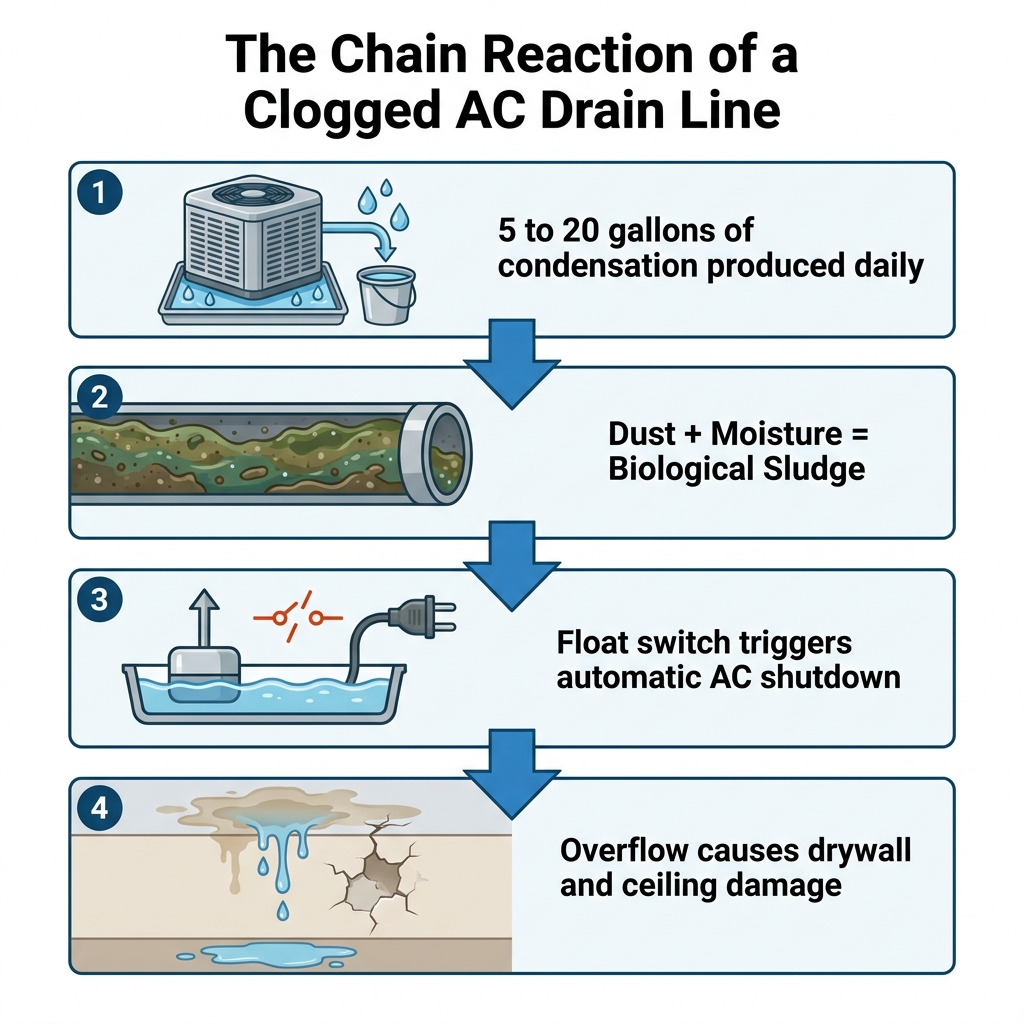

The Anatomy of a Clog: Dust, Condensation, and Biological Sludge
To understand why these blockages occur so frequently in late summer, it helps to look at the sheer volume of water your system processes. A typical central air conditioner acts as a massive dehumidifier, pulling moisture out of your indoor air as it cools it. Depending on the humidity levels and the size of your system, your air conditioner produces between 5 and 20 gallons of condensation every single day during peak operation. All of this water drips off the cold evaporator coil and lands in a shallow collection pan before draining away.
This constant flow of water creates a permanently wet environment. At the same time, microscopic organic particulate matter that manages to bypass your air filters settles into the same pan. In our years of maintaining HVAC systems across Southern California, our team has found that our dry, dusty climate provides a continuous supply of airborne particulates. The dust acts as a nutrient-rich food source for naturally occurring algae, mold, and bacteria. Over the months, this mixture of water and organic matter forms a thick, sticky biological sludge.
• 2.0 Ton — Estimated Daily Condensation (Peak Summer): 5 to 10 Gallons — Sludge Risk Level: Moderate
• 3.0 Ton — Estimated Daily Condensation (Peak Summer): 10 to 15 Gallons — Sludge Risk Level: High
• 4.0 - 5.0 Ton — Estimated Daily Condensation (Peak Summer): 15 to 20+ Gallons — Sludge Risk Level: Severe
By the time August rolls around, this biological mixture has often reached critical mass. The sludge thickens and binds together, adhering to the walls of the PVC drain pipe until the flow of water is completely choked off. As we have noted in related discussions, dust from Santa Ana winds can clog your AC by introducing heavy particulate matter that accelerates this exact biological growth.
Keeping the evaporator coil and drain pan free of this debris is a highly effective preventative measure. We recently helped a local homeowner who realized their system was struggling during the end-of-season cooling push. One of our technicians provided a clear assessment and completed a thorough evaporator coil cleaning in a timely manner. By removing the heavy layer of dust and grime from the coil, our technician eliminated the exact type of organic matter that eventually washes down into the pan to form stubborn drain line clogs.
Why Your Air Conditioner Suddenly Shuts Off in Extreme Heat
One of the most frequent panic calls our dispatchers receive on a sweltering late-summer afternoon is a cooling system shutting down entirely. While a blank thermostat or a silent condenser might seem like a catastrophic mechanical failure, we often find it is the result of a tripped float switch responding to a clogged drain line. Understanding how this safety mechanism works can save you from a panic when the house starts warming up.
The condensate overflow switch is a simple but highly effective device mounted either on the edge of the primary drain pan or spliced directly into the drain pipe itself. It contains a small buoyant float connected to an electrical circuit. When the drain line clogs and water begins to pool, the rising water lifts the float. Once the float reaches a specific height, it physically breaks the low-voltage connection between your thermostat and your HVAC equipment. This immediately stops the outdoor compressor and indoor blower from running.
While losing your air conditioning on a hot day is uncomfortable, this sudden shutdown is actually a vital protective feature rather than a system failure. If the system were allowed to continue running, it would generate gallons of additional condensation, guaranteeing a massive indoor flood. Because air conditioners run continuously during extreme heat waves, these shutdowns almost always happen on the hottest days of the year when the system is processing the maximum amount of moisture.
Our team recently responded to this exact situation for a customer who found their AC stopped working right before work. One of our technicians arrived the same day to diagnose the unit, discovering that a backed-up drain line had tripped the safety switch and halted the system. Once the line was professionally cleared and the switch reset, the AC was repaired with a quick response, restoring cooling before the house grew unbearably hot. The safety switch did exactly what it was designed to do: it traded a temporary loss of cooling for the prevention of major water damage.
The Hidden Risks of Water Damage and Indoor Air Quality Issues
When a drain line clogs and the system lacks a functional safety switch, the resulting water damage is rarely a minor inconvenience. Because HVAC units are often installed in areas out of daily sight—such as attics, dedicated utility closets, or basements—an overflowing drain pan can leak for days before anyone notices. By the time the water makes its presence known, the damage to the home is usually extensive.
For attic installations, the primary risk is ceiling damage. Water soaks through the insulation and saturates the drywall from above. Eventually, the weight of the water causes the drywall to sag, crack, and stain with dark brown rings. In severe cases, the weakened ceiling can collapse entirely, dropping wet insulation and drywall debris into the living space below. In our experience repairing units in Baldwin Park neighborhoods, fixing this structural water damage often requires hiring drywall contractors and flooring specialists, turning a simple maintenance issue into a major home renovation project.
Beyond the physical damage to the building materials, a clogged drain line introduces significant indoor air quality risks. The Environmental Protection Agency (EPA) explicitly warns that controlling moisture is the most effective way to control biological growth indoors. When a drain pan remains filled with stagnant water and biological sludge, it creates an ideal microclimate for mold and mildew to flourish.
As the blower motor pulls air through the system, it sweeps directly over this stagnant pool. The moving air picks up microbial volatile organic compounds (mVOCs)—the gases produced by mold and bacteria that cause distinct musty odors. These odors are then pushed through the supply vents and distributed evenly throughout your entire home. If you notice a damp, dirty sock smell every time your air conditioner kicks on, it is a strong indicator that biological sludge is festering in your drain pan and negatively impacting the air your family breathes.
Why DIY Flushes Fail (And How Professional Extraction Works)
When faced with a clogged drain line, many homeowners turn to the internet for quick fixes. The most common DIY advice suggests pouring a cup of white vinegar or a small amount of bleach down the access pipe to dissolve the clog. While vinegar is an excellent preventative measure for keeping a clean pipe clear of minor algae growth, it is entirely ineffective against a solid, established blockage. Pouring liquid on top of a completely sealed pipe simply causes the access tube to overflow, spilling vinegar and stagnant water onto your floor without breaking the sludge.
Another common DIY tactic involves using compressed air or a wet/dry vacuum to blow the clog out. Without specialized attachments and a deep understanding of the piping layout, DIY blowouts often make the problem worse. Applying high pressure to the top of the line can easily rupture the PVC joints behind your walls, creating a hidden leak. Alternatively, a weak blowout might just push the thick sludge a few feet further down the line, where it quickly settles and forms a new, harder-to-reach blockage.
Professional extraction requires a completely different approach. When our technicians at Piggies Air Conditioning handle a clogged line, we go beyond a quick blowout by thoroughly clearing biological buildup and sludge from drain lines to prevent costly water damage and system shutdowns. We use specialized, high-suction vacuum equipment connected directly to the exterior termination point of the drain line. Instead of pushing the sludge deeper into the plumbing, the vacuum forcefully extracts the entire blockage—pulling the algae, dust, and stagnant water completely out of the system.
Once the main blockage is removed, our professionals flush the line with specialized clearing solutions to break down any remaining biological film clinging to the pipe walls. We also inspect the primary and secondary drain pans, clear the trap, and verify that the float switch is functioning correctly. If you are experiencing recurrent shutdowns or slow-draining systems, reaching out for professional AC repair in Covina and surrounding areas ensures the line is cleared safely and permanently.
Frequently Asked Questions About AC Drain Lines
How do I know if my AC drain line is clogged?
The most obvious sign of a clogged AC drain line is water pooling around your indoor air handler or furnace. You may also notice that your thermostat is blank or the system refuses to turn on, which happens when the safety float switch trips to prevent flooding. Additionally, a persistent musty or moldy odor coming from your supply vents often indicates that stagnant water is sitting in the drain pan.
Will a clogged AC drain line stop the AC from working?
Yes, a clogged AC drain line will frequently stop the entire system from working. Modern cooling systems are equipped with a float switch located near the drain pan that detects rising water levels. When the water gets too high, the switch automatically cuts electrical power to the thermostat and the outdoor unit to prevent massive indoor flooding. The system will not resume cooling until the water is safely extracted and the switch resets.
Where is the AC condensate drain line located?
The AC condensate drain line is typically located near your indoor air handler, furnace, or evaporator coil cabinet. It usually consists of a white PVC pipe that exits the indoor unit and runs either through the floor, down a wall, or directly outside the home. The main access point for clearing the line is often a small, capped T-shaped pipe situated just outside the evaporator coil drain pan.
Can a clogged AC drain cause a fire?
While extremely rare, water overflowing from a clogged drain pan onto sensitive electrical components can cause electrical shorts. However, the primary risk of a clogged line is extensive water damage to drywall and flooring, along with aggressive biological growth. HVAC manufacturers design systems with dedicated safety switches specifically to cut power and prevent electrical damage long before a fire risk can develop.
How often should an AC drain line be professionally cleared?
It is highly recommended to have your AC drain line professionally cleared at least once a year during routine preventative maintenance. Homes located in particularly dusty environments, or households that run their air conditioning heavily throughout the long summer season, may require bi-annual checks. Preventative clearing stops biological sludge from reaching critical mass and causing unexpected shutdowns during peak heat.
Protect Your Home from Unexpected Water Backups Today
A clogged AC condensate drain line is much more than a simple plumbing nuisance; it is an active biological issue that requires prompt, expert attention. Ignoring a slow-draining system or relying on ineffective DIY methods leaves your home vulnerable to severe water damage, ruined ceilings, and compromised indoor air quality. As late summer pushes your cooling system to its limits, ensuring that condensation can flow freely out of your home is critical for uninterrupted comfort.
Do not wait for a tripped float switch to leave you sweating in a hot house, or worse, for an overflowing drain pan to damage your furnace and flooring. Schedule a professional inspection and drain line clearing with Piggies Air Conditioning today to remove stubborn biological sludge and restore your peace of mind. Regular, thorough maintenance is the only proven way to keep your system running cleanly and efficiently all season long.
Other blogs


Customer Testimonials



CUSTOMER SERVICE!
I highly recommend this company for anyone needing AC repair or maintenance. I'll definitely be calling them again for any future needs!

I had the pleasure of experiencing outstanding service and professionalism from Ruben, and I am beyond impressed. From the moment I first contacted them, by phone and follow up communication via email for my quotes. The attention to detail and commitment to excellence were evident.
Ruben, was incredibly responsive, addressing all my inquiries promptly and with clear, thorough explanations. Their dedication to understanding and meeting my needs was remarkable.
Ruben, went above and beyond to ensure that everything was handled seamlessly, demonstrating not just professionalism, but also a sincere dedication to customer satisfaction.
I can't recommend Piggies air Conditioning/Ruben highly enough. If you're looking for someone who combines expertise with exceptional service, look no further. They are a true example of what outstanding professionalism should be.
The technician arrived on time, which I really appreciated given how crucial air conditioning is in this heat. Ruben was professional and friendly, explaining what he was doing throughout the process. The issue I had was diagnosed fairly quickly, and they provided me with a few options on how to fix it. The pricing was transparent, and I didn't feel like there were any hidden costs, which is always a plus when it comes to service calls like these. Highly recommend this company!
1st & foremost, huge shout out to Ruben thank u so so much for reaching out & making things happen SO FAST! I was so surprised since i had reached out to a couple different places who lagged on even answering calls, messages, etc.
Ruben was also very informative & taught me ALOT that i didnt know about.
Also cant leave the amazing Luis & Miles out of
this review.
They came, they saw, they conquered!
And they worked pretty swiftly too, felt very comfy around em, loved their personalities, great attitude, work ethic, professionalism, had some really good convos & they still got the job done lightning fast
SUPER HUGE SHOUT OUT & THANKS for everything guys! Definitely recommending u guys to everyone i know.
recommendations and feedback. The actual installation was painless and unremarkable, his AC experts got it done, got it cleaned and most importantly got it right. Rueben even went a step further to assure we had
protection from the coming rain, that is service unheard of these days. His price was competitive and a REAL value for the service we recieved. Using anyone else for your AC needs, would be a huge mistake. We thank them again and will recommend to everyone.
Echoing a lot of the other reviews here, Piggies Air Conditioning responds so quickly to requests (even though I actually accidentally sent in multiple requests on my side without responding, oops!)
They were able to come do a FREE energy audit and initial inspection on the same day and Ruben was amazing at explaining his thoughts on our house's situation and what he thought was worth the money and wasn't worth the money.
I truly felt like he was trying to help me find the best solution to our issues instead of just trying to upsell us on everything and anything.
I'm definitely recommending this business to anyone I know if they want a trustworthy and realistic service, value, and quality.