









The Challenge of Fall HVAC Transitions: Preparing Your System for Cooler Nights
The abrupt shift from long summer cooling to the first chilly nights of the season often catches homeowners off guard. When the weather finally breaks, shifting your system into heating mode requires reliable home maintenance tips and troubleshooting to ensure everything operates safely. By mid-fall October, you rely on your furnace to take over seamlessly, but that first startup can bring unexpected odors, strange noises, or even a complete failure to ignite. Our team at Piggies Air Conditioning has helped countless families navigate this seasonal shift, and a pattern we see often is that these early startups cause unnecessary panic without the right preparation.
Many homeowners experience a brief moment of anxiety when turning the heater on for the first time. You might wonder if that burning smell is normal or if a strange clicking sound means something is broken. These common anxieties stem from the fact that your heating components have been sitting dormant for months. Addressing these concerns through a proactive approach is the smartest way to manage your home's comfort. Understanding how your air conditioning systems and heating components work together helps you make informed decisions before an emergency strikes.
Scheduling a professional pre-winter inspection prevents emergency breakdowns when you need warm air the most. A thorough evaluation verifies that all safety switches are functional, electrical connections are secure, and the combustion process is operating exactly as designed. If your system struggles to make the transition, exploring professional air conditioning installation services or heating replacements early in the season gives you plenty of time to weigh your options without the pressure of a freezing house.
Why Idle Furnaces Accumulate Dust During Long Southern California Summers
The problem: When you run your cooling system continuously throughout the hot summer months, the internal heating components of your furnace are completely bypassed. While the blower motor works overtime to circulate chilled air, the heat exchanger and gas burners sit completely idle.
The cause: In our years of servicing regions like Baldwin Park, we've seen how intense summer heat means your air conditioner runs for extended periods, pushing massive volumes of air through the ductwork. Even with a good air filter in place, microscopic particles of dust, pet dander, lint, and airborne debris naturally settle onto the dormant heating surfaces. Over the course of six to eight months, this creates a fine, even layer of combustible material directly on the heat exchanger.
The solution: Understanding the physics of dust burn-off helps you manage the very first heating cycle of the year. When the thermostat finally calls for heat, the burners ignite, and the heat exchanger rapidly warms up to several hundred degrees. That accumulated layer of summer dust instantly oxidizes—or burns off—creating a distinct smell that spreads through your vents. Recognizing this physical process helps you understand why your system behaves the way it does after a long Southern California summer, and why preventative cleaning is so valuable.
Decoding Startup Smells: Normal Dust Burn-Off vs. Warning Signs
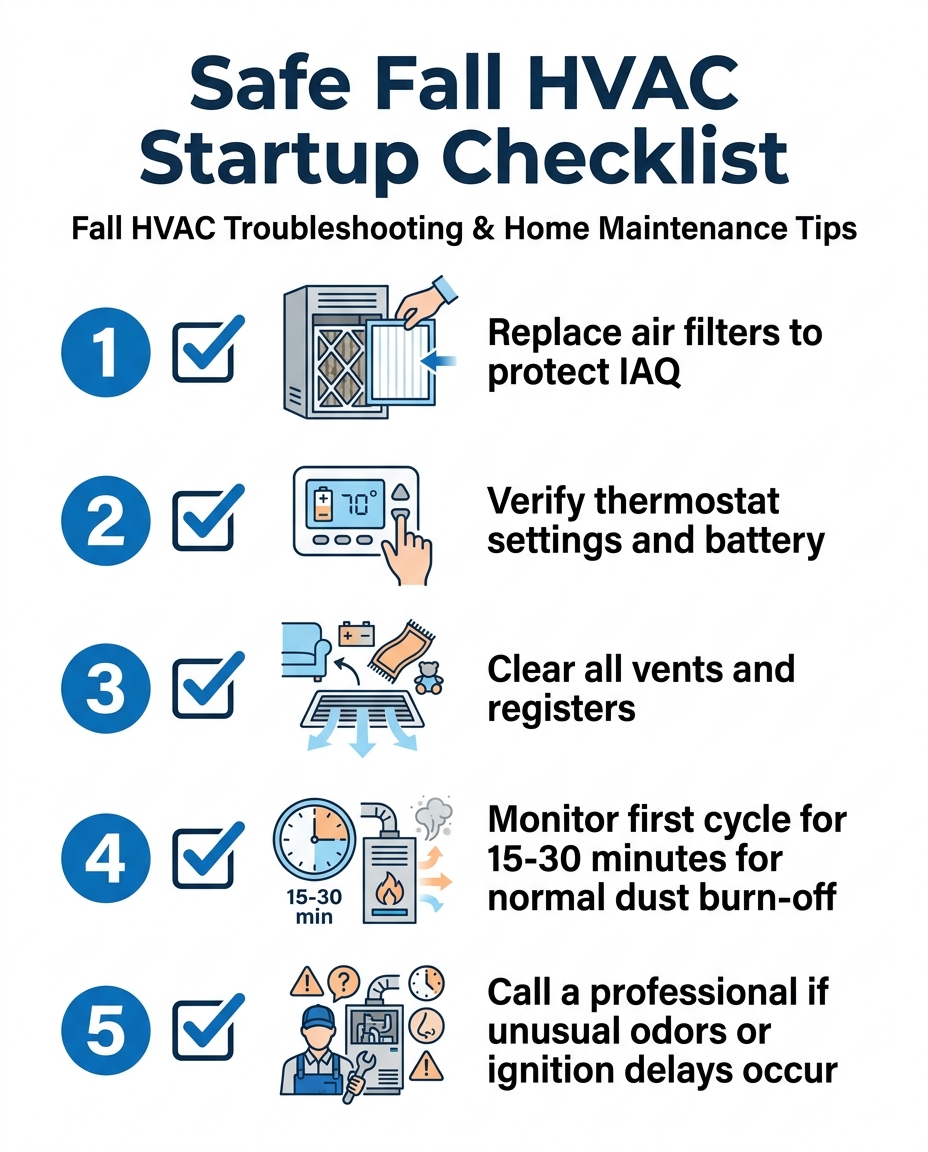
When you power up your heating system in mid-fall October, your nose is often the first diagnostic tool you use. Differentiating between a safe, temporary odor and a dangerous smell that requires immediate professional intervention is a critical homeowner skill. A standard "burning dust" smell is entirely normal for the first run of the season. This odor typically resembles the smell of a warm hair dryer or a dusty space heater, and it should begin to dissipate within 15 to 30 minutes of continuous operation.
However, not all smells are harmless. Recognizing abnormal and dangerous odors can protect your home from severe electrical or combustion hazards. If you notice strange scents, it is vital to know exactly what they mean and how to react.
• Burning Dust / Musty — Likely Cause: Summer dust oxidizing on the heat exchanger. — Normal or Abnormal?: Normal — Required Action: Ventilate the home; monitor for 30 minutes.
• Electrical Burning / Fishy — Likely Cause: Overheating blower motor, melting wire insulation, or failing capacitor. — Normal or Abnormal?: Abnormal (Dangerous) — Required Action: Turn off system at the thermostat immediately; call a professional.
• Melting Plastic — Likely Cause: A foreign object inside the vent or a failing internal component. — Normal or Abnormal?: Abnormal (Dangerous) — Required Action: Shut down the system; inspect accessible floor vents.
• Rotten Eggs / Sulfur — Likely Cause: A natural gas leak near the furnace or gas valve. — Normal or Abnormal?: Abnormal (Emergency) — Required Action: Evacuate the home, leave doors open, and call the gas company.
The ventilation strategy: When you perform the initial test run of your heater, it is good practice to open a few windows to allow the harmless dust burn-off odors to escape. If an unusual smell persists beyond the first half-hour, or if you ever detect the scent of gas or melting plastic, turn off the system immediately at the thermostat. Never ignore a persistent, acrid smell hoping it will simply go away on its own.
Safe Troubleshooting for Ignition Issues
If your heater refuses to turn on when the temperature drops, there are a few basic checks you can safely perform before scheduling a service call. However, it is crucial to strictly maintain safety boundaries. Modern furnaces are complex machines that combine high-voltage electricity with combustible gases. Working with a professional local team ensures a seamless, safe transition without the homeowner risking dangerous DIY combustion errors in Baldwin Park.
Step 1: Thermostat and Power Checks
1. Verify the thermostat mode: Ensure the system is actually switched from "cool" to "heat." It sounds simple, but a bumped switch is a frequent culprit.
2. Check the temperature setting: Adjust the target temperature at least three degrees higher than the current room temperature to force the system to call for heat.
3. Inspect the batteries: If your thermostat screen is blank or flashing, replace the batteries. A weak battery can prevent the thermostat from sending the ignition signal to the furnace control board.
4. Check the electrical panel: Locate your home's main breaker box and ensure the furnace circuit breaker hasn't tripped. If it has tripped, reset it once. If it trips again immediately, do not force it—this indicates a serious electrical short.
Step 2: Knowing When to Stop
If the power is on and the thermostat is calling for heat, but the system still won't start, you must recognize when to stop troubleshooting. One of the most common and dangerous issues is delayed ignition. If you hear a loud, rapid clicking followed by a small "boom" or "whoosh" sound, unburned gas is pooling in the combustion chamber before finally catching a spark.
Safety Warning: Adjusting gas valves, cleaning pilot assemblies, realigning burners, or testing internal electrical components is strictly for licensed professionals. Attempting DIY repairs on a combustion system can lead to gas leaks, carbon monoxide exposure, or fire hazards. If your basic power and thermostat checks do not resolve the issue, leave the system off and call for expert assistance.
Protecting Indoor Air Quality Before Winter Arrives
Fall HVAC maintenance is directly connected to the quality of the air you breathe inside your home. According to EPA data, indoor air quality can degrade significantly during seasonal transitions if HVAC systems are not properly cleaned and inspected. Before you close your windows tightly for the cooler season, evaluating your system's filtration capabilities is essential.
In mid-fall October, the region's dry conditions and the potential for Santa Ana winds make pre-winter indoor air quality checks vital. These winds can carry fine silt, dust, and outdoor allergens directly into your home's envelope. If your HVAC system is operating with a clogged or dirty filter, it cannot effectively capture these irritants, leading to stale air circulation and a noticeable drop in indoor comfort.
Key steps for protecting your indoor air:
• Replace the air filter: A fresh, high-quality pleated filter reduces the strain on your blower motor while trapping dust and dander before it enters your ductwork.
• Clear the vents: Ensure that return and supply registers are not blocked by furniture, rugs, or curtains, which can restrict airflow and harbor dust.
• Manage humidity: Fall air can be exceptionally dry. A well-maintained system helps balance indoor air, minimizing respiratory irritants trapped inside the home.
Taking these proactive steps not only protects your family's health but also protects your property investment. Understanding how a new AC increases home value in Southern California often comes down to demonstrating a history of excellent indoor air quality management and consistent preventative maintenance.
When Troubleshooting Reveals It's Time to Upgrade
Sometimes, routine troubleshooting uncovers issues that go beyond a simple repair. Recognizing the signs that an aging heater or combined HVAC system is beyond safe, cost-effective maintenance is a critical decision point for homeowners in Baldwin Park. If your system requires frequent repairs, struggles to maintain a consistent temperature, or produces alarming noises like grinding and booming, it may be time to consider a full replacement.
Transitioning to modern, high-efficiency systems offers significant benefits. For example, heat pump upgrades provide both heating and cooling from a single, highly efficient unit. Because heat pumps transfer heat rather than generating it through combustion, they eliminate the risks associated with gas leaks and carbon monoxide, making them an exceptionally safe choice for your home.
When planning an upgrade, it is highly recommended to explore generic utility incentives to help offset the initial investment. Many homeowners look into programs like local utility rebates for air conditioning and high-efficiency heat pumps, which can make a substantial difference in the overall project scope. Be sure to verify current program requirements with your utility provider, as these incentives are designed to encourage energy-efficient home improvements.
Additionally, modernizing your home comfort system doesn't have to drain your savings all at once. The availability of flexible HVAC financing options makes full system replacements manageable, allowing you to enjoy reliable heating this winter while paying for the upgrade over time.
Frequently Asked Questions About Fall HVAC Maintenance
Why does my furnace smell like burning dust when I turn it on?
Our technicians at Piggies Air Conditioning often remind customers that the smell of burning dust is completely normal during the first heating cycle of the season. Throughout the summer, microscopic particles of dust and lint settle on the dormant heat exchanger. When you turn the heater on in mid-fall October, these components rapidly heat up, causing the accumulated debris to oxidize and burn off. This process typically creates a distinct, temporary odor that should fade within 15 to 30 minutes of continuous operation. If the smell persists or changes to an electrical or plastic scent, shut the system down immediately.
What should I check before turning my heater on for the winter?
Before initiating the first heating cycle, homeowners should perform a few safe, basic checks. Start by replacing your air filter with a fresh one to ensure proper airflow and protect your indoor air quality. Next, check your thermostat to confirm it is set to "heat" and that the batteries are fresh. Finally, walk through your home to clear any furniture or rugs away from supply and return vents. These simple steps help the system run efficiently and prevent unnecessary strain on the blower motor.
How do you troubleshoot a furnace that won't ignite?
If your furnace refuses to ignite, begin by verifying that the thermostat is calling for heat and the main circuit breaker has not tripped. You can also check that the furnace power switch (often looking like a regular light switch near the unit) is in the "on" position. However, if the system has power but still fails to light, or if you hear loud clicking and booming sounds, you must stop immediately. Actual ignition failure involves gas valves and combustion sensors, which require a licensed professional to diagnose and repair safely.
What is included in fall HVAC maintenance?
Professional fall HVAC maintenance involves a comprehensive safety and performance inspection of your entire heating system. A licensed technician will inspect the heat exchanger for dangerous cracks, test all safety controls and limit switches, and calibrate the thermostat. They will also clean the burner assembly, check the ignition system, and measure the electrical draw of the blower motor. This thorough evaluation ensures the system operates safely and efficiently before the coldest nights arrive.
How long should the burning smell last when I turn on my heater?
The normal burning dust smell should last between 15 and 30 minutes during the initial startup. It is helpful to open a few windows to ventilate the home while the system clears out the summer dust. Anything lasting longer than half an hour, or any odor that smells like electrical burning, melting plastic, or rotten eggs, is a serious warning sign. In those cases, you must turn the system off at the thermostat and contact a professional immediately.
Ensure a Safe Heating Season with a Professional Pre-Winter Inspection
Managing your home's transition from cooling to heating doesn't have to be a stressful experience. Understanding why idle furnaces behave the way they do—and knowing exactly what to look for during that first startup—gives you the confidence to maintain a comfortable environment in Baldwin Park. The peace of mind that comes from knowing your heating system is operating safely and efficiently is invaluable.
We encourage you to schedule your professional pre-winter inspection now, before emergency service calls peak and the coldest nights set in. A clear, neutral evaluation of your idle furnace ensures that any underlying issues are resolved early. By addressing your system's health and indoor air quality proactively, you can prevent mid-winter breakdowns and enjoy a warm, safe home all season long.
Other blogs


Customer Testimonials



CUSTOMER SERVICE!
I highly recommend this company for anyone needing AC repair or maintenance. I'll definitely be calling them again for any future needs!

I had the pleasure of experiencing outstanding service and professionalism from Ruben, and I am beyond impressed. From the moment I first contacted them, by phone and follow up communication via email for my quotes. The attention to detail and commitment to excellence were evident.
Ruben, was incredibly responsive, addressing all my inquiries promptly and with clear, thorough explanations. Their dedication to understanding and meeting my needs was remarkable.
Ruben, went above and beyond to ensure that everything was handled seamlessly, demonstrating not just professionalism, but also a sincere dedication to customer satisfaction.
I can't recommend Piggies air Conditioning/Ruben highly enough. If you're looking for someone who combines expertise with exceptional service, look no further. They are a true example of what outstanding professionalism should be.
The technician arrived on time, which I really appreciated given how crucial air conditioning is in this heat. Ruben was professional and friendly, explaining what he was doing throughout the process. The issue I had was diagnosed fairly quickly, and they provided me with a few options on how to fix it. The pricing was transparent, and I didn't feel like there were any hidden costs, which is always a plus when it comes to service calls like these. Highly recommend this company!
1st & foremost, huge shout out to Ruben thank u so so much for reaching out & making things happen SO FAST! I was so surprised since i had reached out to a couple different places who lagged on even answering calls, messages, etc.
Ruben was also very informative & taught me ALOT that i didnt know about.
Also cant leave the amazing Luis & Miles out of
this review.
They came, they saw, they conquered!
And they worked pretty swiftly too, felt very comfy around em, loved their personalities, great attitude, work ethic, professionalism, had some really good convos & they still got the job done lightning fast
SUPER HUGE SHOUT OUT & THANKS for everything guys! Definitely recommending u guys to everyone i know.
recommendations and feedback. The actual installation was painless and unremarkable, his AC experts got it done, got it cleaned and most importantly got it right. Rueben even went a step further to assure we had
protection from the coming rain, that is service unheard of these days. His price was competitive and a REAL value for the service we recieved. Using anyone else for your AC needs, would be a huge mistake. We thank them again and will recommend to everyone.
Echoing a lot of the other reviews here, Piggies Air Conditioning responds so quickly to requests (even though I actually accidentally sent in multiple requests on my side without responding, oops!)
They were able to come do a FREE energy audit and initial inspection on the same day and Ruben was amazing at explaining his thoughts on our house's situation and what he thought was worth the money and wasn't worth the money.
I truly felt like he was trying to help me find the best solution to our issues instead of just trying to upsell us on everything and anything.
I'm definitely recommending this business to anyone I know if they want a trustworthy and realistic service, value, and quality.