









Preparing Your HVAC System for the Fall Transition
Your air conditioning system has been working overtime all summer, but as the evenings cool down, applying the right home maintenance tips and troubleshooting steps is critical before switching on the heat. You might notice that your AC is running nonstop during the afternoon, yet the house still feels chilly by nightfall. That sudden shift forces your equipment to do double duty. It is a harsh transition, especially when the October Santa Ana winds begin blowing heavy dust and debris through the region.
Many homeowners face a difficult decision point right now: do you risk straining your system by blindly switching the thermostat to "heat," or do you take proactive steps to inspect both the heating and cooling components first? Taking the time to evaluate your equipment prevents unexpected breakdowns on the first truly cold night.
To ensure your home stays comfortable year-round, exploring professional air conditioning systems and securing HVAC financing and rebate assistance makes the seasonal transition much easier.
In our region, autumn brings sharp diurnal temperature drops. At Piggies Air Conditioning, our technicians see this daily reality firsthand—you might need robust cooling at 3:00 PM and reliable heating by 8:00 PM. This rapid cycling from cooling to heating places immense stress on your blower motor, ductwork, and thermostat sensors. If your system has been accumulating wear and tear since May, asking it to instantly fire up the furnace without a basic inspection is a recipe for trouble. Evaluating both sides of your HVAC system right now ensures that you are not carrying summer's hidden mechanical issues into the winter heating season.
How High Winds Impact Indoor Air Quality and Filtration
The transition into fall brings a unique set of environmental challenges. High-wind events significantly increase the amount of airborne particulates, pollen, and fine dirt circulating around your property. When these winds kick up, your HVAC system acts like a giant vacuum, pulling that contaminated air through your return vents and straight into your air filter.
The cause of reduced airflow:
In Baldwin Park and the San Gabriel Valley, local wind climatology directly accelerates the loading of HVAC air filters. Our team typically sees what would normally be a three-month filter lifespan easily drop to just a few weeks during heavy wind events. The Environmental Protection Agency (EPA) recommends upgrading to higher MERV-rated filters (typically MERV 8 to 13 for residential systems) to effectively capture these fine dust particles and allergens before they enter your living space.
The solution to system strain:
When a filter becomes clogged with wind-blown dust, it creates a wall that restricts airflow. Your blower motor then has to work twice as hard to push the same amount of air through the house. This increased static pressure leads to higher energy consumption, uneven temperatures, and eventually, premature motor failure. To prevent this, you must check and replace your filters much more frequently during the fall.
• Normal Operation — Filter Check Frequency: Every 30 to 60 days — Recommended Action: Replace when visibly gray or dirty.
• High Wind Events — Filter Check Frequency: Every 2 to 3 weeks — Recommended Action: Upgrade MERV rating; replace immediately if clogged.
• Heavy Dust / Wildfires — Filter Check Frequency: Weekly — Recommended Action: Monitor indoor air quality; keep windows closed.
Troubleshooting the Burning Dust Smell During Initial Heating Startup
It happens every year: you turn on the heater for the first time in months, and within minutes, a distinct burning dust odor fills the house. At Piggies Air Conditioning, we receive dozens of calls every fall from concerned homeowners for whom this is an alarming moment that immediately sparks fears of an electrical fire or a broken furnace.
Here is the thing: in the vast majority of cases, this smell is completely normal. Over the long summer, dust, pet dander, and airborne particles from the October Santa Ana winds settle directly onto your furnace's heat exchanger and internal burners. When those components ignite and heat up for the first time, that accumulated layer of dust simply burns off.
This harmless odor typically lasts anywhere from 15 to 30 minutes before dissipating entirely. You can help clear the air by opening a few windows while the system runs its initial cycle. However, it is crucial to know the difference between a normal startup smell and a serious hazard.
• Normal burning dust: Smells like a dusty radiator or warm dirt. Fades within half an hour.
• Electrical ozone: Smells like burning plastic, melting wires, or a metallic spark. Shut the system down immediately.
• Rotten eggs or sulfur: Indicates a natural gas leak. Leave the house and call your utility provider immediately.
• Musty or damp odors: Usually points to mold or mildew growth in the ductwork or on the AC evaporator coil.
If the burning smell persists for more than an hour, or if it is accompanied by loud banging or scraping noises, turn off the thermostat and call a professional. Never ignore a persistent odor that doesn't match the typical dust burn-off profile.
Safe Home Maintenance Tips and Troubleshooting for Fall Airflow
Taking care of your HVAC system doesn't mean you have to be a mechanical expert. There are several safe, highly effective steps you can take to improve airflow and efficiency before the cold weather sets in. As your local Baldwin Park HVAC experts, we believe in being completely transparent about what you can do yourself versus what requires a licensed professional.
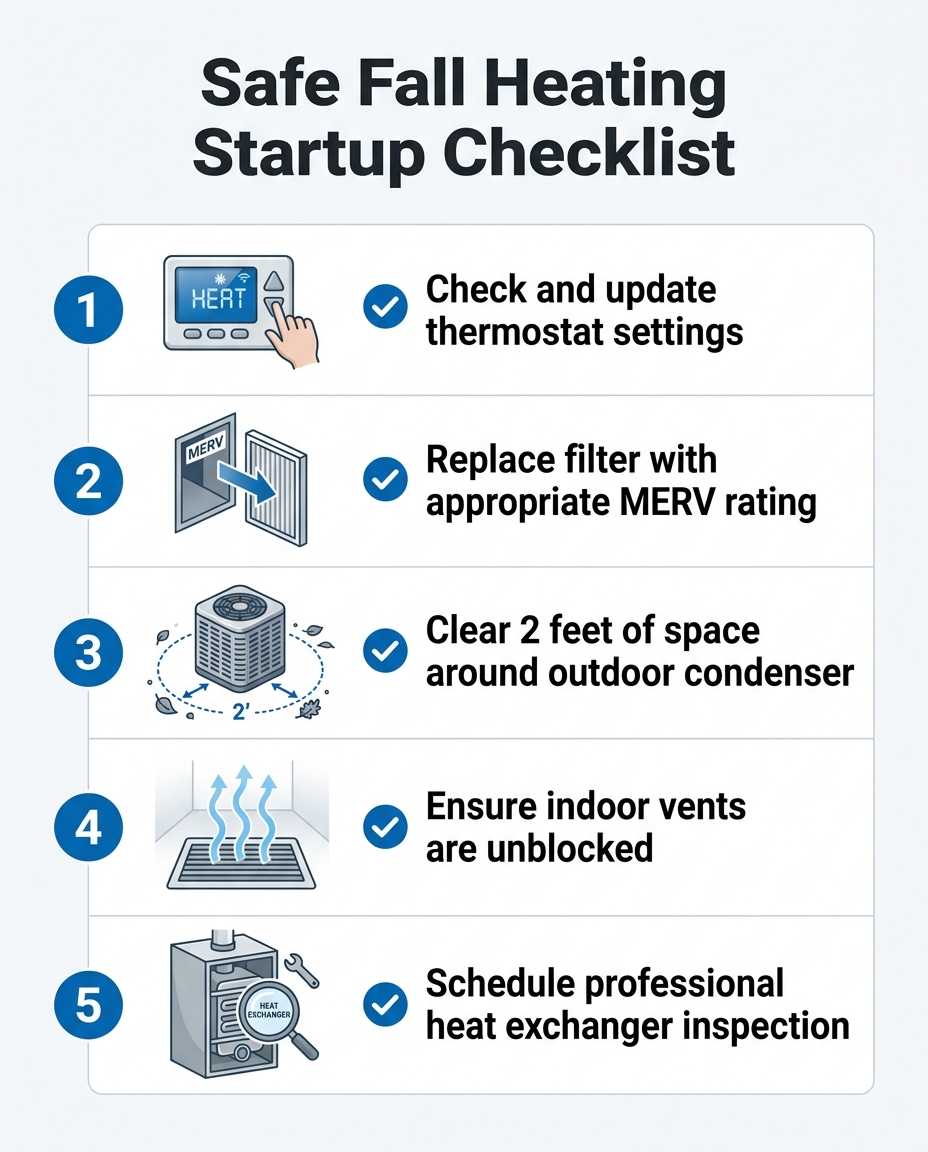
1. Update your thermostat schedules: Check your programmable or smart thermostat. Adjust the schedule to accommodate the cooler mornings and evenings typical of Baldwin Park and the San Gabriel Valley, ensuring you aren't wasting energy heating an empty house during the day.
2. Clear the outdoor condenser unit: Fall winds blow leaves, twigs, and heavy dust straight into the fins of your outdoor AC unit. Carefully brush away this debris and ensure there is at least two feet of clear space around the entire unit. Restricted airflow outside directly impacts your system's efficiency inside.
3. Inspect indoor vents and returns: Walk through every room and check the supply registers and return grilles. Make sure they are fully open and completely unblocked by heavy rugs, new furniture arrangements, or curtains. Closing vents in unused rooms actually increases static pressure and harms your system.
4. Know your DIY boundaries: You can safely change filters, clear debris, and adjust settings. However, you should never attempt to open the furnace cabinet to troubleshoot electrical wiring, adjust gas valves, or clean the burner assembly yourself. Those tasks present severe safety risks and require specific licensing and training.
Why Heating System Inspections Require a Licensed Professional
While changing your air filter is a great first step, a true pre-winter inspection goes far beyond basic airflow troubleshooting. The core components of a gas furnace or heat pump operate under extreme conditions, and checking them requires specialized diagnostic tools and professional training.
The most critical element of a heating inspection is evaluating the heat exchanger. This metal shield separates the toxic combustion gases from the clean air blowing into your home. Over years of expanding and contracting, a heat exchanger can develop microscopic cracks. If left undetected, these cracks can leak deadly carbon monoxide into your living space. A licensed technician uses specialized combustion analyzers and visual inspection cameras to verify that this component is completely intact.
Professionals also perform vital safety checks that simply cannot be done as a DIY project. They measure the electrical draw of the blower motor to predict impending failures, verify that gas line connections are secure, and ensure the burner alignment is burning fuel cleanly. They also test the high-limit safety controls to guarantee the system will shut itself down if it overheats.
In our years of servicing San Gabriel Valley homes, we've found that if an inspection reveals critical failure points—especially in systems that are more than 10 to 15 years old—repairing the unit might not be the safest or most cost-effective choice. In those cases, evaluating your options for a professional AC replacement alongside a new heating system ensures you have reliable, safe comfort before the October Santa Ana winds give way to deeper winter chills.
Evaluating Long-Term System Efficiency Before Winter
The shift between seasons is the perfect time to assess the overall health of your HVAC system. If your equipment struggled to keep up during the peak of summer, it is highly likely it will struggle again when asked to heat your home during the coldest nights of the year.
The problem with aging systems:
Older HVAC units often suffer from degraded efficiency, meaning they consume far more electricity and gas to produce the same amount of comfort. If you noticed weak airflow, strange noises, or rapidly rising energy bills over the summer in Baldwin Park and the San Gabriel Valley, your system is waving a red flag.
The solution through modern upgrades:
Today's modern, energy-efficient alternatives are designed to handle both heating and cooling seamlessly in mild climates. Upgrading to energy-efficient heat pumps provides a massive leap in performance. Because heat pumps transfer heat rather than generating it from combustible fuel, they offer incredible efficiency and eliminate the risk of carbon monoxide leaks entirely.
Navigating Utility Incentives
Upgrading a failing system doesn't have to be an overwhelming financial burden. Local utility programs, state energy initiatives, and federal tax credits often reward the installation of high-efficiency technology. However, navigating these generic rebate qualifications requires expertise. Working with a knowledgeable contractor ensures that your new equipment meets all the strict efficiency standards required to qualify, and that all necessary documentation is handled transparently. A professional can help you match the right equipment to your home's exact square footage and ductwork capacity, maximizing both your comfort and your potential incentives.
Frequently Asked Questions About Fall HVAC Troubleshooting
Before diving into these common questions, you might also find our step-by-step guide on applying for the SCE HVAC rebate helpful if you are considering a system upgrade this season.
Why does my heater smell like burning dust when I turn it on?
It is usually settled dust burning off the heat exchanger after months of inactivity. Over the summer, particles accumulate on the internal heating components. When the furnace ignites for the first time, this dust burns away, creating a temporary odor. It should dissipate quickly within 15 to 30 minutes.
How do Santa Ana winds affect my HVAC system?
They introduce high volumes of dust, dirt, and particulates into the air, clogging your air filters much faster than normal. The October Santa Ana winds restrict system airflow as the filters load up with debris. This forces your blower motor to work harder, which can lead to increased energy use and potential overheating if the filter isn't changed.
What heating troubleshooting can I safely do myself?
You can safely change your air filters, clear outdoor debris away from the condenser, and check your thermostat settings. You can also ensure that all indoor vents are open and unobstructed by furniture. You should never attempt electrical repairs, open the blower cabinet, or troubleshoot gas lines yourself.
How often should I change my air filter in the fall?
During high-wind events, you should check your filters every two to three weeks and replace them as soon as they appear visibly loaded with dust. Under normal conditions, checking them monthly is sufficient. Upgrading to a higher MERV rating during the fall can also help capture finer wind-blown allergens.
Why is a professional inspection required for a gas furnace?
Professionals must check for severe safety hazards like carbon monoxide leaks, cracked heat exchangers, and improper gas combustion. These critical safety checks require specialized diagnostic tools, such as combustion analyzers, that homeowners do not have. A professional inspection ensures the system operates safely and efficiently all winter.
Ensure Safe Heating and Clean Air This Fall
Preparing for the sudden temperature drops and heavy winds of autumn doesn't have to be stressful. By understanding how the local weather impacts your equipment, you can take control of your indoor air quality and system efficiency. Remember that while straightforward guidance on changing filters and clearing vents is incredibly valuable, professional inspections remain your absolute best defense against dangerous winter breakdowns.
Whether you are dealing with a lingering burning smell or simply want the peace of mind that comes from a fully vetted system, taking action now pays off. By following these essential home maintenance tips and troubleshooting guidelines, you can protect your equipment in Baldwin Park and the San Gabriel Valley. Explore flexible options for necessary maintenance or system upgrades today, and don't forget to ask about HVAC financing and rebate assistance to make your next upgrade as smooth as possible.
Other blogs


Customer Testimonials



CUSTOMER SERVICE!
I highly recommend this company for anyone needing AC repair or maintenance. I'll definitely be calling them again for any future needs!

I had the pleasure of experiencing outstanding service and professionalism from Ruben, and I am beyond impressed. From the moment I first contacted them, by phone and follow up communication via email for my quotes. The attention to detail and commitment to excellence were evident.
Ruben, was incredibly responsive, addressing all my inquiries promptly and with clear, thorough explanations. Their dedication to understanding and meeting my needs was remarkable.
Ruben, went above and beyond to ensure that everything was handled seamlessly, demonstrating not just professionalism, but also a sincere dedication to customer satisfaction.
I can't recommend Piggies air Conditioning/Ruben highly enough. If you're looking for someone who combines expertise with exceptional service, look no further. They are a true example of what outstanding professionalism should be.
The technician arrived on time, which I really appreciated given how crucial air conditioning is in this heat. Ruben was professional and friendly, explaining what he was doing throughout the process. The issue I had was diagnosed fairly quickly, and they provided me with a few options on how to fix it. The pricing was transparent, and I didn't feel like there were any hidden costs, which is always a plus when it comes to service calls like these. Highly recommend this company!
1st & foremost, huge shout out to Ruben thank u so so much for reaching out & making things happen SO FAST! I was so surprised since i had reached out to a couple different places who lagged on even answering calls, messages, etc.
Ruben was also very informative & taught me ALOT that i didnt know about.
Also cant leave the amazing Luis & Miles out of
this review.
They came, they saw, they conquered!
And they worked pretty swiftly too, felt very comfy around em, loved their personalities, great attitude, work ethic, professionalism, had some really good convos & they still got the job done lightning fast
SUPER HUGE SHOUT OUT & THANKS for everything guys! Definitely recommending u guys to everyone i know.
recommendations and feedback. The actual installation was painless and unremarkable, his AC experts got it done, got it cleaned and most importantly got it right. Rueben even went a step further to assure we had
protection from the coming rain, that is service unheard of these days. His price was competitive and a REAL value for the service we recieved. Using anyone else for your AC needs, would be a huge mistake. We thank them again and will recommend to everyone.
Echoing a lot of the other reviews here, Piggies Air Conditioning responds so quickly to requests (even though I actually accidentally sent in multiple requests on my side without responding, oops!)
They were able to come do a FREE energy audit and initial inspection on the same day and Ruben was amazing at explaining his thoughts on our house's situation and what he thought was worth the money and wasn't worth the money.
I truly felt like he was trying to help me find the best solution to our issues instead of just trying to upsell us on everything and anything.
I'm definitely recommending this business to anyone I know if they want a trustworthy and realistic service, value, and quality.