









What Causes That Foul Odor When Your Air Conditioner Turns On?
Are you wondering why your AC smells like dirty socks (and how we eliminate the odor)? If you are experiencing a sudden blast of stale, musty air every time your thermostat calls for cooling, you are not alone. This unpleasant phenomenon is widely known in the HVAC industry as Dirty Sock Syndrome, and it is a specific, concrete problem that goes far beyond normal household dust. It frequently plagues homeowners during the August late-summer cooling season, rearing its head just when your system has been working its hardest for months on end.
For reliable air conditioning systems that keep your home comfortable and fresh, investing in professional AC service is the best way to address lingering odors and protect your indoor air quality.
When that foul smell hits you, you face an immediate decision point: do you try to mask the odor with temporary air fresheners, or do you invest in the professional, permanent elimination of the biological growth causing the stench? Masking the smell might provide an afternoon of relief, but the underlying contamination remains inside your ductwork and equipment. Understanding exactly what is happening inside your air handler is the first step toward restoring a truly clean, breathable environment in your home.
The Biology of Dirty Sock Syndrome on Your Evaporator Coil
Dirty Sock Syndrome is caused by a buildup of bacteria, mold, and fungi on a damp indoor evaporator coil, producing a musty, stale odor when the system runs. As your air conditioner removes heat from your home, it simultaneously extracts moisture from the air. This continuous condensation leaves the evaporator coil constantly wet while the system is operating.
In areas like Baldwin Park, CA, where cooling systems run constantly through the warmer months, this dark, damp environment inside the air handler becomes the perfect breeding ground for microscopic life. It is important to understand that this is not just standard dust buildup; it is active biological colonization.
The Role of the Evaporator Coil
Your evaporator coil is a network of highly sensitive copper or aluminum tubes surrounded by delicate metal fins. Its primary job is to absorb heat. When warm indoor air blows across these chilled coils, moisture condenses on the metal surfaces, much like water droplets forming on the outside of a cold glass of ice water on a summer day. This water is supposed to drip down into a condensate drain pan and flow safely out of your house.
However, because the coil is constantly wet, any organic matter—such as microscopic skin cells, pet dander, or pollen that slips past your air filter—sticks to the damp fins. This organic debris serves as a food source for bacteria and fungi. If you want to understand more about maintaining these components, learning how to clean heat pump filters and coils provides great context on how delicate these systems truly are.
Why Bacteria Thrives in the Dark
Biological contaminants thrive in environments where the relative humidity remains above 60% and where moisture becomes stagnant. When your air conditioner cycles off, the fan stops blowing, but the coil remains wet in the pitch-black cabinet of your air handler. The microbes multiply rapidly in the dark. Then, the next time your thermostat triggers a cooling cycle, the blower fan kicks on and forces a concentrated blast of the gases produced by these bacteria directly into your living space—resulting in that unmistakable dirty sock smell.
Why Late Summer is the Peak Danger Zone for AC Odors
Dirty Sock Syndrome rarely happens on the first hot day of spring. Instead, it is a compounding issue that peaks during the August late-summer cooling season. By the time late summer arrives, your air conditioner has been subjected to months of heavy, continuous usage.
With Baldwin Park's late summer heat waves and periodic humidity spikes, the indoor evaporator coil experiences rapid, continuous condensation and evaporation cycles. These localized climate conditions create the exact rapid moisture accumulation needed for bacteria to thrive unchecked.
The Lifecycle of Coil Contamination
1. Spring Activation: When the system is first turned on for the year, the coil is relatively clean and dry. Minor dust may accumulate, but biological growth is minimal.
2. Mid-Summer Accumulation: As the system runs daily, condensation forms continuously. Microscopic organic matter begins to stick to the wet coil, providing a steady food source for airborne microbes.
3. Late-Summer Colonization: By August, the fluctuating temperatures and periodic humidity spikes have created a compounding effect. The bacteria and fungi have established robust colonies on the coil fins. The sheer volume of this biological growth reaches a tipping point, resulting in a noticeable, pungent odor every time the system cycles on.
This timeline explains why your system might have smelled perfectly fine in June, only to become unbearable by the end of August. It is a late-summer phenomenon driven by months of cumulative moisture and biological activity.
Indoor Air Quality and the Health Impact of Biological Pollutants
When your home smells like a damp locker room, the odor is more than just a nuisance—it is a clear indicator of compromised indoor air quality. The Environmental Protection Agency (EPA) identifies biological pollutants, including mold, mildew, and bacteria, as primary contributors to poor indoor air quality. When these contaminants are living directly on your evaporator coil, they are perfectly positioned to infiltrate every room in your house.
As the blower fan pushes conditioned air over the contaminated coil, it picks up microscopic spores and bacterial byproducts, distributing them throughout your ductwork and into your living spaces in Baldwin Park, CA. You are quite literally breathing in the exhaust of these microbial colonies.
Identifying Symptoms of Poor Indoor Air Quality
Leaving biological growth unchecked on your AC coil can lead to a variety of comfort and wellness issues within the home. Common impacts include:
• Exacerbated allergies: Increased sneezing, coughing, or watery eyes when the AC is running.
• Respiratory irritation: A feeling of tightness in the chest or throat irritation caused by airborne mold spores.
• Lingering headaches: Poor air quality and volatile organic compounds (VOCs) produced by bacteria can contribute to frequent headaches.
• Persistent mustiness: Soft furnishings, carpets, and curtains may begin to absorb and retain the stale odor over time.
Addressing the root cause of the smell is not just about making your house smell better; it is about ensuring the air your family breathes is clean, healthy, and free of biological pollutants.
The Danger of Masking Odors: Why DIY Fixes Fail
When faced with a foul-smelling air conditioner during the August late-summer cooling season, many homeowners instinctively reach for quick fixes. Unfortunately, attempting to resolve Dirty Sock Syndrome through do-it-yourself methods is not only ineffective but can also cause expensive damage to your HVAC equipment.
The Risks of Chemical Sprays and Deodorizers
One of the most common mistakes is spraying store-bought deodorizers or essential oils into the return vents. These products only mask the symptom and do nothing to eradicate the biological growth on the coil. Worse, many commercial sprays contain volatile organic compounds (VOCs) that degrade your indoor air quality further. When mixed with the existing bacterial odors, the resulting smell is often worse than the original problem.
Furthermore, standard seasonal wipe-downs or changing your air filter will not fix an odor originating from the evaporator coil. A clean filter improves airflow and catches dry dust, but it cannot clean a contaminated, wet coil located deeper inside the system.
Why DIY Coil Cleaning is Dangerous
Attempting to clean the evaporator coil yourself is highly discouraged. The aluminum fins on the coil are incredibly thin and easily bent. Even slight pressure from a brush or a vacuum attachment can crush the fins, severely restricting airflow and potentially ruining the coil entirely. Specialized chemical treatments are required to destroy bacterial colonies safely, and these chemicals must be handled and applied by a licensed professional to ensure they do not corrode the metal or leave toxic residues in your air stream.
• Changing the Air Filter — Why It Fails: Filters only catch airborne debris before it hits the coil; they cannot remove existing bacterial colonies growing on the metal fins. — The Professional Solution: Direct application of professional-grade coil cleaners that penetrate the fins.
• Scented Sprays in Vents — Why It Fails: Only masks the odor temporarily and introduces harmful VOCs into your home's breathing air. — The Professional Solution: Eradicating the root cause (the bacteria) so no masking agents are needed.
• DIY Brushing/Scraping — Why It Fails: High risk of crushing delicate aluminum fins, which restricts airflow and can destroy the coil entirely. — The Professional Solution: Using non-acidic, foaming chemical cleaners that lift debris without mechanical force.
• Bleach or Vinegar — Why It Fails: Can cause severe corrosion to copper and aluminum, leading to catastrophic refrigerant leaks. — The Professional Solution: Installing UV-C lights to continuously disrupt microbial DNA without harsh chemicals.
Our Definitive Two-Step Solution: Chemical Cleaning and UV Lights
To permanently eliminate Dirty Sock Syndrome, temporary fixes simply will not cut it. We utilize a definitive, two-step professional methodology designed to eradicate existing biological growth and ensure it never returns to your Baldwin Park, CA home.
During a recent routine maintenance visit, a local homeowner requested an inspection because they suspected their system was struggling with airflow and musty odors. A technician promptly accessed the air handler, identified the bacterial buildup, and completed a comprehensive cleaning of the evaporator coil. The process was finished in a timely, satisfactory manner, restoring fresh airflow to the home immediately. This is the standard of care required to truly solve the problem.
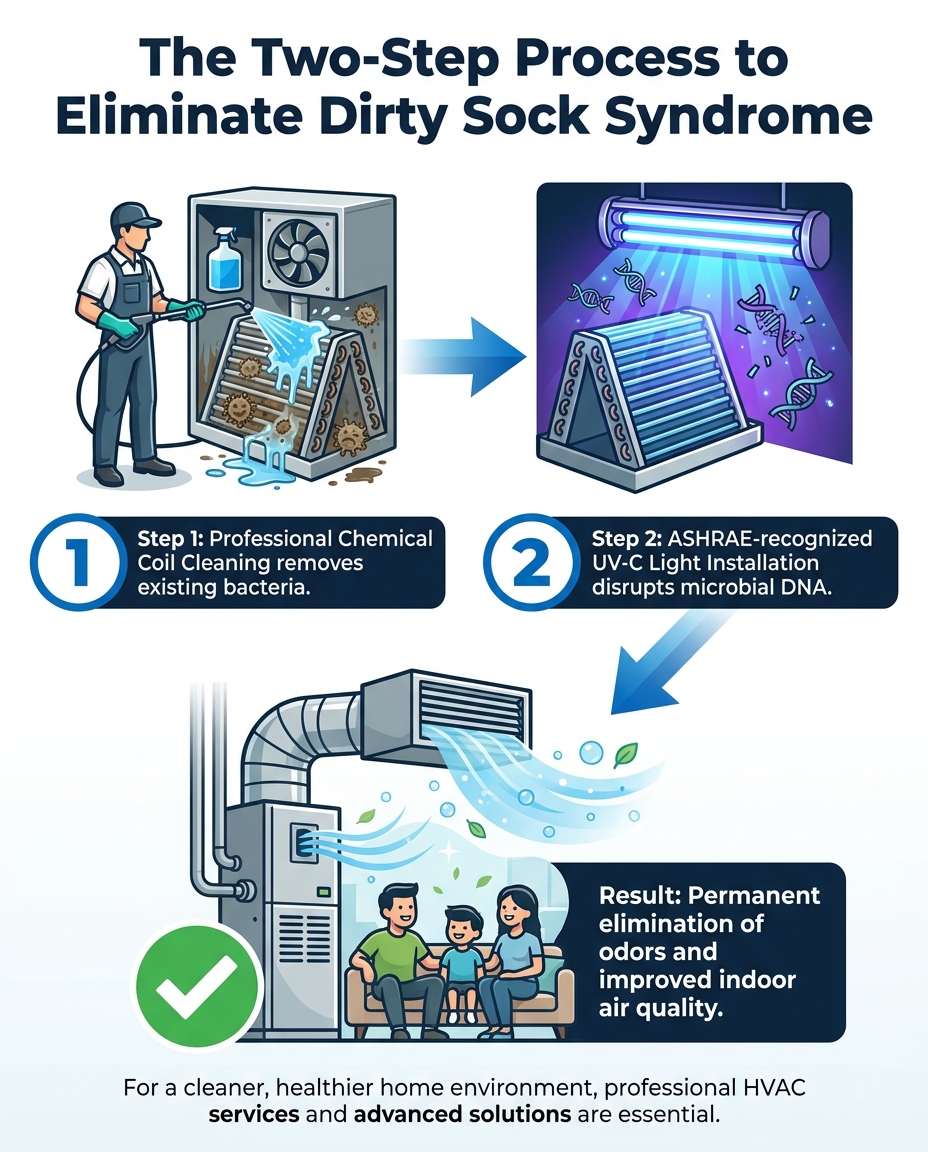
Step 1: Precision Chemical Eradication
The first step involves a professional-grade chemical coil cleaning. A licensed technician safely accesses the evaporator coil and applies a specialized, foaming chemical cleaner. This non-acidic solution is designed to penetrate deep into the tightly packed aluminum fins, lifting out dirt, biological matter, and bacterial colonies without damaging the delicate metal. Once the foam has neutralized the contaminants, it is safely rinsed away, leaving the coil completely bare and sanitized.
Step 2: Continuous UV-C Protection
Cleaning the coil solves the immediate odor, but because the coil will inevitably get wet again the next time the AC runs, the bacteria will eventually return if left unprotected. This is why we treat the installation of ASHRAE-recognized UV-C ultraviolet lights as a mandatory preventative pairing with chemical cleaning, rather than just an optional add-on.
UV-C lights are installed directly inside the air handler, shining continuously on the evaporator coil. The ultraviolet light disrupts the DNA of microscopic organisms, rendering them unable to reproduce. By preventing mold and bacteria from colonizing the damp coil, the UV light serves as a permanent shield against Dirty Sock Syndrome.
Proactive scheduling of this comprehensive service through a routine AC maintenance plan prevents future late-summer breakdowns and ensures your air remains pristine year-round.
Frequently Asked Questions About AC Odors and Dirty Sock Syndrome
Homeowners dealing with foul-smelling air conditioners often have a lot of concerns about safety and repair options. If you are experiencing this issue during the August late-summer cooling season, you likely have questions about what steps to take next. While reviewing these answers, remember that professional diagnosis is always recommended. For residents in our local HVAC service areas, scheduling an inspection is the safest way to proceed.
Is it safe to run my AC if it smells like dirty socks?
Running the AC circulates the biological contaminants causing the odor throughout your living spaces. While not immediately life-threatening for most healthy individuals, it severely degrades your indoor air quality and can trigger respiratory irritation. If anyone in your home suffers from asthma or severe allergies, the continuous circulation of these microbial byproducts can cause significant discomfort. It should be professionally inspected and cleaned as soon as possible to restore healthy breathing air.
How do professionals fix dirty sock syndrome?
Professionals use specialized, non-corrosive chemical cleaners to neutralize and remove the bacteria living directly on the evaporator coil. They follow up this deep cleaning by installing UV-C lights inside the air handler to prevent future biological growth from taking hold. Additionally, a thorough professional service includes checking the condensate drain line to ensure moisture is being properly removed from the system, reducing the stagnant water that feeds the bacteria.
Can a UV light stop my AC from smelling?
Yes, UV-C lights are highly effective at disrupting the DNA of mold, mildew, and bacteria, preventing them from reproducing. By stopping the biological growth that causes the foul odors, a properly installed UV light keeps the evaporator coil sanitized. UV lights are considered a long-term preventative measure, not just a temporary fix, ensuring that once your coil is clean, it stays clean.
Why does my AC smell like mildew but only when it first turns on?
Moisture sits on the evaporator coil while the system is turned off, creating a dark, damp environment that allows bacteria to multiply rapidly. When the blower fan first starts at the beginning of a cooling cycle, it pushes the accumulated, concentrated musty air directly into your ductwork. The smell often dissipates as the system runs and the air cycles through the house, but the root cause—the bacterial colony on the coil—remains active and continues to degrade your air quality.
Will changing the air filter fix AC smells?
A clean filter improves airflow and protects the system from dust, but it cannot clean a contaminated evaporator coil. Filters are designed to catch dry airborne debris before it enters the equipment, not the biological growth living directly on the damp coil surfaces deep inside the unit. While regular filter changes are an important part of routine maintenance, they will not cure Dirty Sock Syndrome once the bacteria has already colonized the coil.
Restore Fresh, Healthy Air to Your Home Today
Dealing with Dirty Sock Syndrome can be frustrating, but it is a highly solvable problem. You do not have to live with foul odors circulating through your Baldwin Park, CA home every time the cooling system cycles on. By relying on professional chemical cleaning paired with preventative UV light installation, you can permanently eliminate the biological growth at its source.
Don't let compromised air quality affect your family's comfort. Schedule a professional inspection today to eradicate the buildup and restore clean, odor-free air to your home.
Other blogs


Customer Testimonials



CUSTOMER SERVICE!
I highly recommend this company for anyone needing AC repair or maintenance. I'll definitely be calling them again for any future needs!

I had the pleasure of experiencing outstanding service and professionalism from Ruben, and I am beyond impressed. From the moment I first contacted them, by phone and follow up communication via email for my quotes. The attention to detail and commitment to excellence were evident.
Ruben, was incredibly responsive, addressing all my inquiries promptly and with clear, thorough explanations. Their dedication to understanding and meeting my needs was remarkable.
Ruben, went above and beyond to ensure that everything was handled seamlessly, demonstrating not just professionalism, but also a sincere dedication to customer satisfaction.
I can't recommend Piggies air Conditioning/Ruben highly enough. If you're looking for someone who combines expertise with exceptional service, look no further. They are a true example of what outstanding professionalism should be.
The technician arrived on time, which I really appreciated given how crucial air conditioning is in this heat. Ruben was professional and friendly, explaining what he was doing throughout the process. The issue I had was diagnosed fairly quickly, and they provided me with a few options on how to fix it. The pricing was transparent, and I didn't feel like there were any hidden costs, which is always a plus when it comes to service calls like these. Highly recommend this company!
1st & foremost, huge shout out to Ruben thank u so so much for reaching out & making things happen SO FAST! I was so surprised since i had reached out to a couple different places who lagged on even answering calls, messages, etc.
Ruben was also very informative & taught me ALOT that i didnt know about.
Also cant leave the amazing Luis & Miles out of
this review.
They came, they saw, they conquered!
And they worked pretty swiftly too, felt very comfy around em, loved their personalities, great attitude, work ethic, professionalism, had some really good convos & they still got the job done lightning fast
SUPER HUGE SHOUT OUT & THANKS for everything guys! Definitely recommending u guys to everyone i know.
recommendations and feedback. The actual installation was painless and unremarkable, his AC experts got it done, got it cleaned and most importantly got it right. Rueben even went a step further to assure we had
protection from the coming rain, that is service unheard of these days. His price was competitive and a REAL value for the service we recieved. Using anyone else for your AC needs, would be a huge mistake. We thank them again and will recommend to everyone.
Echoing a lot of the other reviews here, Piggies Air Conditioning responds so quickly to requests (even though I actually accidentally sent in multiple requests on my side without responding, oops!)
They were able to come do a FREE energy audit and initial inspection on the same day and Ruben was amazing at explaining his thoughts on our house's situation and what he thought was worth the money and wasn't worth the money.
I truly felt like he was trying to help me find the best solution to our issues instead of just trying to upsell us on everything and anything.
I'm definitely recommending this business to anyone I know if they want a trustworthy and realistic service, value, and quality.