









What Every San Gabriel Valley Homeowner Should Know About How to Clean Heat Pump Filters and Coils
Knowing how to clean heat pump filters and coils is one of the most useful things you can do as a homeowner. Here's a quick overview of the process:
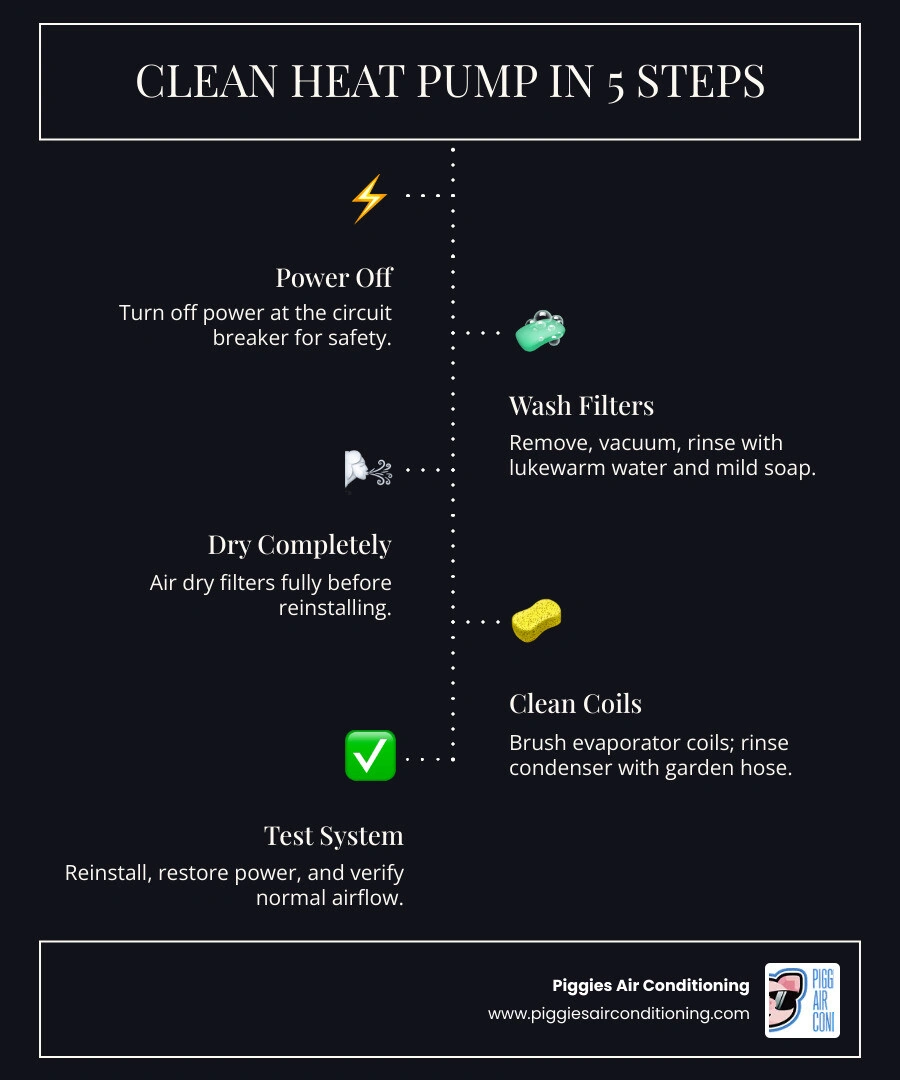
- Turn off the power at the circuit breaker before touching anything.
- Remove the filters from the indoor unit, vacuum off loose dust, then rinse with lukewarm water and mild soap.
- Dry filters completely — never reinstall a damp filter.
- Clean the coils — gently brush indoor evaporator coils and rinse outdoor condenser coils with a garden hose using moderate pressure.
- Reinstall, restore power, and test — check for normal airflow before walking away.
That's the short version. Keep reading for the full step-by-step breakdown.
Your heat pump works hard year-round in the San Gabriel Valley — cooling during hot inland summers and heating through cooler winter nights. Over time, dust, pollen, and debris build up on filters and coils. When that happens, your system works harder than it should. Energy bills climb. Comfort drops. And the lifespan of your unit quietly shortens.
Research shows a dirty heat pump can lose up to 30% of its efficiency — costing homeowners hundreds of dollars a year in unnecessary utility costs. The good news? Regular filter and coil cleaning is a straightforward DIY task that takes less than an hour and makes a measurable difference.
This guide walks you through exactly how to do it safely and correctly.
Know your how to clean heat pump filters and coils terms:
Why Regular Heat Pump Maintenance Matters
Regularly cleaning your heat pump is about more than just keeping things tidy; it has a direct impact on your monthly utility bills and the overall lifespan of your system. In places like West Covina, Pasadena, and the wider Los Angeles County, our weather demands a lot from our HVAC systems. When a heat pump is neglected, it quickly starts to show signs of strain.
According to industry statistics, a dirty air conditioner or heat pump can use up to 25% more energy to achieve the same temperature settings as a clean one. Dust and debris act like an insulating blanket over the coils, preventing them from transferring heat efficiently. Over a year, this drop in efficiency can cost homeowners between $200 and $600 in unnecessary energy expenses.
Furthermore, keeping your heat pump clean dramatically extends its operational life. A well-maintained heat pump can last up to 20 years, whereas a severely neglected system may fail prematurely at just 12 to 15 years. By staying on top of basic maintenance, you protect your investment and postpone the high cost of a system replacement.
To see the difference regular care makes, look at how a clean system compares to a neglected one:
| Performance Metric | Well-Maintained Heat Pump | Neglected Heat Pump |
|---|---|---|
| Energy Efficiency | 100% (Optimal heat transfer) | Up to 30% efficiency loss |
| Lifespan | 15 to 20 years | 12 to 15 years (or fewer) |
| Airflow Quality | Clean, highly filtered, allergen-free | Dusty, musty, restricted airflow |
| Utility Bills | Standard, predictable rates | 10% to 25% higher monthly bills |
| System Strain | Low (Components run smoothly) | High (Compressor runs hot and long) |
By understanding how maintenance affects heat pump lifespan, you can see how a little bit of DIY effort goes a long way. Let's look at what you need to get the job done right.
Essential Tools and Safety Prep Before You Begin
Before you roll up your sleeves, you need to gather the proper tools and take a few vital safety precautions. Working on a heat pump involves dealing with both electrical components and delicate metal parts, so safety must always come first.

To clean your heat pump filters and coils successfully, assemble the following tools and materials:
- A vacuum cleaner with a soft brush attachment.
- A soft-bristled hand brush or a clean microfiber cloth.
- Mild dish soap or a specialized, non-acidic, HVAC-safe coil cleaner.
- A garden hose with an adjustable spray nozzle (for the outdoor unit).
- A fin comb (optional, for straightening bent aluminum coil fins).
- Safety goggles, work gloves, and a face mask to protect yourself from dust and cleaning solutions.
- A clean towel or drying rack.
The Ultimate Safety Rule: Cut the Power
Never attempt to clean any part of your heat pump while it is connected to power. To safely isolate the system:
- Turn off the heat pump via your thermostat.
- Locate your home's main electrical panel and switch off the circuit breaker labeled for your HVAC or heat pump system.
- For the outdoor unit, locate the physical disconnect switch (usually housed in a small metal box mounted on the wall near the unit) and pull the plug or flip the switch to "Off."
Understanding how does a heat pump work for heating and cooling helps clarify why cutting the power is so important. The system utilizes high-voltage electrical circuits to run the compressor and fan motors, and spraying water or touching internal parts while energized carries a severe risk of electric shock.
Step-by-Step Guide: How to Clean Heat Pump Filters and Coils
Now that your tools are ready and the power is safely disconnected, you are ready to begin the cleaning process. Following a structured schedule ensures you do not miss any critical components and keeps your manufacturer's warranty fully intact.
Step 1 & 2: How to Clean Heat Pump Filters and Coils Safely (Access and Filter Wash)
The filters in your indoor unit act as the first line of defense, trapping airborne dust, pet dander, and hair before it can reach the internal coils.
- Access the Filters: Gently lift the front plastic panel of your indoor unit until it clicks and holds itself open. You will see the mesh filters sitting directly inside.
- Take a Photo: Before pulling them out, take a quick picture with your phone. This gives you a reference for their exact orientation when it is time to slide them back in.
- Remove and Inspect: Slide the filters down and out of their mounting frames. Inspect them for any signs of physical damage, such as tears in the mesh or warped plastic frames. If they are torn or warped, they must be replaced, as damaged filters allow dust to bypass the filtration system and coat the coils directly.
- Vacuum the Loose Dust: Take the filters outside or to a trash can. Use your vacuum cleaner with the soft brush attachment to gently sweep away the heavy layers of dust and hair.
- Wash the Filters: Rinse the filters under lukewarm water. If they are particularly dirty or have a greasy film from cooking or indoor pets, fill a sink with warm water and a few drops of mild dish soap. Submerge the filters and gently agitate them. Crucial Tip: Never use water hotter than 104°F (40°C) or place the filters in a dishwasher, as high heat will warp the plastic frames.
- Air Dry Completely: Shake off the excess water and lay the filters flat on a dry towel in a shaded area. Do not place them in direct sunlight or use a hair dryer to speed up the process. The filters must be 100% dry before they are reinstalled to prevent mold and mildew from growing inside your ductwork.
Step 3 & 4: How to Clean Heat Pump Filters and Coils (Indoor Evaporator and Outdoor Condenser Coils)
With the filters out of the way, you can now access the indoor evaporator coils. You will also need to clean the outdoor condenser coils to ensure unrestricted heat exchange.
- Brush the Indoor Evaporator Coils: The indoor coils are made of very thin, delicate aluminum fins. Using a soft-bristled brush or a dry microfiber cloth, gently sweep the coils in a vertical direction (along the line of the fins) to remove light dust. Never brush horizontally, as this will bend the fins and block airflow. If you have an approved, no-rinse foaming coil cleaner, you can spray it lightly onto the coils; the condensation generated when the unit runs will naturally wash the cleaner and dirt down into the condensate drain pan.
- Clear the Outdoor Area: Head outside to your condenser unit. Before cleaning, clear away any weeds, tall grass, leaves, or branches. You should maintain at least two feet of clear space around the entire outdoor cabinet to allow for proper airflow.
- Rinse the Outdoor Condenser Coils: Look through the metal grates of the outdoor unit to locate the coils. Using your garden hose with a standard spray nozzle, gently rinse the coils from the outside inward.
- Straighten Bent Fins: If you notice any bent aluminum fins on either unit, use a specialized fin comb to gently straighten them out. This restores optimal airflow and helps the system run more efficiently.
Step 5: Drying, Reinstallation, and System Testing
The final step is to put everything back together and make sure your heat pump is operating smoothly.
- Verify Dryness: Check your filters one last time to ensure they are completely dry to the touch.
- Slide Filters In: Using the photo you took earlier as a guide, slide the clean filters back into their slots. Press down gently until they click securely into place.
- Close the Panel: Push the front cover of the indoor unit down until it snaps shut.
- Restore Power: Flip your outdoor electrical disconnect switch back to "On," then head inside to turn the main circuit breaker back on.
- Test the System: Turn your thermostat back to your desired cooling or heating setting. Listen closely for a few minutes. The air coming from your vents should smell clean and fresh, and the airflow should feel strong and consistent.
Signs Your Heat Pump Needs Immediate Attention
While regular cleaning can solve many minor performance issues, there are times when your system is trying to tell you that it needs professional help. Keep an eye out for these warning signs:
- Reduced Airflow: If you have cleaned your filters and coils but the air coming from your registers still feels weak, there may be a blockage deep inside your ductwork or an issue with the blower motor.
- Ice or Frost Buildup: If you notice ice forming on your indoor evaporator coils or the outdoor unit during the summer, this is a clear indicator of restricted airflow or a refrigerant leak.
- Unusual Noises: A clean system should run quietly. If you hear loud rattling, squealing, or grinding, refer to our guide on what to do when your heat pump making grinding or rattling noise to determine if a component has come loose.
- Inconsistent Temperatures: If some rooms in your home are freezing while others remain warm, your heat pump may be struggling to keep up due to internal component wear.
If you notice any of these symptoms, it is best to consult a professional technician to diagnose the problem before it leads to a complete system breakdown. You can read more about identifying these issues in our guide to the common signs your heat pump needs repair.
Frequently Asked Questions About Heat Pump Maintenance
How often should I clean my heat pump filters?
As a general rule, you should check and clean your heat pump filters every 4 to 6 weeks during seasons of heavy use (such as the peak of summer and winter). If you live in a home with pets, smokers, or family members who suffer from severe allergies, you may need to clean them every 2 to 3 weeks. During periods of mild weather when the system is rarely running, checking them once every 3 months is usually sufficient.
Can I use a pressure washer to clean my heat pump coils?
No, you should never use a pressure washer on your heat pump coils. The high-pressure water stream will instantly flatten and crush the delicate aluminum fins, permanently restricting airflow and ruining the coil. Additionally, high-pressure water can easily force its way past protective seals and damage sensitive electrical wiring or control boards inside the outdoor unit. Always stick to a standard garden hose with moderate, gentle pressure.
When should I call a professional for heat pump cleaning?
While homeowners can easily handle filter cleaning and basic outdoor coil rinsing, you should call a professional for a deep system clean at least once a year. A licensed technician has specialized tools to clean the hard-to-reach blower wheel, flush out the condensate drain line to prevent indoor water leaks, inspect electrical connections, and check refrigerant levels. If your coils are severely caked in grime, or if you suspect a refrigerant leak, always leave the job to a professional to protect your warranty and ensure your safety.
Conclusion
Taking the time to learn how to clean heat pump filters and coils is a simple, cost-effective way to keep your home comfortable while keeping your energy bills low. Regular DIY care keeps your system running efficiently, but it works best when paired with professional seasonal tune-ups.
At Piggies Air Conditioning, we are proud to provide honest, owner-operated HVAC services to our neighbors throughout Baldwin Park, West Covina, Pasadena, and the surrounding San Gabriel Valley. As a certified Daikin Comfort Pro dealer, we back our Daikin installations with an industry-leading 12-year full replacement and labor warranty, giving you ultimate peace of mind.
Whether you need a quick seasonal checkup or expert repairs, our team is ready to help.
- If you are in West Covina, book your Heat Pump Maintenance West Covina CA today.
- If you live in Pasadena, schedule your Heat Pump Service Pasadena CA with our friendly technicians.
- For residents across the wider region, explore our Heat Pump Maintenance Los Angeles County CA options.
Keep your home comfortable all year long. Schedule professional service today with Piggies Air Conditioning!
Other blogs


Customer Testimonials



CUSTOMER SERVICE!
I highly recommend this company for anyone needing AC repair or maintenance. I'll definitely be calling them again for any future needs!

I had the pleasure of experiencing outstanding service and professionalism from Ruben, and I am beyond impressed. From the moment I first contacted them, by phone and follow up communication via email for my quotes. The attention to detail and commitment to excellence were evident.
Ruben, was incredibly responsive, addressing all my inquiries promptly and with clear, thorough explanations. Their dedication to understanding and meeting my needs was remarkable.
Ruben, went above and beyond to ensure that everything was handled seamlessly, demonstrating not just professionalism, but also a sincere dedication to customer satisfaction.
I can't recommend Piggies air Conditioning/Ruben highly enough. If you're looking for someone who combines expertise with exceptional service, look no further. They are a true example of what outstanding professionalism should be.
The technician arrived on time, which I really appreciated given how crucial air conditioning is in this heat. Ruben was professional and friendly, explaining what he was doing throughout the process. The issue I had was diagnosed fairly quickly, and they provided me with a few options on how to fix it. The pricing was transparent, and I didn't feel like there were any hidden costs, which is always a plus when it comes to service calls like these. Highly recommend this company!
1st & foremost, huge shout out to Ruben thank u so so much for reaching out & making things happen SO FAST! I was so surprised since i had reached out to a couple different places who lagged on even answering calls, messages, etc.
Ruben was also very informative & taught me ALOT that i didnt know about.
Also cant leave the amazing Luis & Miles out of
this review.
They came, they saw, they conquered!
And they worked pretty swiftly too, felt very comfy around em, loved their personalities, great attitude, work ethic, professionalism, had some really good convos & they still got the job done lightning fast
SUPER HUGE SHOUT OUT & THANKS for everything guys! Definitely recommending u guys to everyone i know.
recommendations and feedback. The actual installation was painless and unremarkable, his AC experts got it done, got it cleaned and most importantly got it right. Rueben even went a step further to assure we had
protection from the coming rain, that is service unheard of these days. His price was competitive and a REAL value for the service we recieved. Using anyone else for your AC needs, would be a huge mistake. We thank them again and will recommend to everyone.
Echoing a lot of the other reviews here, Piggies Air Conditioning responds so quickly to requests (even though I actually accidentally sent in multiple requests on my side without responding, oops!)
They were able to come do a FREE energy audit and initial inspection on the same day and Ruben was amazing at explaining his thoughts on our house's situation and what he thought was worth the money and wasn't worth the money.
I truly felt like he was trying to help me find the best solution to our issues instead of just trying to upsell us on everything and anything.
I'm definitely recommending this business to anyone I know if they want a trustworthy and realistic service, value, and quality.