









What to Do When Your Heat Pump Won't Switch Between Heating and Cooling
If your heat pump is not switching between heating and cooling, here are the most common reasons why — and what to check first:
- Stuck or failed reversing valve — the part that physically redirects refrigerant flow between modes
- Thermostat settings or wiring issue — wrong mode selected, dead batteries, or a miswired O/B terminal
- Low refrigerant — pressure drop can prevent the reversing valve slide from moving
- Dirty air filter or blocked coils — restricted airflow mimics a mode-switching failure
- Tripped breaker, bad capacitor, or faulty control board — electrical issues that cut the signal to the reversing valve
If you've checked your thermostat settings and replaced your filter and the problem persists, it's time to call a certified HVAC technician.
Picture this: it's a warm June morning in Baldwin Park or West Covina, and you flip your thermostat from heat to cool — but the air coming out stays warm. Or the opposite happens in winter, and your system just keeps blowing cool air no matter what you do. A heat pump not switching modes is one of the more frustrating HVAC problems a homeowner can face, precisely because the system seems to be running fine.
Heat pumps are designed to handle both heating and cooling year-round, which also means they accumulate wear twice as fast as a single-season system. By June 2026, many San Gabriel Valley homes rely on heat pumps as their only source of whole-home comfort — so when mode switching fails, the impact is immediate. A stuck heat pump can drive energy consumption up by as much as 30% as the system strains to do a job it can no longer perform efficiently.
The good news is that many causes are diagnosable, and some are even fixable with a quick thermostat check or filter swap. This guide walks you through every major reason a heat pump gets stuck in one mode and tells you exactly when to stop troubleshooting and pick up the phone.
Similar topics to heat pump not switching between heating and cooling:
How the Reversing Valve and Solenoid Control Mode Shifting
To understand why your system is acting up, it helps to understand the mechanical magic happening inside the outdoor cabinet. Unlike a traditional air conditioner and furnace combo, a heat pump uses the exact same refrigeration cycle to both cool and heat your home. How does it pull off this double duty? It all comes down to a single, critical component: the reversing valve.
Think of the reversing valve as a high-tech train track switch for your system's refrigerant. Inside the valve is a sliding mechanism (often called the slide or the spool) that moves back and forth. Depending on which way the slide is pushed, it redirects the hot, high-pressure refrigerant gas to either your indoor coils (for heating) or your outdoor coils (for cooling).
But what actually tells this slide to move? That is the job of the solenoid coil.

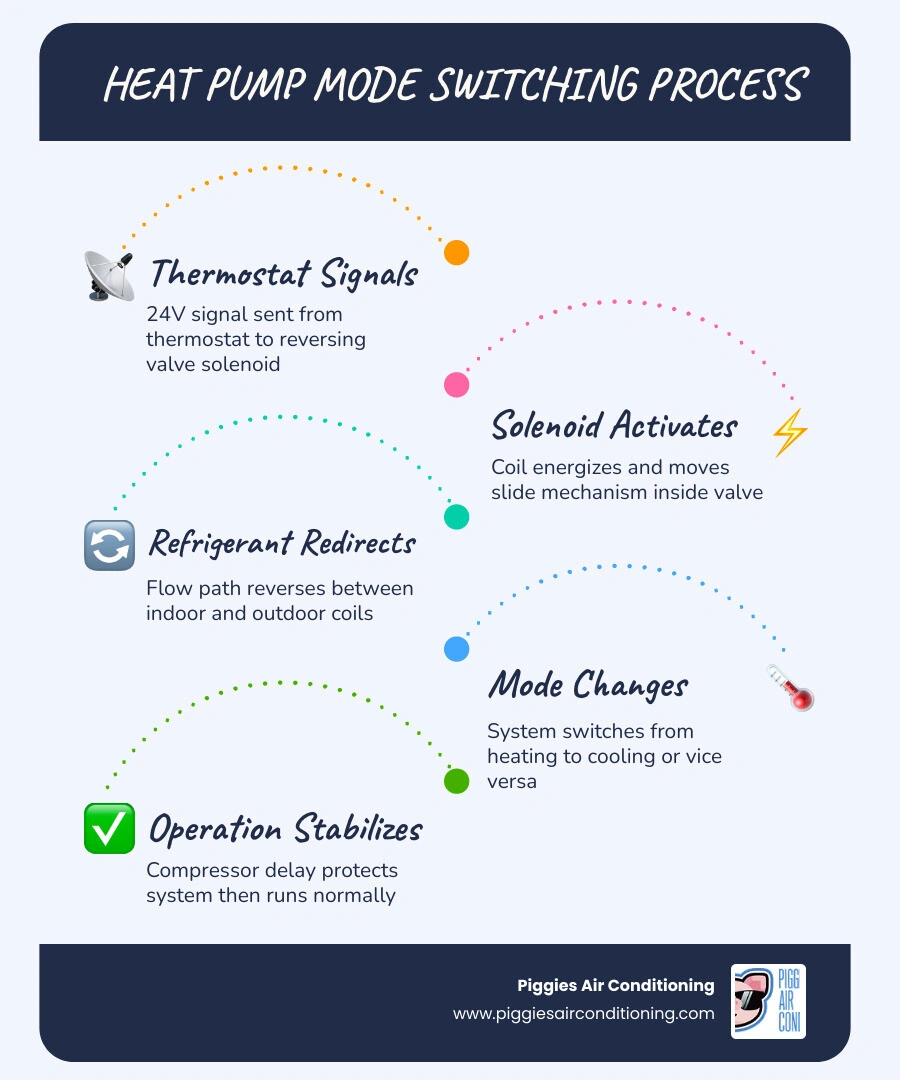
The solenoid is an electromagnetic coil that sits on top of the reversing valve. When you change the mode on your thermostat, it sends a 24-volt electrical signal down the O/B wire to the solenoid. This electrical current creates a magnetic field that pulls a tiny pilot valve inside the assembly. Once the pilot valve opens, it harnesses the natural pressure of the refrigerant itself to slide the main valve mechanism into place.
For a detailed breakdown of how this entire cycle works to keep your home comfortable, check out our guide on How Does a Heat Pump Work for Heating and Cooling.
When everything functions correctly, this transition is seamless. But because the reversing valve relies on a delicate balance of electrical signals, magnetic forces, and physical pressure, even a small hiccup can leave your system stuck on one side of the tracks.
Common Causes of a Heat Pump Not Switching Between Heating and Cooling
When a heat pump refuses to transition between modes, we typically look at a few main culprits. Approximately 15% to 20% of all heat pump service calls are related to reversing valve or mode-switching failures. These issues generally fall into two categories: thermostat/communication problems and physical mechanical failures.
If you suspect your system is struggling with more than just a settings glitch, reading through the Signs Your Heat Pump Needs Repair can help you narrow down the symptoms before calling in our team.
To help you visualize where the breakdown might be occurring, here is a quick comparison of how reversing valve issues differ from thermostat problems:
| Symptom | Likely Reversing Valve Issue | Likely Thermostat / Wiring Issue |
|---|---|---|
| System Behavior | The outdoor unit runs, but the air temperature doesn't change when switching modes. | The outdoor unit does not turn on at all, or ignores the mode change entirely. |
| Noises | You hear a loud clicking or buzzing sound from the outdoor unit, but no "whoosh" of refrigerant. | Complete silence from the outdoor unit when you change settings at the wall. |
| Diagnostic Test | Tap testing the valve body lightly sometimes temporarily frees the stuck slide. | Jumping the R and O/B terminals at the control board successfully forces a mode switch. |
| Airflow | Air continues to blow strongly, but remains lukewarm or the wrong temperature. | The system may refuse to turn on the indoor blower or short-cycle rapidly. |
Thermostat Issues Causing a Heat Pump Not Switching Between Heating and Cooling
Before assuming you have a major mechanical failure, it is always wise to look at the brain of your HVAC system: the thermostat.
- Incorrect Settings: It sounds simple, but sometimes the thermostat is set to "Auto" mode rather than a dedicated "Heat" or "Cool" setting, causing communication delays.
- O/B Wire Configuration: The O/B terminal is what controls the reversing valve. Some manufacturers (like Ruud and Rheem) require the valve to be energized in heating mode (B terminal), while most others (like Daikin, Carrier, and Trane) require it to be energized in cooling mode (O terminal). If a new smart thermostat was recently installed and this setting was programmed incorrectly, your system will blow the exact opposite of what you want.
- Low-Voltage Wiring Issues: Over time, the physical wires connecting your thermostat to your outdoor unit can corrode, loosen, or be damaged by household pests. If the 24-volt signal cannot reach the outdoor unit, the reversing valve will remain in its default, de-energized state.
- Smart Thermostat Communication Failures: Modern smart thermostats occasionally suffer from software glitches or firmware updates that disrupt the signal sent to the control board.
Mechanical Failures Behind a Heat Pump Not Switching Between Heating and Cooling
If the thermostat is working perfectly, the issue is likely physical.
- Stuck Reversing Valve Slide: The internal slide mechanism can physically seize up. This often happens if the heat pump has run in one mode for months at a time (such as during a long, hot Southern California summer) without switching. Debris, copper shavings, or degraded compressor oil can also physically wedge the slide in place.
- Failed Solenoid Coil: The solenoid coil can burn out electrically. If the coil is damaged, it cannot create the magnetic field required to open the pilot valve, leaving the slide completely immobile.
- Refrigerant Pressure Imbalance: Because the reversing valve uses the system's own refrigerant pressure to physically slide the spool, a major pressure imbalance can prevent the valve from shifting, even if the solenoid is working perfectly.
Other Common Culprits: Airflow, Refrigerant, and Electrical Issues
While the reversing valve and thermostat are the primary suspects, several secondary issues can mimic a mode-switching failure or physically prevent the system from transitioning.
Airflow Obstructions (Dirty Filters and Coils)
A severely clogged air filter or a thick layer of dirt on your outdoor coils restricts airflow. This restriction prevents efficient heat transfer, which can cause the evaporator coil to freeze up or trigger safety limits on the control board. When the system shuts down or blows lukewarm air due to poor airflow, it often feels to the homeowner like the system is stuck in the wrong mode.
Low Refrigerant and Leaks
The reversing valve slide relies on the physical pressure of the refrigerant to push it back and forth. If your system has a refrigerant leak and is running even 10% to 20% low on charge, there may not be enough physical pressure to slide the valve spool into place. This can leave the valve stuck in the middle, resulting in lukewarm air blowing from your vents in both modes.
Electrical Component Failures
Your heat pump relies on a steady flow of electricity to power its sensors, control boards, and compressor.
- Tripped Breakers: If the breaker powering the outdoor unit trips, the indoor fan might still blow air, but the compressor and reversing valve will have no power, resulting in room-temperature air.
- Bad Capacitors: A failing run capacitor can prevent the compressor or outdoor fan motor from starting up, leaving you without heating or cooling.
- Faulty Control Board: The outdoor defrost control board acts as the traffic cop for electrical signals. If a relay on this board burns out, it may fail to send the necessary 24-volt current to the solenoid coil.
If you are experiencing electrical hiccups or suspect a deeper mechanical issue in the San Gabriel Valley, our local specialists can help. Learn more about our targeted regional services by visiting our pages for Heat Pump Repair Pasadena and Heat Pump Repair Arcadia CA.
Troubleshooting and Prevention: When to Call a Professional
When your home's comfort is on the line, it is helpful to know what you can safely check yourself before picking up the phone to call in the experts.
Safe Homeowner Troubleshooting Steps
- Double-Check the Thermostat: Ensure your thermostat is set to the correct mode ("Cool" or "Heat") and that the temperature setpoint is at least 3 to 4 degrees beyond the current room temperature. If your thermostat uses batteries, replace them with fresh ones.
- Inspect the Air Filter: Check your system's air filter. If it is grey, dusty, or clogged, replace it immediately. We recommend changing standard filters every 30 to 90 days.
- Verify the Breakers: Locate your home's main electrical panel and check the breakers for both the indoor air handler and the outdoor condenser unit. If a breaker is tripped, flip it completely to the "Off" position, then back to "On" once. (If it trips again immediately, do not reset it a second time — call a professional).
- Clear the Outdoor Unit: Walk outside and ensure your outdoor unit has at least two feet of clear space around it. Remove any leaves, weeds, or debris blocking the metal coils.
- Perform a Power Reset: Turn your thermostat to "Off." Go to your electrical panel and turn off the breakers for both the indoor and outdoor units. Wait 5 full minutes to allow the system's internal capacitors to drain and the refrigerant pressures to equalize. Turn the breakers back on, set your thermostat to your desired mode, and wait up to 5 minutes for the system's built-in startup delays to pass.
When to Call a Professional
If you have completed the steps above and your heat pump still refuses to switch modes, it is time to bring in a certified technician. Working with high-voltage electricity and pressurized refrigerant lines carries significant safety risks and requires specialized diagnostic tools.
A professional technician will use a multimeter to verify if the reversing valve solenoid is receiving the proper 24-volt signal, test the solenoid coil's electrical resistance, and measure the refrigerant pressures to determine if the valve is physically stuck.
The Power of Prevention
The single best way to avoid a stuck reversing valve is to keep your system clean and well-maintained. Because heat pumps operate year-round in Southern California, they accumulate wear twice as fast as traditional systems.
Regular professional maintenance can reduce heat pump repair needs by up to 50% and extend your system's overall lifespan by 5 to 10 years. We highly recommend scheduling professional maintenance twice a year — once in the spring before the summer heat hits, and once in the fall before the winter chill.
For homeowners across our service areas, we offer dedicated seasonal tune-ups and diagnostic services. Explore our local service options to keep your system running smoothly:
- Heat Pump Service Pasadena CA
- Heat Pump Service Arcadia CA
- Heat Pump Maintenance Los Angeles County CA
- Heat Pump Tune Up Arcadia CA
Frequently Asked Questions About Heat Pump Mode Switching
How long should it take for a heat pump to switch modes?
Typically, a heat pump will take 1 to 3 minutes to begin transitioning after you adjust your thermostat. This delay is a built-in safety feature designed to protect the compressor from damage by allowing refrigerant pressures to equalize before restarting. Once the system starts up in the new mode, it can take 10 to 15 minutes for the temperature coming out of your vents to fully stabilize. If your system has not changed air temperatures after 20 minutes of continuous operation, there is likely an issue.
Why is my heat pump blowing cold air when set to heat?
If your heat pump occasionally blows cool air for 10 to 15 minutes during cold weather, it is likely just running its normal defrost cycle. During winter, moisture can freeze on the outdoor coils. To melt this ice, the heat pump temporarily switches back into cooling mode, routing hot refrigerant to the outdoor unit to melt the frost.
During this brief cycle, the indoor backup heat strips should turn on to keep the air coming from your vents warm. If the air remains icy cold for longer than 15 minutes, or if it happens when the outdoor temperature is mild, you likely have a stuck reversing valve or a failed auxiliary heating element.
Is it normal for my heat pump to make a whooshing noise when changing modes?
Yes! A brief, distinct "whoosh" or sighing sound is completely normal when your heat pump changes modes or enters a defrost cycle. This sound is simply the physical movement of the reversing valve slide and the rapid equalization of refrigerant pressure as it changes direction. However, if you hear loud metallic clanging, persistent buzzing, or grinding noises, that is not normal and indicates a mechanical issue that needs immediate attention.
Conclusion
A heat pump that refuses to switch between heating and cooling is more than just an inconvenience — it is an efficiency drain that can spike your energy bills and put unnecessary strain on your compressor. Whether the culprit is a simple thermostat configuration error, a burned-out solenoid coil, or a physically stuck reversing valve, diagnosing the issue early is key to protecting your investment.
At Piggies Air Conditioning, we are proud to serve communities across the San Gabriel Valley, eastern Los Angeles County, and northern Orange County — including Baldwin Park, West Covina, Pasadena, Arcadia, and surrounding areas. As a certified Daikin Comfort Pro dealer, our owner-operated team is dedicated to providing honest, reliable, and same-day HVAC services.
Whether you need a quick diagnostic repair or are considering a complete system upgrade, we have you covered. Learn more about our regional installation and replacement options:
Don't spend another day dealing with uncomfortable indoor temperatures. Schedule professional service with Piggies Air Conditioning today, and let our family restore reliable, year-round comfort to your home!
Other blogs


Customer Testimonials



CUSTOMER SERVICE!
I highly recommend this company for anyone needing AC repair or maintenance. I'll definitely be calling them again for any future needs!

I had the pleasure of experiencing outstanding service and professionalism from Ruben, and I am beyond impressed. From the moment I first contacted them, by phone and follow up communication via email for my quotes. The attention to detail and commitment to excellence were evident.
Ruben, was incredibly responsive, addressing all my inquiries promptly and with clear, thorough explanations. Their dedication to understanding and meeting my needs was remarkable.
Ruben, went above and beyond to ensure that everything was handled seamlessly, demonstrating not just professionalism, but also a sincere dedication to customer satisfaction.
I can't recommend Piggies air Conditioning/Ruben highly enough. If you're looking for someone who combines expertise with exceptional service, look no further. They are a true example of what outstanding professionalism should be.
The technician arrived on time, which I really appreciated given how crucial air conditioning is in this heat. Ruben was professional and friendly, explaining what he was doing throughout the process. The issue I had was diagnosed fairly quickly, and they provided me with a few options on how to fix it. The pricing was transparent, and I didn't feel like there were any hidden costs, which is always a plus when it comes to service calls like these. Highly recommend this company!
1st & foremost, huge shout out to Ruben thank u so so much for reaching out & making things happen SO FAST! I was so surprised since i had reached out to a couple different places who lagged on even answering calls, messages, etc.
Ruben was also very informative & taught me ALOT that i didnt know about.
Also cant leave the amazing Luis & Miles out of
this review.
They came, they saw, they conquered!
And they worked pretty swiftly too, felt very comfy around em, loved their personalities, great attitude, work ethic, professionalism, had some really good convos & they still got the job done lightning fast
SUPER HUGE SHOUT OUT & THANKS for everything guys! Definitely recommending u guys to everyone i know.
recommendations and feedback. The actual installation was painless and unremarkable, his AC experts got it done, got it cleaned and most importantly got it right. Rueben even went a step further to assure we had
protection from the coming rain, that is service unheard of these days. His price was competitive and a REAL value for the service we recieved. Using anyone else for your AC needs, would be a huge mistake. We thank them again and will recommend to everyone.
Echoing a lot of the other reviews here, Piggies Air Conditioning responds so quickly to requests (even though I actually accidentally sent in multiple requests on my side without responding, oops!)
They were able to come do a FREE energy audit and initial inspection on the same day and Ruben was amazing at explaining his thoughts on our house's situation and what he thought was worth the money and wasn't worth the money.
I truly felt like he was trying to help me find the best solution to our issues instead of just trying to upsell us on everything and anything.
I'm definitely recommending this business to anyone I know if they want a trustworthy and realistic service, value, and quality.